Industrial and high-temperature insulation · Stone wool
ROCKWOOL ProRox PS
- Max. temp.
- 650 °C
- Density
- 120–150 kg/m³
- Thermal conductivity (λ)
- 0.037–0.038 W/m·K (50 °C)
Sound coming in or going out (sound insulation)
Echoey rooms (sound absorption)
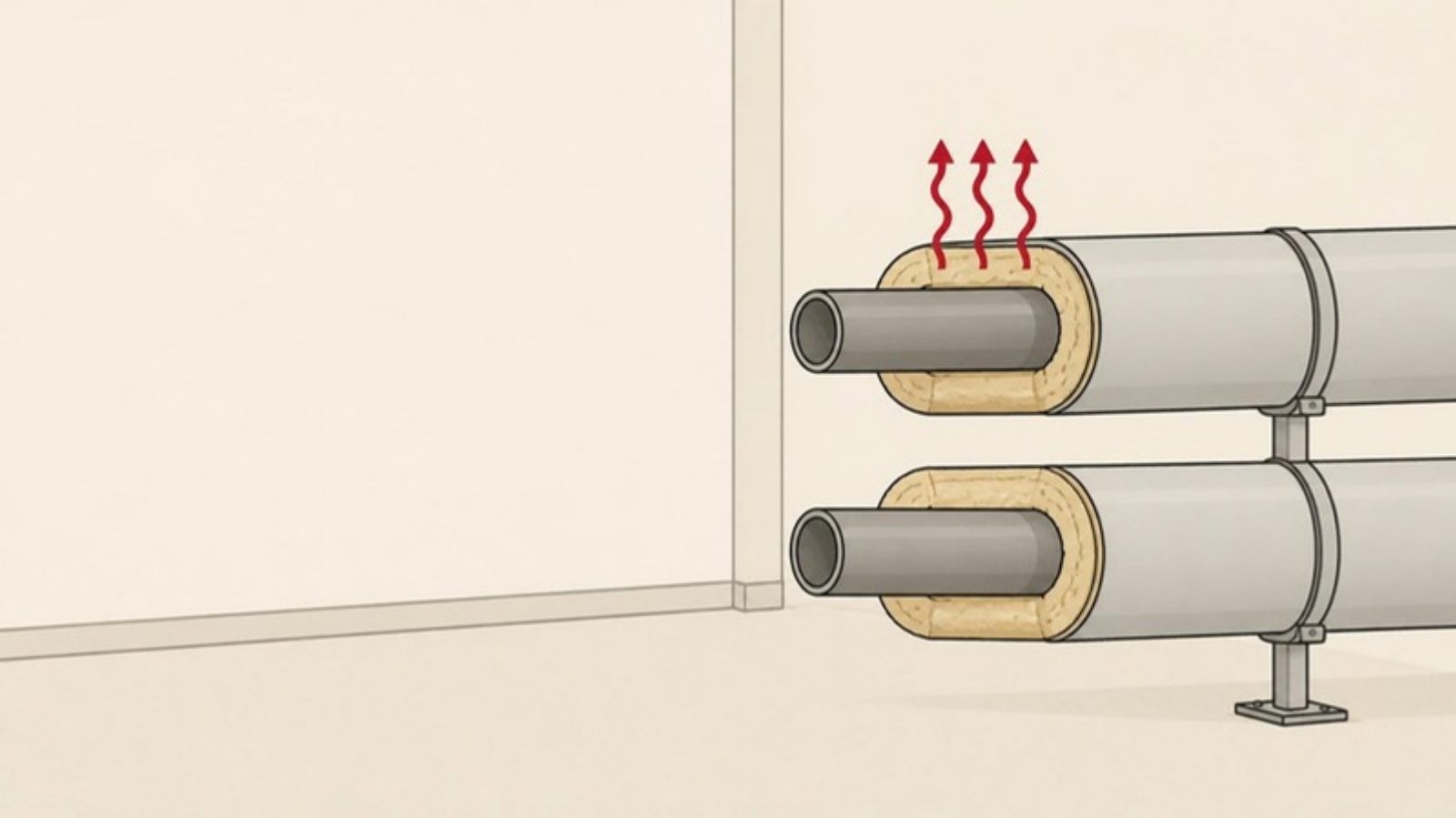
Start with the maximum pipe temperature and choose insulation whose manufacturer-stated service temperature covers it. Then pick the form that suits the job: straight pipes in standard sizes usually take pre-formed pipe sections; large pipes, bends and irregular shapes take wired mats; points that carry load take a rigid material such as calcium silicate. Finally, it needs a jacket against water and impact. Thickness comes from design, not from one number for every job.
The National Insulation Association (NIA) and ROCKWOOL Technical Insulation list similar functions for pipe insulation. Hot pipework usually needs more than one at once.
Different aims lead to different thicknesses. Insulating only to prevent contact burns may need a different thickness from insulating to save energy. See Surface temperature for personnel protection.
Hot-water pipes in a building and steam pipes in a factory are at very different temperatures, and steam temperature rises with pressure. You need the real maximum system temperature, including start-up and upset conditions, and then compare it with the insulation service temperature the manufacturer states.
| Product | Type and form | Service temperature per manufacturer document |
|---|---|---|
| --- | --- | --- |
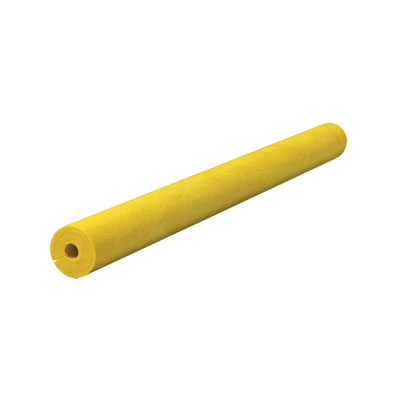
| SCG PCI | Glass-wool pre-formed pipe section for steel pipe | 10–540 °C |
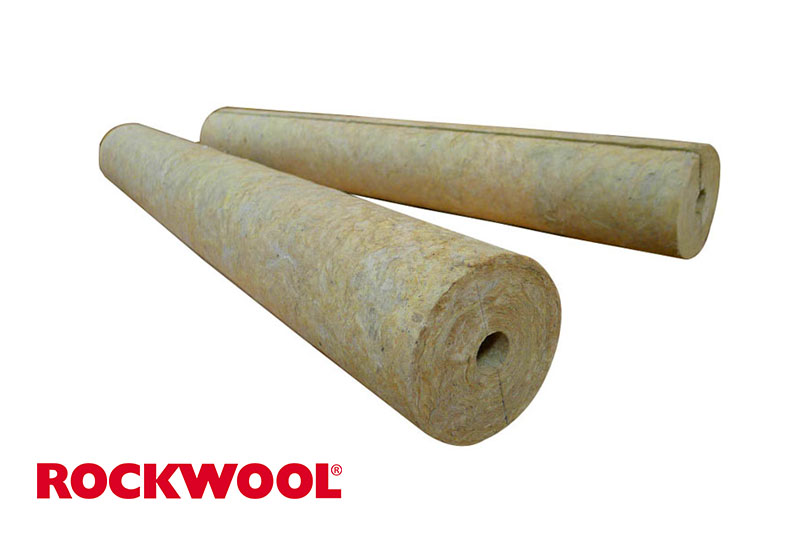
| ROCKWOOL ProRox PS 960 SA | Stone-wool pre-formed pipe section, split and hinged | Up to 650 °C |
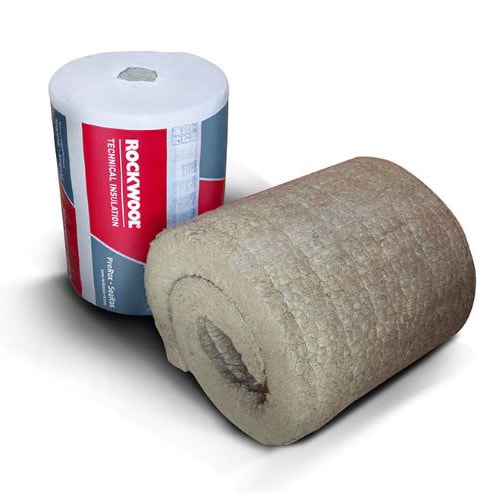
| ROCKWOOL ProRox WM | Stone wool mat stitched to wire mesh | WM 950 / 960 / 970: up to 650 / 650 / 750 °C |
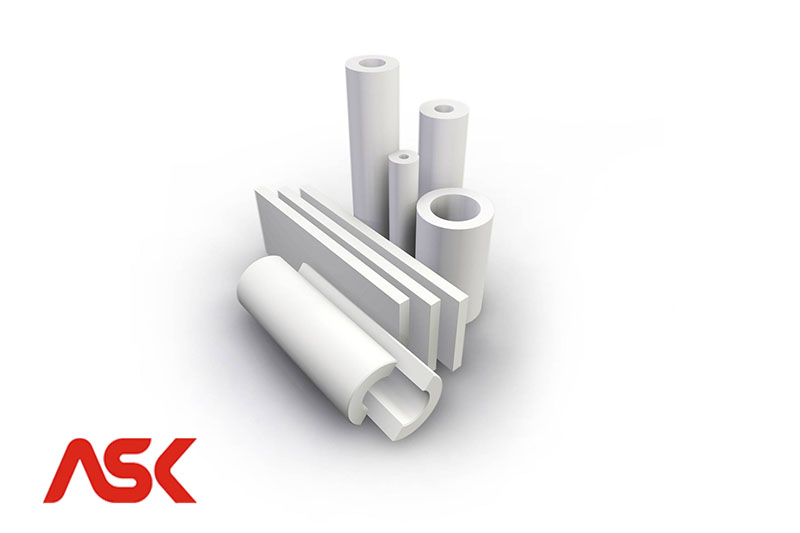
| ASK CS 220 | Rigid calcium silicate as slabs, curved segments and pipe sections | Type I 650 °C / Type II 1,000 °C |
These figures are material limits; they do not mean every job in that range can go ahead without design. For hot-water pipes at moderate temperatures, closed-cell elastomeric insulation is also an option within its own temperature range. See the comparison table in How to choose pipe insulation.
| Form | Suits | Notes |
|---|---|---|
| --- | --- | --- |
| Pre-formed pipe section | Straight pipes in standard sizes | Fits the pipe closely, quick to install, keeps its shape. ROCKWOOL describes it as the first choice for pipework where it can be used |
| Wired mat | Large pipes, bends, fittings and places where sections are hard to use | Can be cut and shaped to fit; needs fixing and support so it does not sag |
| Blanket (no mesh) | Non-vibrating equipment and vessels | The manufacturer specifies it for non-vibrating equipment; for vibrating equipment consider the wired type |
| Calcium silicate | Points carrying load or impact, and high-temperature work | Rigid, with higher compressive strength than fibrous insulation, but more brittle; must be cut and fitted by specialist installers |
No form suits every location. One piping system usually combines several, for example pipe sections on straight runs and wired mat at bends and valves. Read more on the differences in Slab, blanket and wired mat: what is the difference?
The size of a pre-formed section must match the pipe's outside diameter. See Pipe sizes and insulation bore.
Fibrous insulation insulates well when dry. If water gets in, performance falls and the steel pipe underneath is at risk of rusting, so an outer covering is always needed.
The rust risk is explained in Corrosion under insulation (CUI).
Thickness depends on pipe temperature, pipe size, ambient temperature, the insulation's thermal conductivity at that temperature, and the aim of the job. Thermal conductivity rises as temperature rises, so use the value at the real operating temperature from the manufacturer's document, not the room-temperature value. Have an engineer calculate it, or send us the details to check. See How thick should insulation be?
Steam pipes involve both heat and pressure. Insulation must be installed when the system is in a safe condition, and details must be designed at valves, flanges, pipe supports and expansion joints. Valves and flanges left bare are both heat-loss points and contact hazards. Have the designer and an industrial insulation contractor specify and install the work.
For an overview of materials for hot work, see How to choose high-temperature insulation.
Categories and example products for this topic
Industrial and high-temperature insulation · Stone wool
Pipe insulation · Glass wool
Industrial and high-temperature insulation · Stone wool
Industrial and high-temperature insulation · Calcium silicate
Check the message below, then press “Open LINE”. On a phone LINE opens with this message; on a computer LINE shows a QR code to scan with your phone. If LINE does not open, copy the message into the chat, or call us.
Add us on LINE: @x2525 · Call 062-195-1909