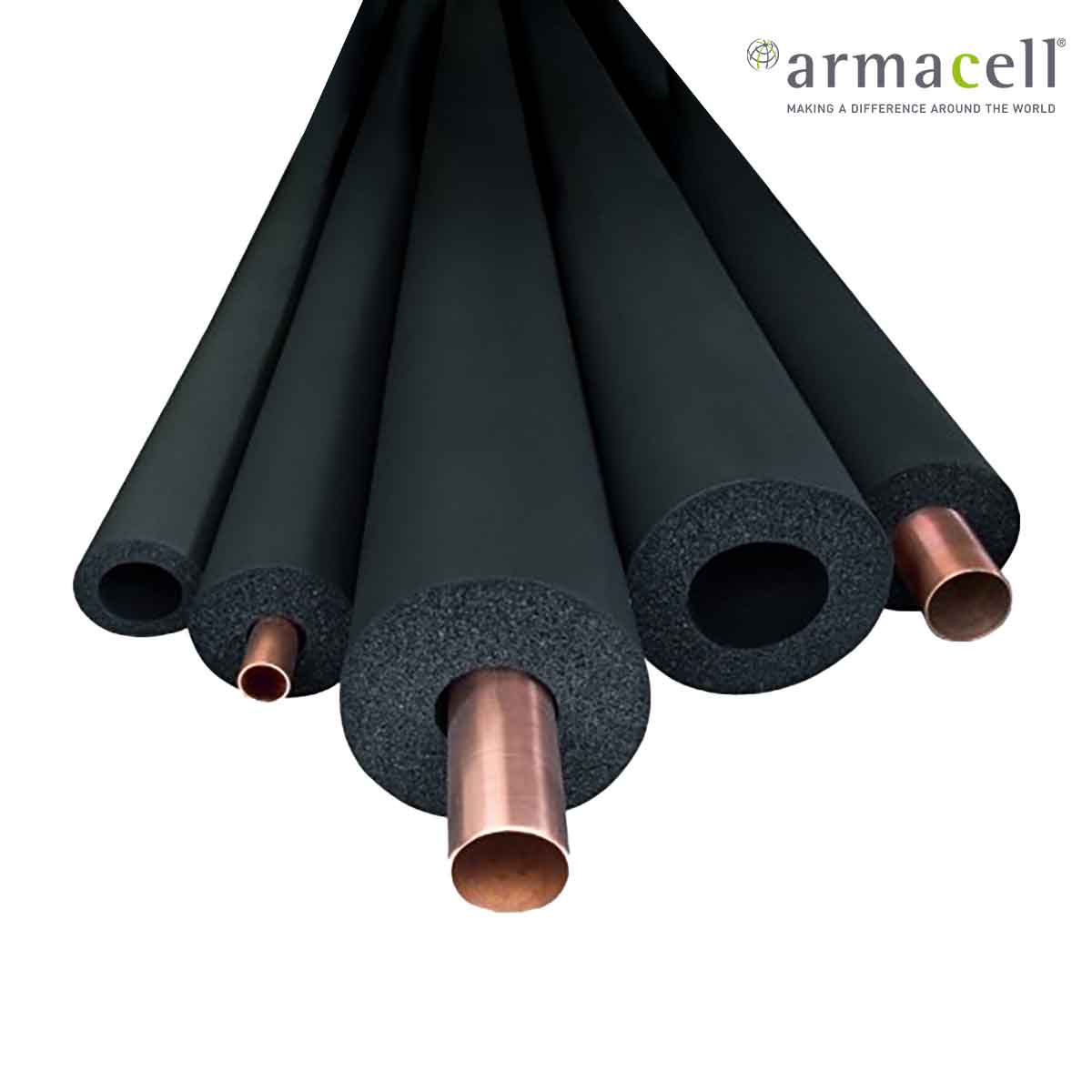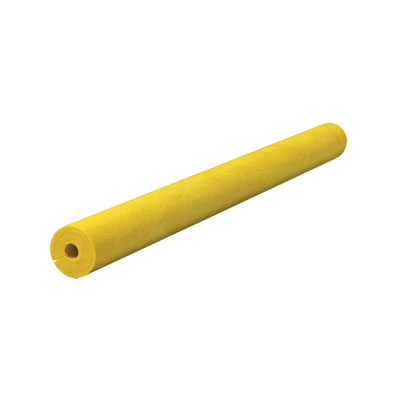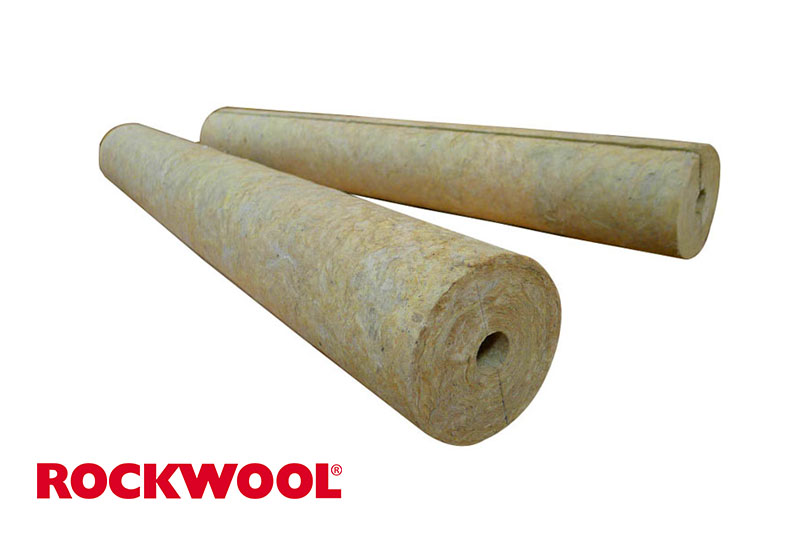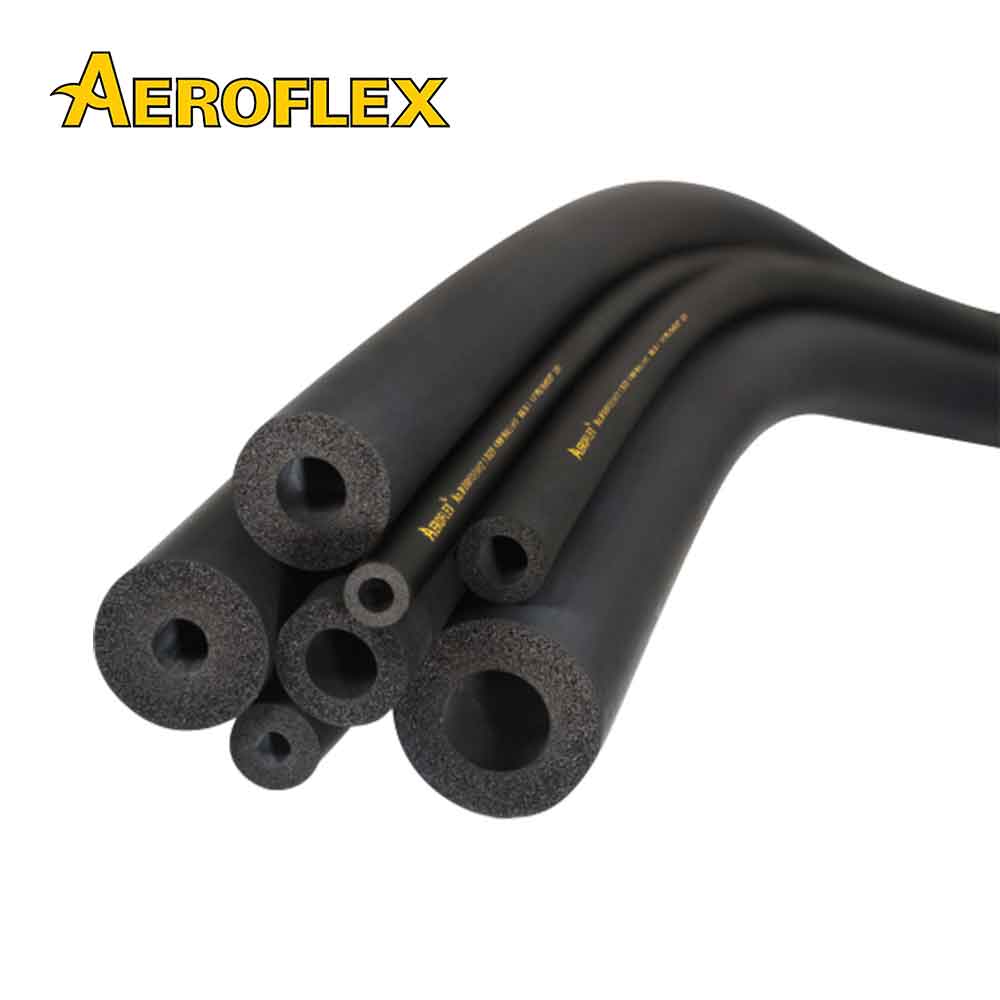
Pipe insulation · Elastomeric foam
AEROFLEX Tube Insulation
- Tube bore
- 6–165 mm
- Wall thickness
- 6–50 mm
- Service temp.
- -57 – 125 °C
Sound coming in or going out (sound insulation)
Echoey rooms (sound absorption)
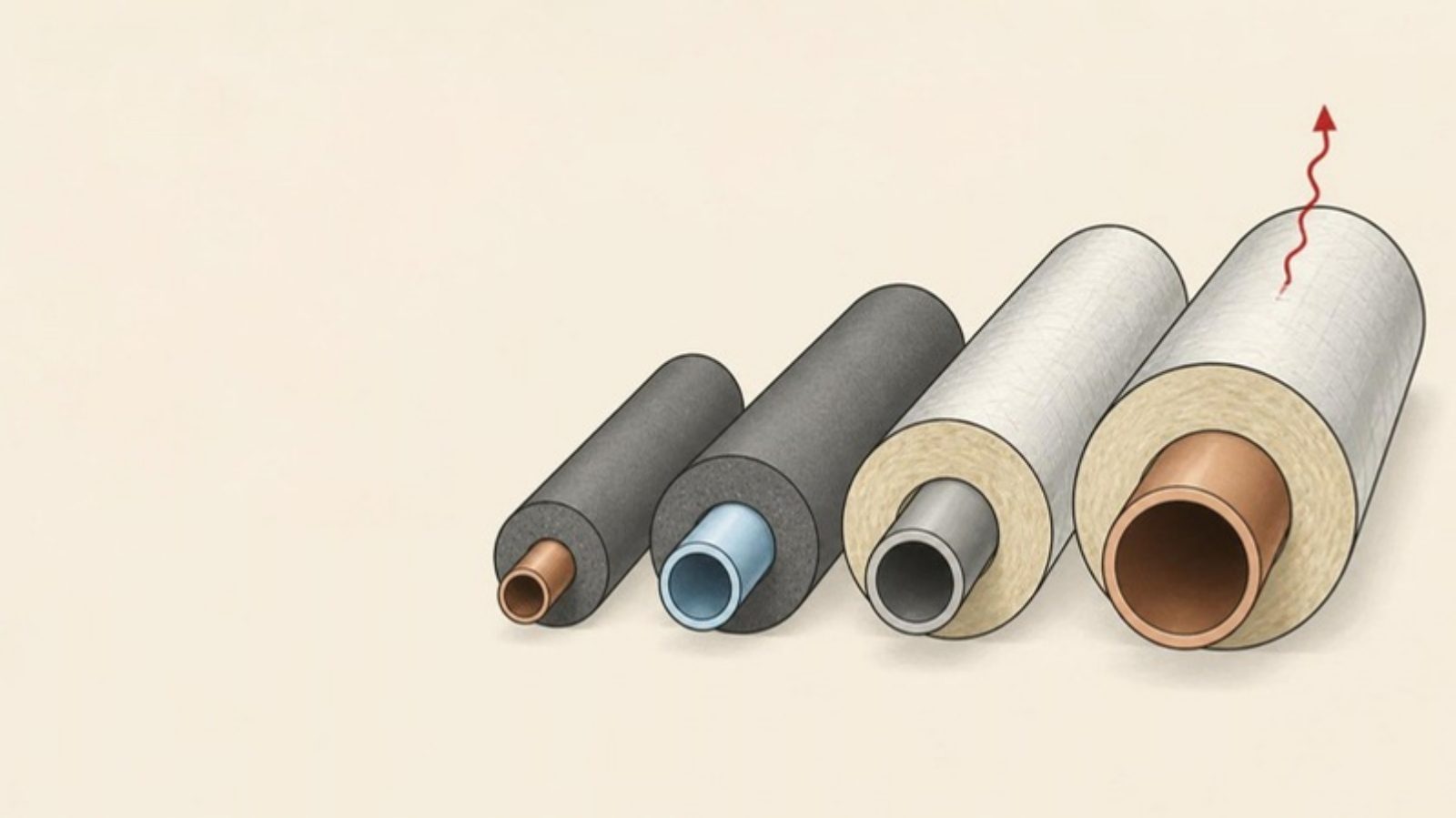
First ask whether the pipe is cold or hot. Cold lines mainly need to stop condensation, so they need a material or facing that resists water vapour continuously; hot lines focus on reducing heat loss and keeping touchable surfaces safe. Then check that the insulation's service temperature range covers the pipe temperature, choose a bore size that matches the pipe's outside diameter, and take the thickness from a design for the real conditions — not one number for every job.
| Cold lines (refrigerant, chilled water) | Hot lines (hot water, steam, process) | |
|---|---|---|
| --- | --- | --- |
| Main problem | Condensation drips, lost cooling | Heat loss, hot surfaces dangerous to touch |
| What is needed | Outer surface warmer than the dew point + continuous vapour resistance | Insulation that withstands the pipe temperature, thickness enough to meet the designed heat loss |
| Read more | Dew point and condensation, Vapour barrier | Service temperature |
Every insulation has a temperature range the maker states for use. It must cover the lowest and highest temperatures the pipe will see, including start-up and shutdown. Examples from the makers' documents for products we sell:
| Product | Type | Service temperature per maker's document |
|---|---|---|
| --- | --- | --- |
| AEROFLEX Tube | Closed-cell EPDM elastomeric | -57 to 125 °C |
| MAXFLEX FR Tube | Closed-cell EPDM elastomeric | -57 to 125 °C |
| Armaflex Class 1 | Closed-cell elastomeric | -50 to +105 °C |
| SCG PCI | Pre-formed glass-wool pipe section | 10 to 540 °C |
These are material ranges; they do not mean any job within the range works without design. Check the latest document before ordering.
Pre-formed tube insulation is sized by the inside diameter of the insulation, which must match the outside diameter of the pipe.
The thickness needed depends on pipe temperature, the temperature and humidity of the surrounding air, pipe size, the insulation's thermal conductivity and the goal (prevent condensation, limit energy loss or limit surface temperature). Many insulation makers provide calculation software or tables. Let the system designer set it, or send us your site details to check.
A thickness that is enough for a pipe in a conditioned room may not be enough for the same pipe in a hot, humid ceiling void under the roof. Do not reuse a number from another job without checking the real conditions.
| Closed-cell elastomeric | Pre-formed glass/stone-wool pipe sections | |
|---|---|---|
| --- | --- | --- |
| Vapour resistance | In the material itself; glue the joints as the maker instructs | Relies on a vapour-retarding facing/jacket when used on cold pipes |
| Common uses | Refrigerant, chilled-water and hot-water pipes within the material's range | Hot and process pipes above the elastomeric range |
| Flexibility | Bends with the pipe, easy around fittings | Rigid sections, cut and fitted at fittings |
Neither is better for every job. Details in Elastomeric vs glass wool in HVAC.
Many elastomeric insulations need UV protection outdoors, such as a coating or jacket as the maker specifies. Glass/stone-wool needs a jacket against rain and mechanical damage. Follow each maker's instructions, as methods and time limits differ.
The right insulation only works when every joint is sealed. Use the adhesive, tape and method the maker recommends. See Sealing insulation joints and Accessories.
Categories and example products for this topic
Pipe insulation · Elastomeric foam
Pipe insulation · Elastomeric foam
Pipe insulation · Glass wool
Industrial and high-temperature insulation · Stone wool
Check the message below, then press “Open LINE”. On a phone LINE opens with this message; on a computer LINE shows a QR code to scan with your phone. If LINE does not open, copy the message into the chat, or call us.
Add us on LINE: @x2525 · Call 062-195-1909