Industrial and high-temperature insulation · Stone wool
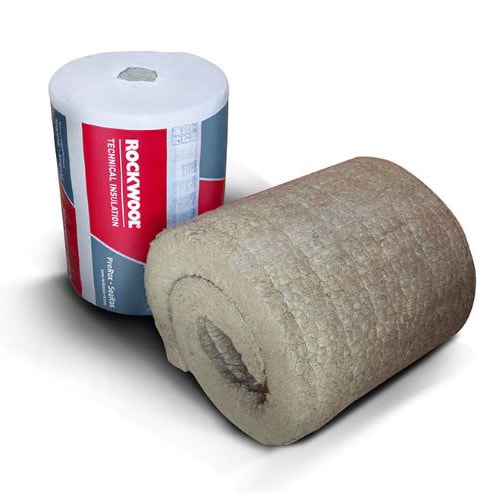
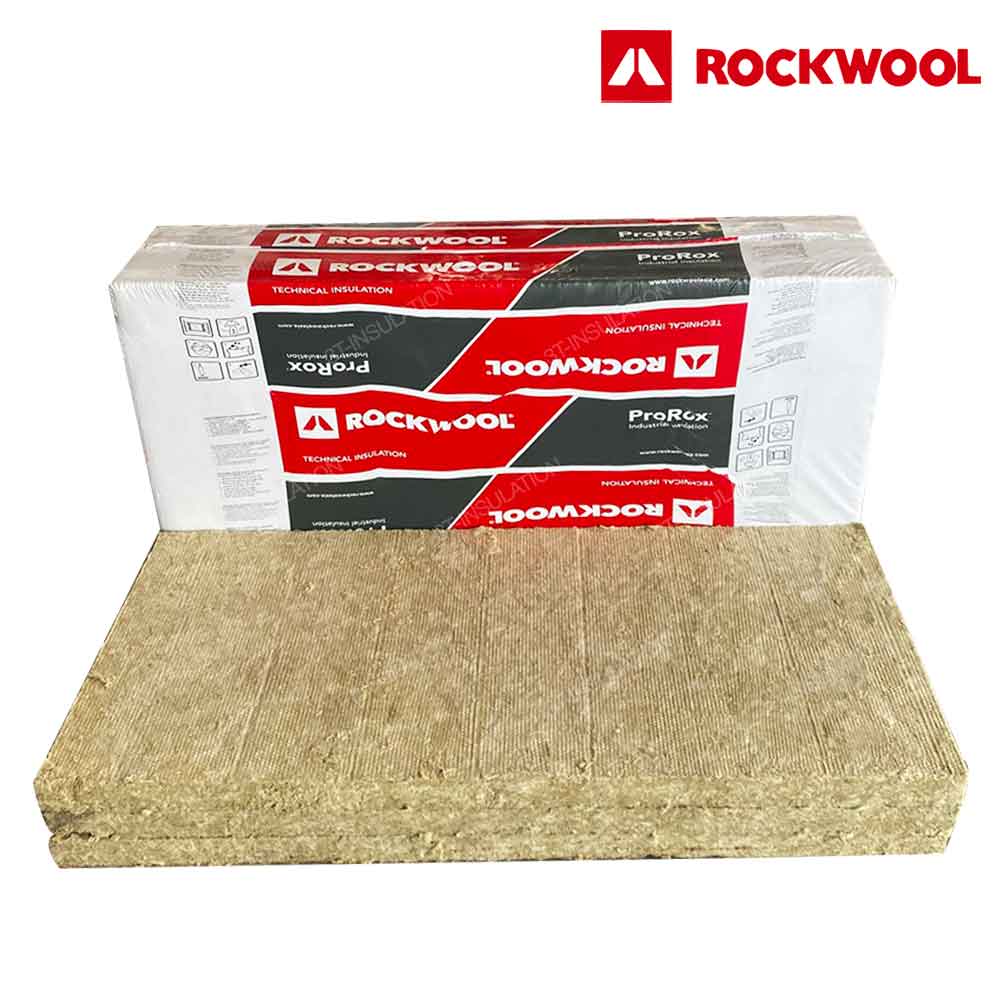
ROCKWOOL ProRox PS
- Max. temp.
- 650 °C
- Density
- 120–150 kg/m³
- Thermal conductivity (λ)
- 0.037–0.038 W/m·K (50 °C)
Sound coming in or going out (sound insulation)
Echoey rooms (sound absorption)
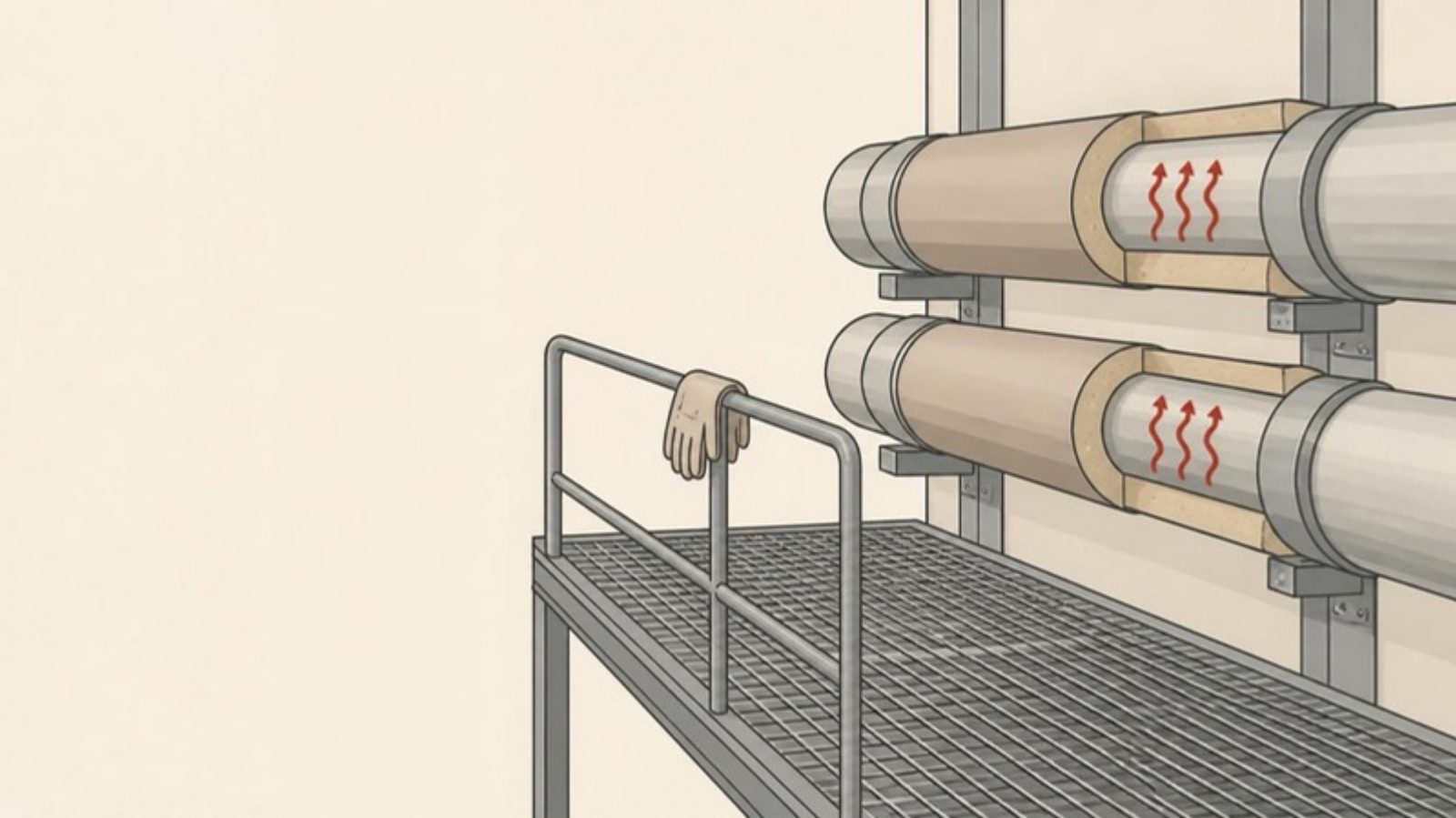
Personnel protection means insulating a hot pipe or piece of equipment so that the outer surface temperature is low enough that someone who touches it by accident is not burned. Saving energy is not the main aim. The surface temperature you get depends on insulation thickness, the surrounding air temperature and wind, and the emissivity of the jacket. The limit itself — how many degrees is acceptable — comes from the project specification or the plant owner. Thickness therefore has to be calculated; there is no ready-made value that fits every job.
Steam pipes, hot-oil lines, furnace walls and hot tanks have surfaces hot enough to burn skin in a fraction of a second. Where people walk past, climb ladders or carry out maintenance, the surfaces within reach have to be made cooler. A warning sign alone does not remove the risk.
This aim differs from insulating to save energy or to hold a process temperature. The same pipe may end up with a different thickness under each aim — see how to choose insulation thickness.
ASTM C1055 is a guide that describes a process for determining acceptable surface conditions for heated systems. It is not a table of ready-made numbers. The points worth knowing:
In practice, then, the limit is written in the project specification, company standards or local regulation. An article from the US National Insulation Association (NIA) mentions a commonly used figure of about 60 °C (140 °F), and its author suggests a lower value, about 54 °C (130 °F), when the jacket is metal, because metal passes heat to skin quickly. These figures are examples from that article; they cannot stand in for your project's requirement.
The surface material matters. A metal surface at the same temperature as a fabric or plastic one feels hotter and burns sooner, because it conducts heat into skin more readily. That is why ASTM C1055 asks for the surface system to be considered.
The outside of the insulation warms up until the heat coming through the insulation equals the heat the surface gives off to the air by convection and radiation. Anything that shifts this balance changes the surface temperature.
| Factor | Effect on outer surface temperature |
|---|---|
| --- | --- |
| Insulation thickness | Thicker → cooler surface |
| Thermal conductivity of the insulation at operating temperature | Lower → cooler surface (λ rises as the insulation gets hotter) |
| Pipe or equipment temperature | Hotter → hotter surface |
| Surrounding air temperature | Warmer air → hotter surface |
| Wind | Still air → hotter surface than with wind |
| Jacket emissivity | Shiny (low) → hotter than dull (high) |
| Pipe size and shape | Affects the calculation; a small pipe and a flat wall give different results |
A bright metal jacket has low emissivity, so it gives off little heat by radiation and the surface has to run hotter to shed the same amount of heat. An NIA article gives an example of one hot pipe with the same insulation thickness: with an oxidised aluminium jacket the surface was about 53 °C, while with a high-emissivity jacket such as PVC or coated fabric it fell to about 40 °C — at the cost of higher heat loss.
It follows that:
Designers calculate surface temperature with standard methods such as ASTM C680 or ISO 12241 and adjust thickness until the surface stays within the limit. The NIA article recommends designing for the worst case:
Information to prepare for the person doing the calculation: pipe or equipment temperature, pipe size or surface dimensions, location (indoors or outdoors), maximum air temperature, jacket type, and the surface-temperature limit in the project specification.
Thailand is hot and some parts of a plant have little air movement, so the air temperature used should be that of the real site, not a value from another country's tables.
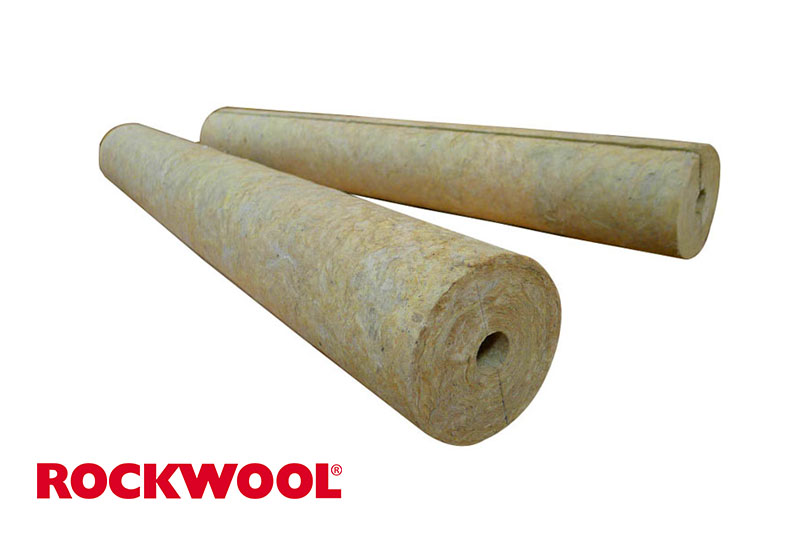
Any hot-service insulation can serve this aim. What matters is that its service temperature covers the surface temperature and that its form suits the surface.
Each product's data sheet gives thermal conductivity at several temperatures, which the calculation needs. For choosing the form, see stone wool slab, blanket, wired mat or pipe section.
Some places should not be insulated — surfaces that must give off heat, or spots where insulation would raise the risk of corrosion under insulation. There the designer may use guards or cages to prevent contact instead, an option API RP 583 mentions.
Categories and example products for this topic
Industrial and high-temperature insulation · Stone wool
Industrial and high-temperature insulation · Stone wool
Industrial and high-temperature insulation · Stone wool
Check the message below, then press “Open LINE”. On a phone LINE opens with this message; on a computer LINE shows a QR code to scan with your phone. If LINE does not open, copy the message into the chat, or call us.
Add us on LINE: @x2525 · Call 062-195-1909