Industrial and high-temperature insulation · Stone wool
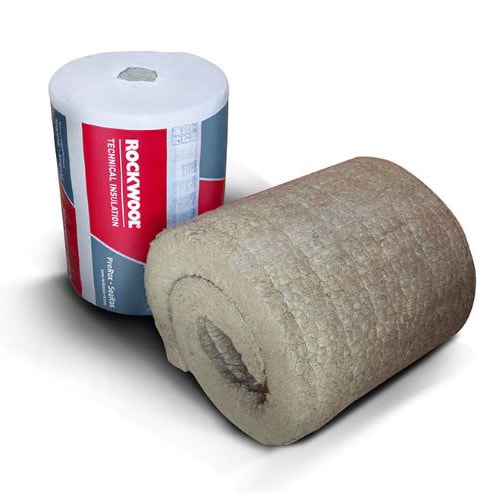
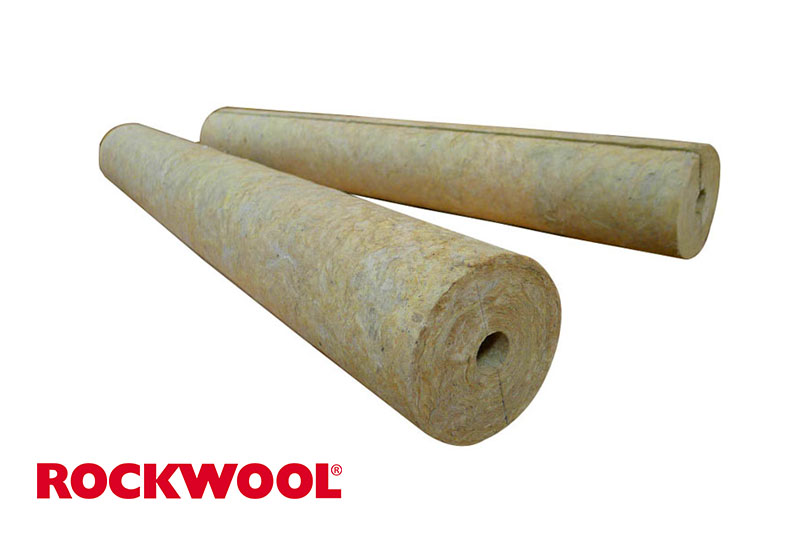
ROCKWOOL ProRox PS
- Max. temp.
- 650 °C
- Density
- 120–150 kg/m³
- Thermal conductivity (λ)
- 0.037–0.038 W/m·K (50 °C)
Sound coming in or going out (sound insulation)
Echoey rooms (sound absorption)
Industrial and high temperature
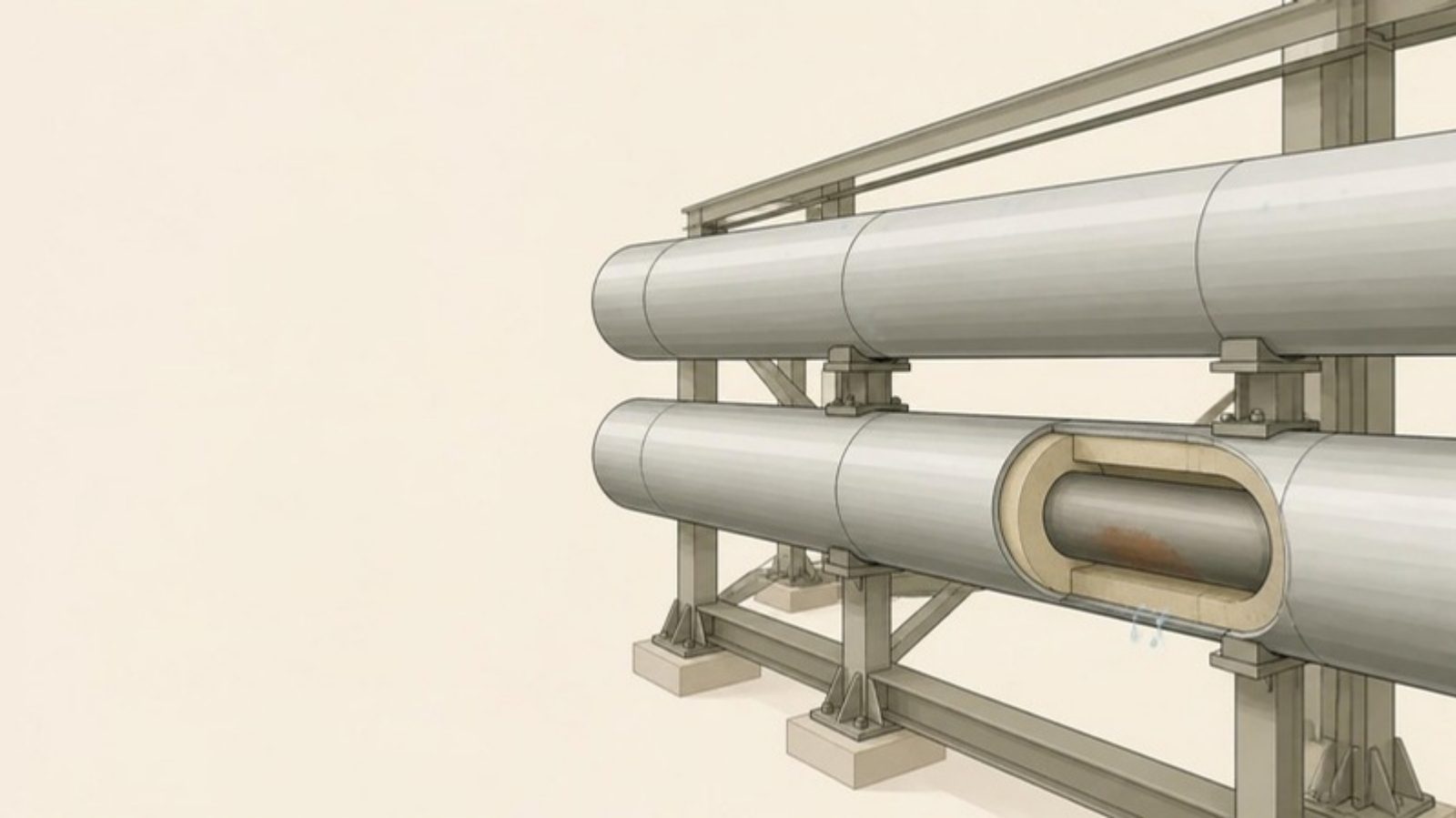
Corrosion under insulation (CUI) is rusting or cracking of a metal pipe or vessel beneath its insulation, caused by water held between the insulation and the metal. It cannot be seen from outside until the insulation is removed or a leak appears. Prevention has to work as a system: a coating on the metal, insulation that absorbs little water and dries quickly, jacketing that really sheds water, and a plan for inspection and maintenance. No single material solves it alone.
Carbon steel rusts when it is in contact with water and oxygen. An insulated pipe usually has a small gap between insulation and metal; once water gets in, it stays there. The insulation slows evaporation, so the metal stays wet for longer than a bare pipe would. The longer the surface is wet, the greater the damage.
The US National Insulation Association (NIA) sums up the part insulation plays in three points: it creates a space that can hold water, it may absorb or carry water to the metal, and some materials may contribute contaminants that speed up corrosion.
The UK Health and Safety Executive (HSE) and NIA list very similar routes:
Water that gets in tends to collect at low points and discontinuities: vessel bases, pipe supports, the underside of horizontal runs and elbows, insulation support rings and drain legs. These are the places to inspect first.
ROCKWOOL's own literature states plainly that water ingress cannot be fully avoided and occurs under every type of insulation. Design therefore has to cover both keeping water out and letting water that does get in drain and dry quickly.
The temperature bands quoted in different documents do not match exactly, so use only the values in the standard your project refers to. Examples from documents we opened:
What all the documents agree on: systems whose temperature cycles, or which are shut down from time to time, are at higher risk than systems that stay steadily hot, because the metal is wetted again and again. A pipe that is always very hot drives water off, but it still passes through the risky band at every start-up and shutdown.
Austenitic stainless steel (grades such as 304/316) does not rust like ordinary steel, but it is vulnerable to external chloride stress corrosion cracking. Water seeping in brings chlorides with it; as the water evaporates on the hot surface the chlorides concentrate until they can crack metal that is under stress.
Chlorides come from two places: the insulation itself, and outside — rain, sea air, wash water or fire-water. So:
API RP 583 and NACE SP0198 treat this as a system with several layers of defence, not a material choice alone.
The NIA article describes protective coatings as the basic prevention method, because they are the last barrier between water and metal. The coating type must suit the pipe material and service temperature — a task for the designer and the coating manufacturer.
For hot work, stone wool made with a water-repellent binder is worth considering:
Water absorption is a test result for the material; it does not mean the system cannot suffer CUI. See insulation, moisture and water repellency.
See sealing insulation joints.
Jacketing and sealants age, so an inspection plan is needed. API RP 583 recommends prioritising by risk (risk-based inspection), looking at equipment age, coating type, location, operating temperature and the consequence of a leak. Visual inspection by trained people remains the foundation, supported by non-destructive methods chosen by specialists.
CUI affects the safety of piping and pressure equipment. The coating system, insulation, jacketing and inspection plan should be selected by qualified engineers and inspectors to the standards your plant uses. We can provide product information and manufacturers' documents to support the decision, but we do not design corrosion-protection systems.
Read next: choosing high-temperature insulation · insulating hot-water and steam pipes
Categories and example products for this topic
Industrial and high-temperature insulation · Stone wool
Industrial and high-temperature insulation · Stone wool
Industrial and high-temperature insulation · Calcium silicate
Check the message below, then press “Open LINE”. On a phone LINE opens with this message; on a computer LINE shows a QR code to scan with your phone. If LINE does not open, copy the message into the chat, or call us.
Add us on LINE: @x2525 · Call 062-195-1909