Industrial and high-temperature insulation · Stone wool
ROCKWOOL ProRox SL
- Max. temp.
- 450–850 °C
- Density
- 60–160 kg/m³
- Thickness
- 50–100 mm
Sound coming in or going out (sound insulation)
Echoey rooms (sound absorption)
Industrial and high temperature
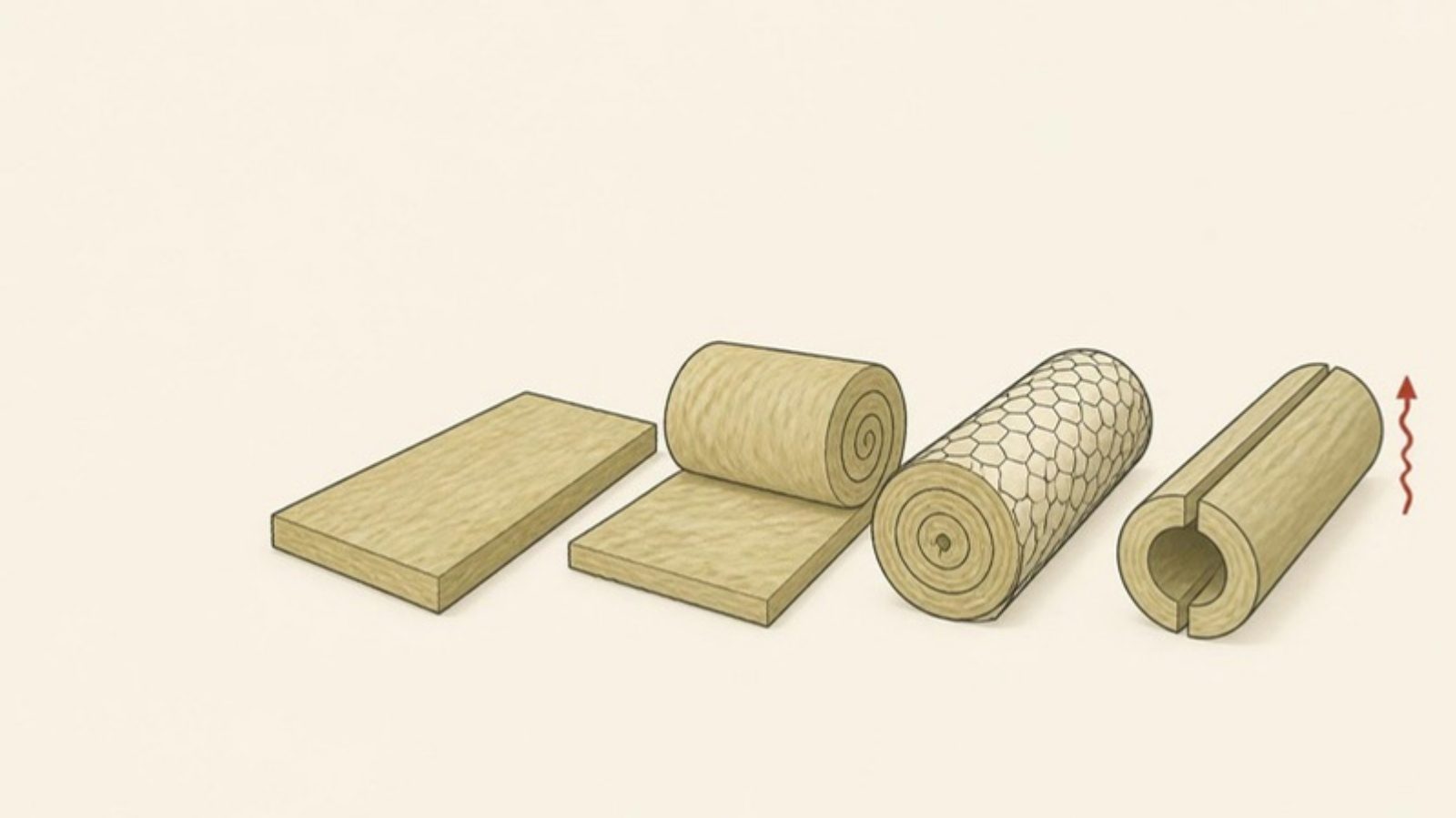
Choose the form from the shape of the surface first, then the grade from the temperature: slabs for flat equipment walls; blankets for large tanks and vessels that do not vibrate; wired mats for large pipes, curved or irregular surfaces and equipment that vibrates or runs very hot; and pre-formed pipe sections for standard pipe sizes. Grades within each form have different maximum service temperatures, which must be read from that grade's own document.
All four are made of the same stone wool. They differ in density, stiffness and how they are shaped, which decides how closely the insulation follows the surface and how it is fixed. Insulation that does not suit the shape leaves gaps and open joints, and heat leaks there however good the material is — see gaps and compression.
| Form | Nature | Suitable surfaces | Usual fixing |
|---|---|---|---|
| --- | --- | --- | --- |
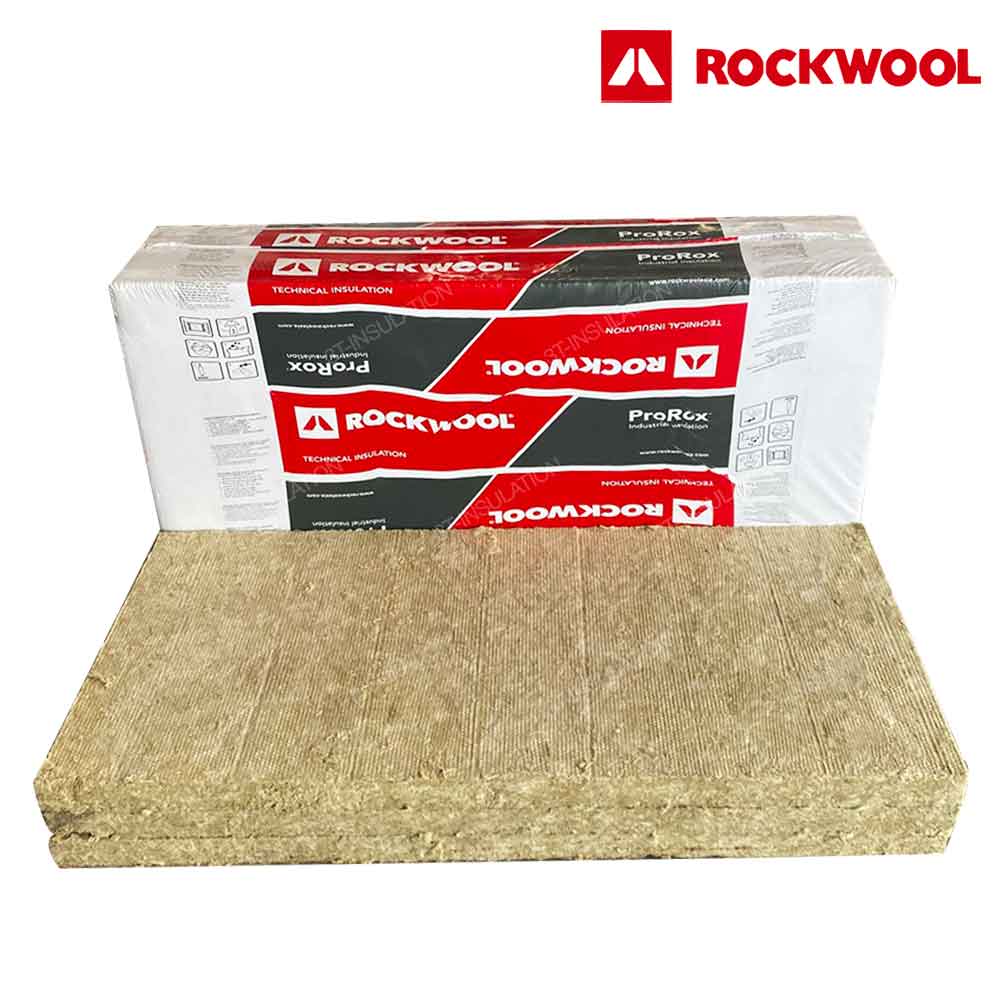
| Slab | Semi-rigid to rigid board that holds its shape | Flat walls of boilers, tanks, columns; rectangular hot ducts | Impaled on insulation pins and locked with washers, or held by bands |
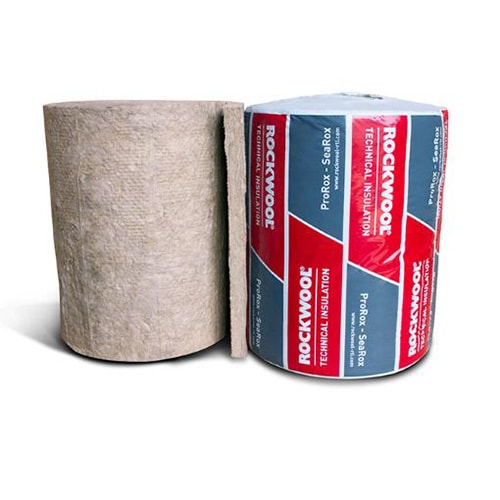
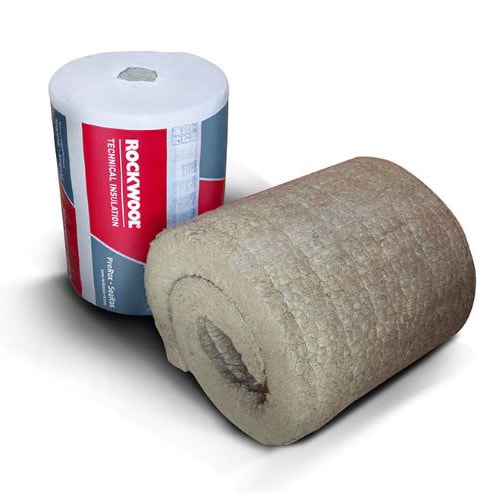
| Blanket | Long flexible roll, no mesh | Large tanks and vessels that do not vibrate; wide-radius curves | Wrapped and banded, or pinned |
| Wired mat | Stone wool stitched to wire mesh | Large pipes, bends, vessels, furnaces, flue ducts, irregular surfaces, vibrating equipment | Mesh edges stitched together with wire or hooks, plus pins or bands |
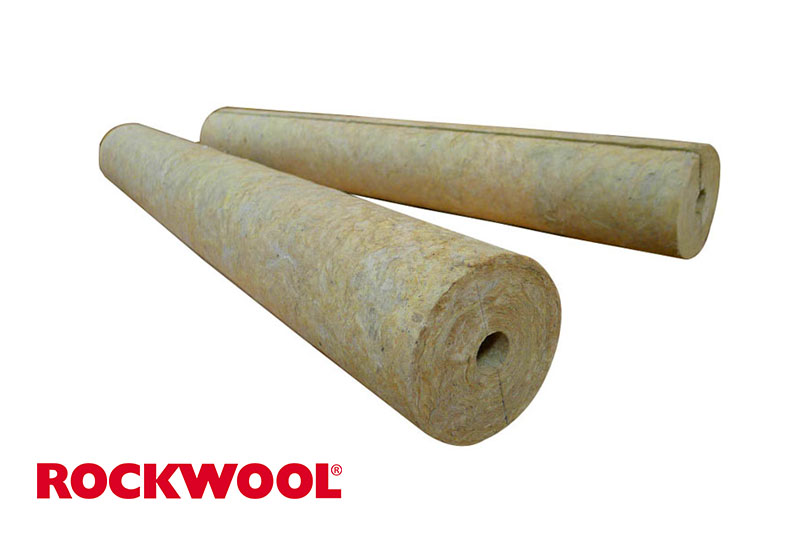
| Pipe section | Split cylinder sized to the pipe | Standard pipe sizes | Snapped over the pipe and tied with wire |
Slabs hold their own shape on vertical and horizontal faces, so they suit wide flat areas. ROCKWOOL's documents describe slabs being fastened to equipment on insulation pins, which are welded or mechanically fixed to the surface, with slab edges butted tightly together.
Long rolls cover area quickly with few joints and bend to a tank wall. The manufacturer specifies them for equipment that does not vibrate.
The stitched-on wire mesh acts as a carrier that holds the wool together, so the mat can be wrapped around large pipes, bends and complex shapes and stands up to vibration better than a plain blanket. ROCKWOOL describes wired mats as suited to large-diameter pipework, vessels and columns and to work where design flexibility is needed.
Formed to the pipe size, split and hinged, they close snugly around the pipe. They go on faster and leave neater joints than wrapping.
These values come from ROCKWOOL Thailand data sheets (tested to ASTM C411 / C447).
| Form | Grade | Density (kg/m³) | Max. service temperature |
|---|---|---|---|
| --- | --- | --- | --- |
| Slab | ProRox SL 930 SA | 60 | 450 °C |
| Slab | ProRox SL 950 SA | 80 | 650 °C |
| Slab | ProRox SL 960 SA | 100 | 650 °C |
| Slab | ProRox SL 978 SA | 110 | 850 °C |
| Slab | ProRox SL 970 SA | 128 | 650 °C |
| Slab | ProRox SL 540 SA | 160 | 650 °C |
| Blanket | ProRox BL 938 SA | 60 | 350 °C |
| Blanket | ProRox BL 958 SA | 80 | 450 °C |
| Blanket | ProRox BL 960 SA | 100 | 650 °C |
| Wired mat | ProRox WM 950 SA | 80 | 650 °C |
| Wired mat | ProRox WM 960 SA | 100 | 650 °C |
| Wired mat | ProRox WM 970 SA | 128 | 750 °C |
| Pipe section | ProRox PS 960 SA | 120 | 650 °C |
| Pipe section | ProRox PS 970 SA | 150 | 650 °C |
Points to note:
Read more: insulation fixing accessories · insulating tanks, boilers, ovens and hot ducts
Pin welding, work on equipment that is still hot, work at height and work in confined spaces must be done by qualified contractors under the plant's safety procedures. Thickness and fixing details must be designed for the real conditions; we do not give ready-made thicknesses.
Categories and example products for this topic
Industrial and high-temperature insulation · Stone wool
Industrial and high-temperature insulation · Stone wool
Industrial and high-temperature insulation · Stone wool
Industrial and high-temperature insulation · Stone wool
Check the message below, then press “Open LINE”. On a phone LINE opens with this message; on a computer LINE shows a QR code to scan with your phone. If LINE does not open, copy the message into the chat, or call us.
Add us on LINE: @x2525 · Call 062-195-1909