Sound insulation · Stone wool
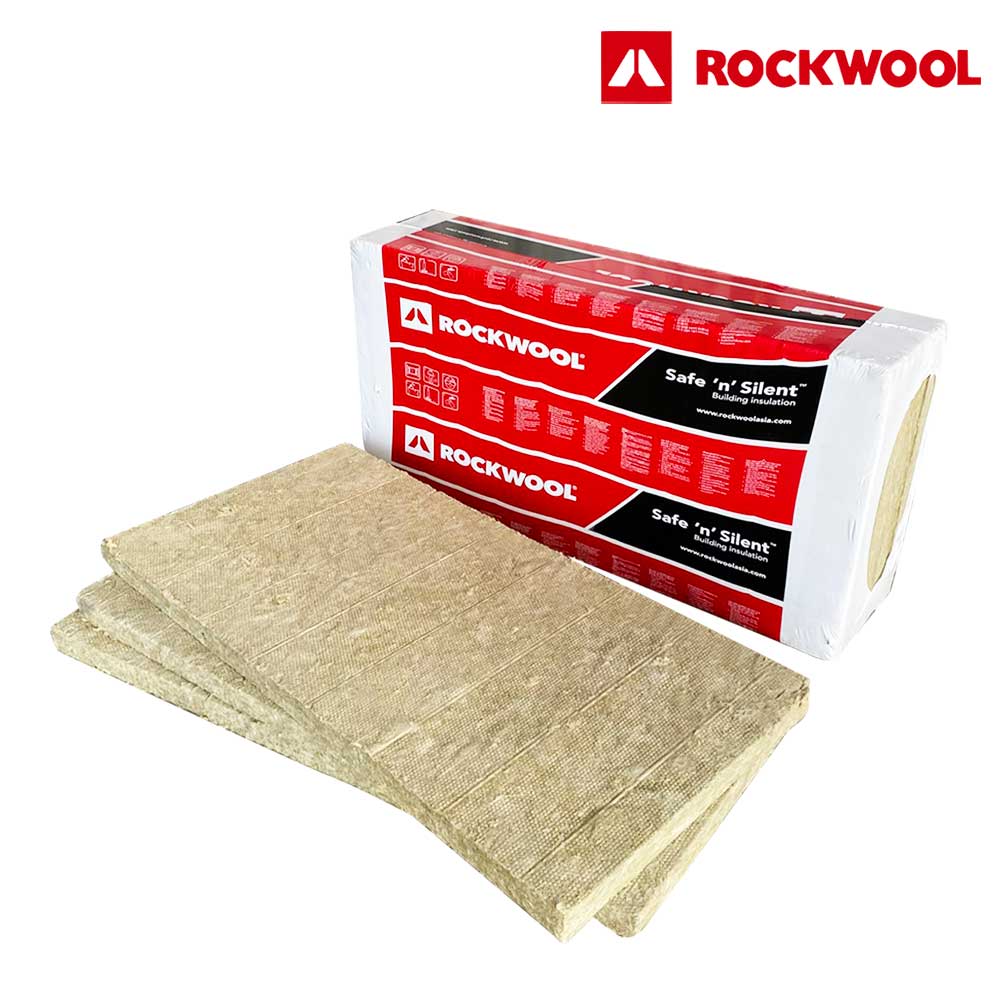
ROCKWOOL Safe 'n' Silent Pro
- Thickness
- 25–100 mm
- Density
- 40–100 kg/m³
- Sound absorption (NRC)
- 0.90–1.00
Sound coming in or going out (sound insulation)
Echoey rooms (sound absorption)
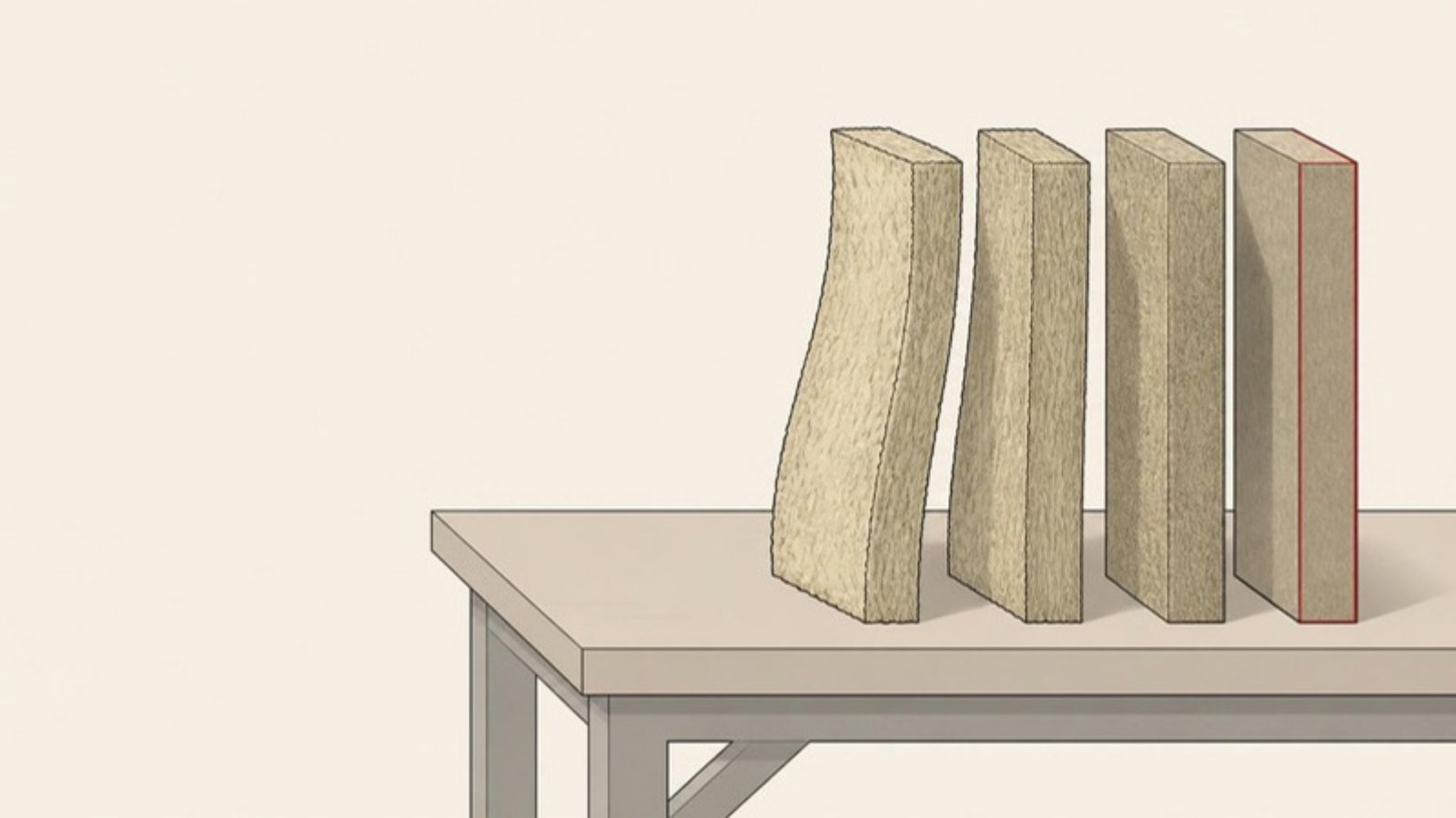
Choose by the job first, then the density. For filling wall or ceiling cavities, light to medium grades (40–60 kg/m³) serve general work. For exposed sound absorbers or wherever the slab must hold its own shape, 60–100 kg/m³ is commonly used because the slab is stiffer and easier to handle. For high-temperature work, choose by the grade's maximum service temperature, not by density. NRC and λ differ only slightly between grades; what changes clearly is rigidity, weight and price.
Each ROCKWOOL slab family comes in several grades by density (kg/m³). The data below comes from ROCKWOOL Thailand data sheets.
| Family | Main use | Grades and density (kg/m³) |
|---|---|---|
| --- | --- | --- |
| Safe 'n' Silent Pro | Sound insulation in drywall and ceiling cavities | Pro 330 (40) · Pro 350 (60) · Pro 370 (80) · Pro 380 (100) |
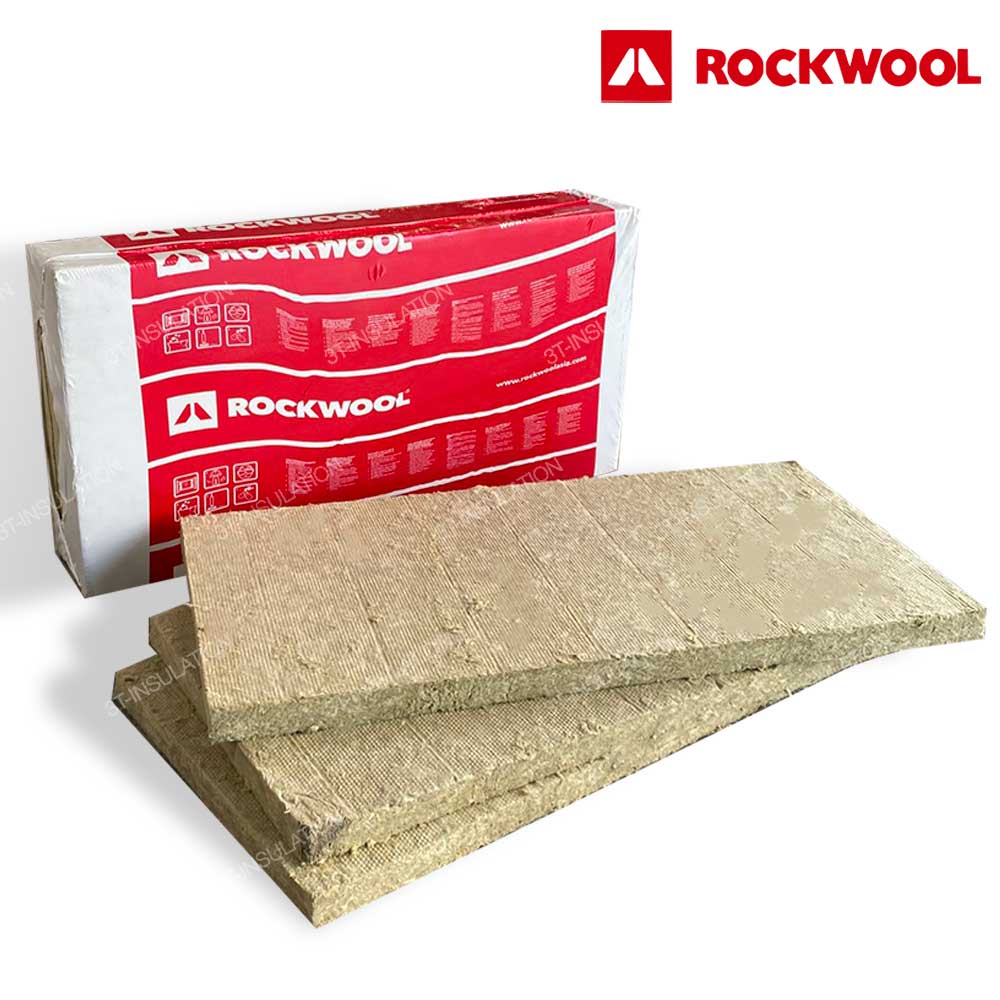
| Thermalrock S | General building and factory use, thermal and sound absorption | S40 · S60 · S80 · S120 · S140 · S150 |
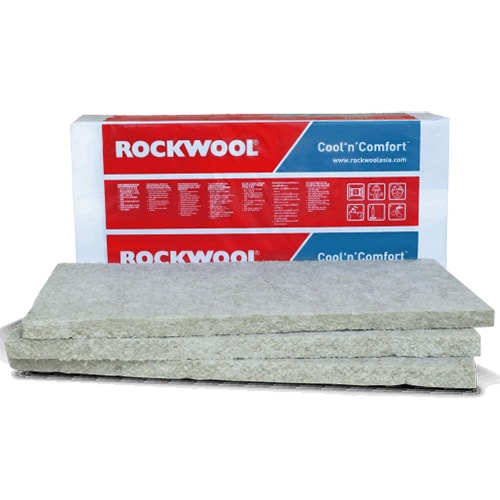
| Cool 'n' Comfort SL | Double-skin metal roofs | SL920 (40) · SL940 (60) · SL950 (80) |
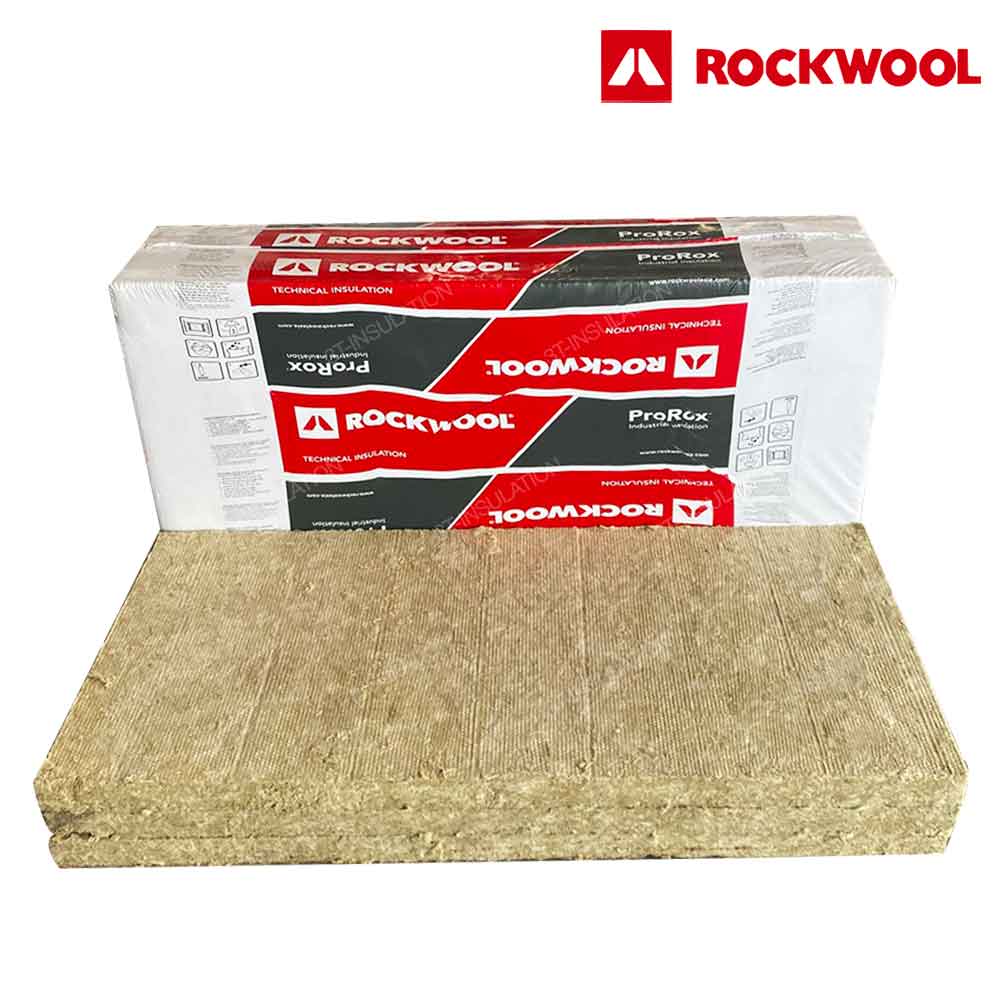
| ProRox SL | Industrial and high-temperature work | SL 930 (60) · SL 950 (80) · SL 960 (100) · SL 978 (110) · SL 970 (128) · SL 540 (160) |
The same density in a different family does not mean the products are interchangeable: each family is tested and specified for a different job. Some sizes are made to order or need an enquiry first.
| Property | As density goes up | From the manufacturer's documents |
|---|---|---|
| --- | --- | --- |
| Rigidity and shape retention | The slab is stiffer, stands on its own and does not sag | ProRox SL 930 (60) is described as semi-rigid, SL 950 (80) as rigid |
| Weight and handling | Heavier; fewer slabs per pack | Thermalrock S at 50 mm: S40 8 per pack, S60 and S80 6 per pack, S140 4 per pack |
| Thermal conductivity (λ) | Slightly better in this range | Safe 'n' Silent Pro at 20 °C: 0.036 (40) → 0.033 W/m·K (100) |
| NRC | Hardly different | Safe 'n' Silent Pro at 50 mm: 0.90 (Pro 330) and 1.00 (Pro 350/370/380) · Thermalrock S: 1.00 (S40), 1.05 (S60–S120), 0.90 (S140/S150) |
| Maximum service temperature | Not directly tied to density | ProRox SL 978 (110) is rated to 850 °C, while SL 970 (128) and SL 540 (160) are rated to 650 °C |
Note from the table: the densest Thermalrock S grades (S140/S150) have a lower NRC than the mid grades. Higher density does not always mean better sound absorption.
NRC is an average of sound absorption at 250–2,000 Hz, so it does not show behaviour below that. If the job needs low-frequency absorption, look at the absorption coefficients by frequency in the data sheet for the grade and thickness you will use. In general, slab thickness and an air gap behind it affect low frequencies more than a change of density grade. See What is NRC?
Cavity insulation damps sound inside the cavity; it is not the sound barrier itself. NRC Canada's Canadian Building Digest 239 states that in walls of normal thickness the density of the absorbing material in the cavity is not critical. What matters more is decoupling, the mass of the boards, cavity depth and sealing.
ROCKWOOL designates the Safe 'n' Silent Pro grades as follows: Pro 330 for interior walls in offices and general buildings, Pro 350 for all drywall partitions, and Pro 370 / Pro 380 for drywall where acoustic performance matters most. If the project relies on an STC value for a wall system, use the same grade as the documented system — do not substitute. See Why cavity insulation improves sound insulation.
Lining plant-room walls, absorbing walls behind perforated metal, or site-made absorber panels need a slab that keeps its shape, does not sag when stood vertically and cuts with clean edges, so medium to high grades are easier to work with. Choose by the NRC of the grade and thickness actually used, and provide a sound-transparent facing to retain fibres. See How to choose a sound-absorbing material.
Use the family designed for roofs, Cool 'n' Comfort SL, whose fibres are treated with a water repellent and whose λ is 0.034–0.035 W/m·K at 20 °C. The grade follows the roof design and purlin spacing. See Metal roof insulation.
Use the ProRox SL family and choose first by the grade's maximum service temperature (450 / 650 / 850 °C), then by rigidity and by λ at the actual operating temperature, which is higher than the value at 20 °C. Thickness and cladding should be calculated by the designer. See How to choose high-temperature insulation and Service temperature of insulation.
More background: Why insulation density matters · What is stone wool? · Sound insulation
Categories and example products for this topic
Sound insulation · Stone wool
Building thermal insulation · Stone wool
Building thermal insulation · Stone wool
Industrial and high-temperature insulation · Stone wool
Check the message below, then press “Open LINE”. On a phone LINE opens with this message; on a computer LINE shows a QR code to scan with your phone. If LINE does not open, copy the message into the chat, or call us.
Add us on LINE: @x2525 · Call 062-195-1909