Sound insulation · Stone wool
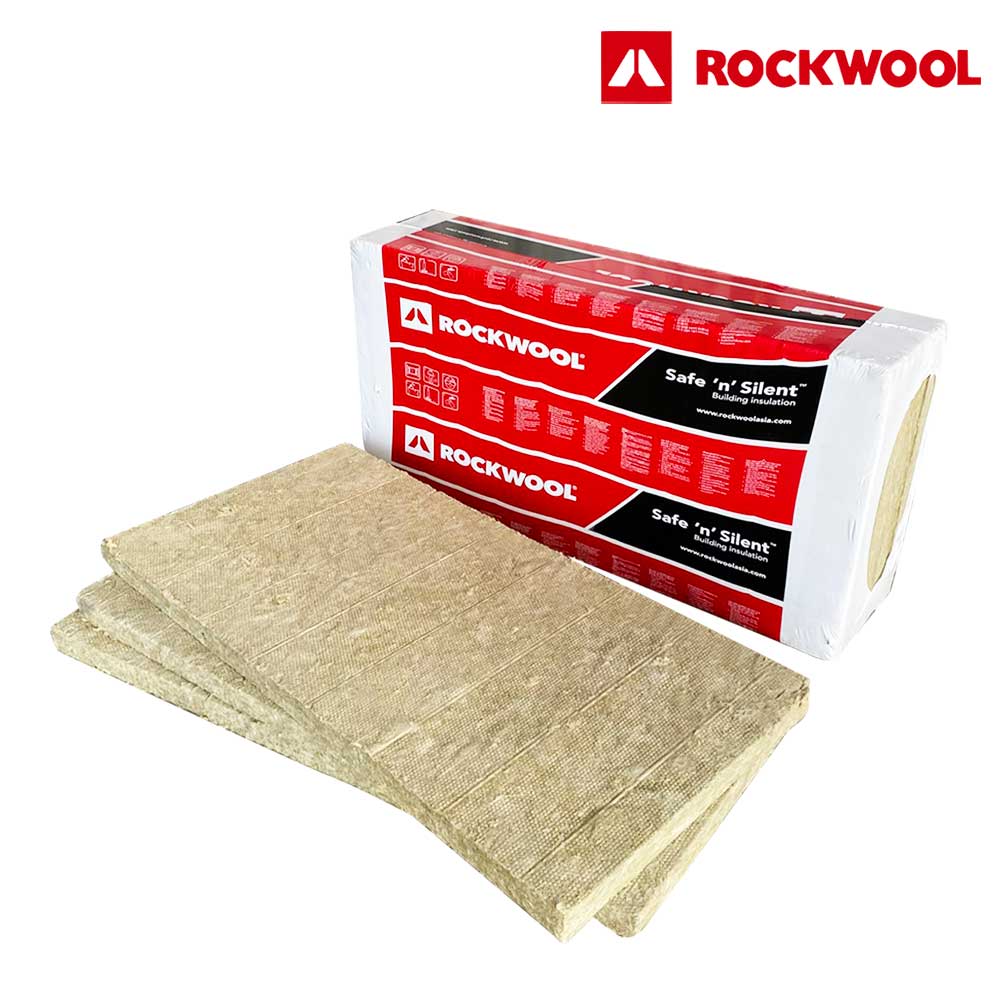
ROCKWOOL Safe 'n' Silent Pro
- Thickness
- 25–100 mm
- Density
- 40–100 kg/m³
- Sound absorption (NRC)
- 0.90–1.00
Sound coming in or going out (sound insulation)
Echoey rooms (sound absorption)
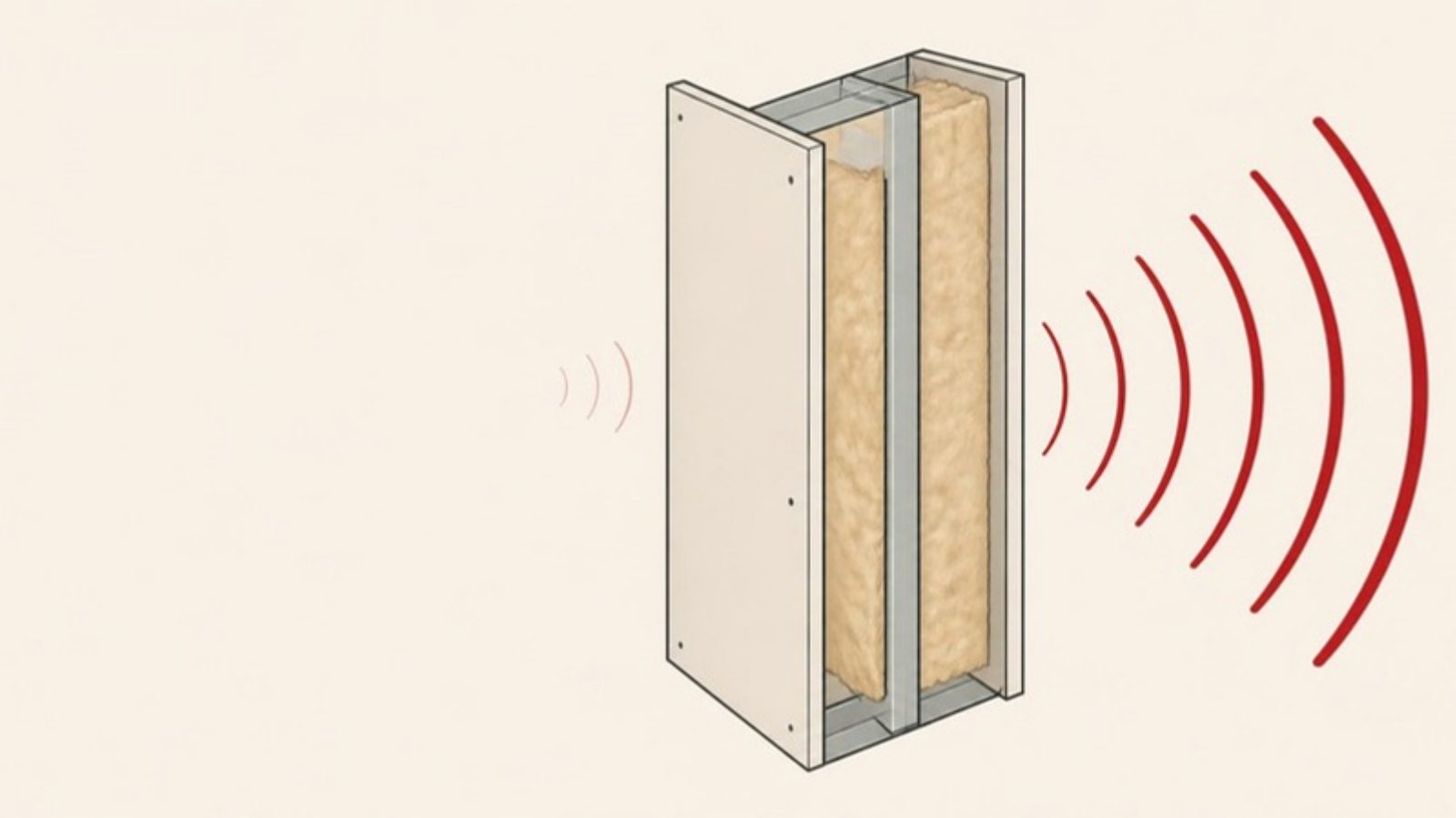
A drywall or double-leaf wall has an air cavity in the middle. Sound that gets through the first board bounces around the cavity and drives the board on the other side. Glass wool or stone wool in the cavity absorbs part of that energy, so less sound reaches the far side. It works fully only when the wall system is right — the two faces are not rigidly connected, there is enough mass, and there are no leaks. That is why an STC or Rw belongs to the whole tested wall, not to the insulation.
A lightweight wall has boards on both sides (e.g. gypsum board or fibre-cement board), framing, and an air cavity. Sound passes through it in two main ways:
Cavity insulation reduces the first path. The second has to be dealt with by the framing design: double studs, staggered studs, or resilient channels.
Research by the National Research Council Canada (NRC), which tested more than 250 gypsum board walls, found that:
The SCG Cylence ZoundBlock installation guide shows a wall of one layer of 8 mm SCG SmartBoard on each side of C64/U66 steel framing (82 mm overall) at STC 41 without insulation and STC 48 with ZoundBlock S050 in the cavity. These figures belong to that wall only; change the boards, framing or cavity and the result changes. The guide does not say whether they are laboratory test results or calculated values.
A wall's sound insulation depends on several things at once:
Insulation is only one of these five. If another is weak — an opening, or sound going round via the ceiling — adding insulation helps only a little. See Sound transmission and flanking.
An STC or Rw shown next to an insulation product is the rating of a wall system described in the document. To claim that figure on a project, build the wall to those details. More in What are STC and Rw.
Before installing, read What to know before insulating a drywall partition.
See solutions: Noise from next door / neighbours · Machine noise
Categories and example products for this topic
Sound insulation · Stone wool
Sound insulation · Glass wool
Check the message below, then press “Open LINE”. On a phone LINE opens with this message; on a computer LINE shows a QR code to scan with your phone. If LINE does not open, copy the message into the chat, or call us.
Add us on LINE: @x2525 · Call 062-195-1909