7 min read · Written by our team · Updated 26 Sept 2026
In short
First confirm the problem is an echoey room, not sound leaking from elsewhere. Then look at NRC and the absorption values per frequency, especially if the problem sound is low-pitched; check the thickness and test mounting; plan the area and position you will cover; and then choose a facing that suits the use. For fire, moisture and cleaning, check each product's own documents.
NRC — the average absorption over the speech range (250–2000 Hz); good for a first comparison. See What is NRC
Absorption per frequency (α) — if the problem is low-pitched, such as music, machinery or a room that booms, also look at 125 and 250 Hz. Two products with the same NRC can absorb bass quite differently
Other figures you may see — some documents give SAA (ASTM C423) or αw with Class A–E (ISO 11654). These summarise absorption in different ways; don't compare numbers across systems directly
3. Thickness and air gap behind
Absorption depends not only on the material but also on its thickness and mounting.
Thicker porous material usually absorbs low frequencies better, which is why many manufacturers list NRC by thickness
An air gap behind the material — mounted on battens or used as a ceiling — usually increases low-frequency absorption
ASTM E795 defines how specimens are mounted for testing, e.g. laid directly against a surface (Type A) or with an air space (such as E-400). NRC values from these two mountings can't be compared directly
Compare products at the same thickness and the same test mounting, and install them as close as possible to how they were tested.
4. How much, and where
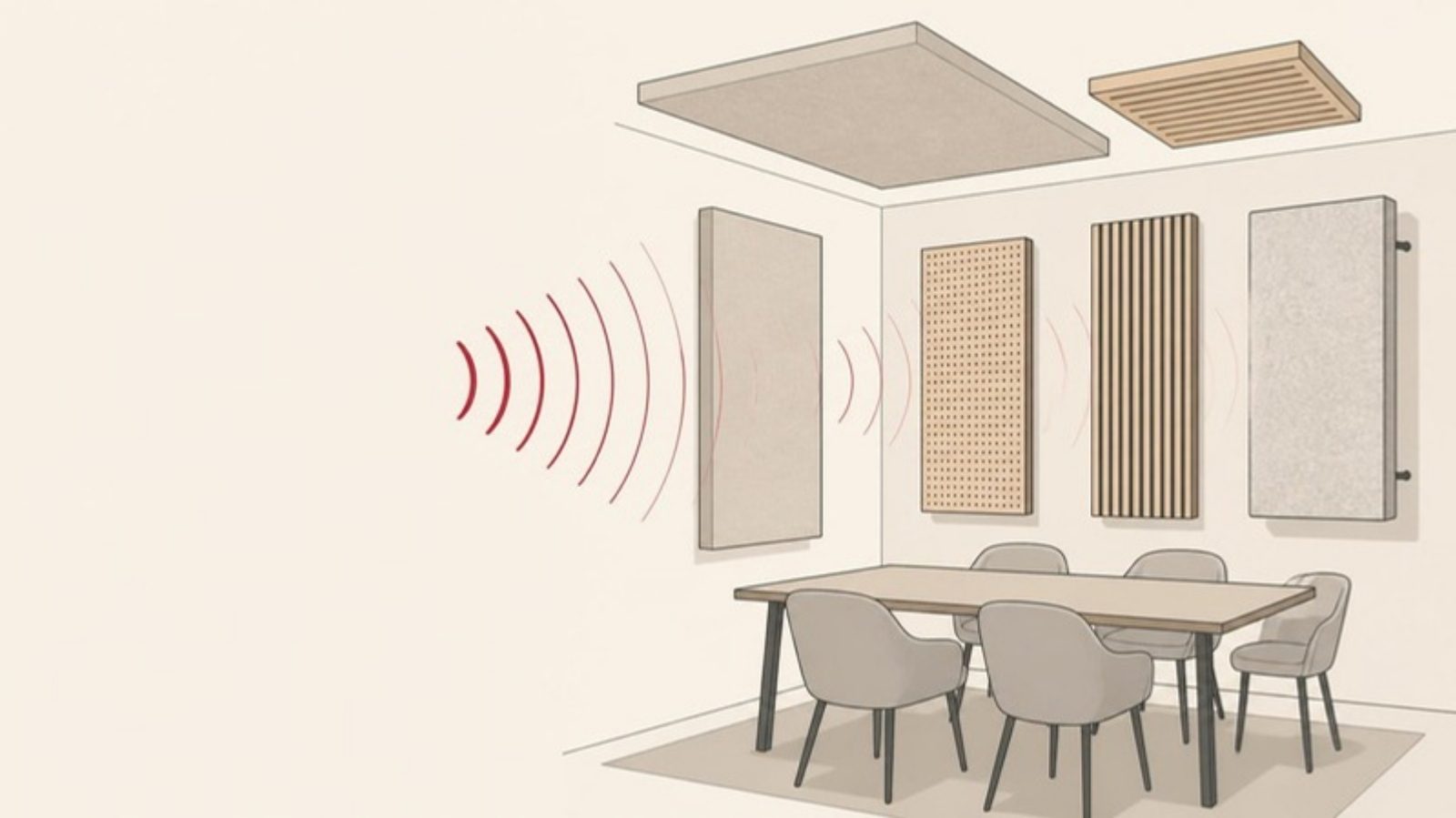
Area matters — the effect on reverberation depends on the total absorption area (absorption × area). A few panels in a large room may change little
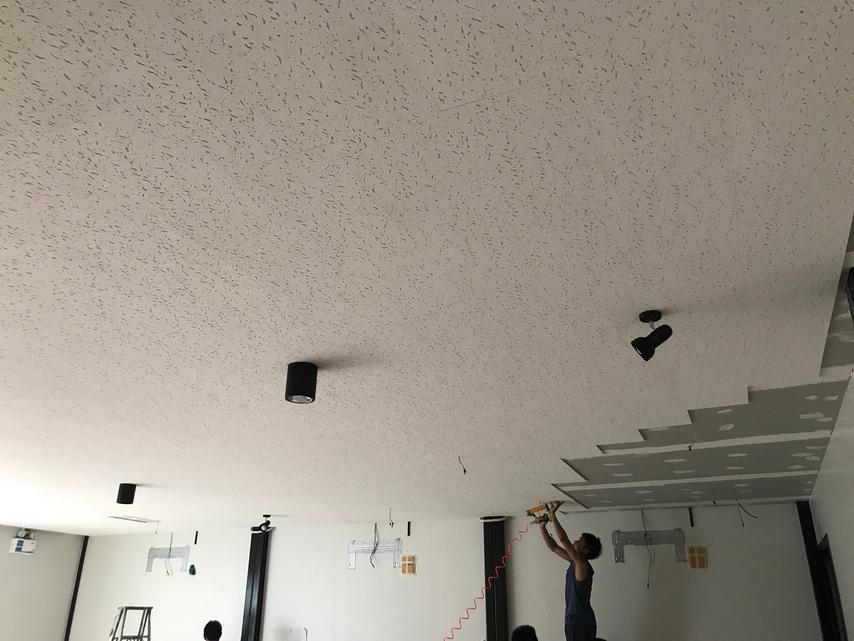
Ceilings — a large surface rarely blocked by furniture, so a common choice
Parallel walls — if there is flutter echo between two hard walls, treat at least one of them
Rooms with defined requirements, such as large meeting rooms or recording rooms, should be calculated by an acoustic consultant
5. Facing and appearance
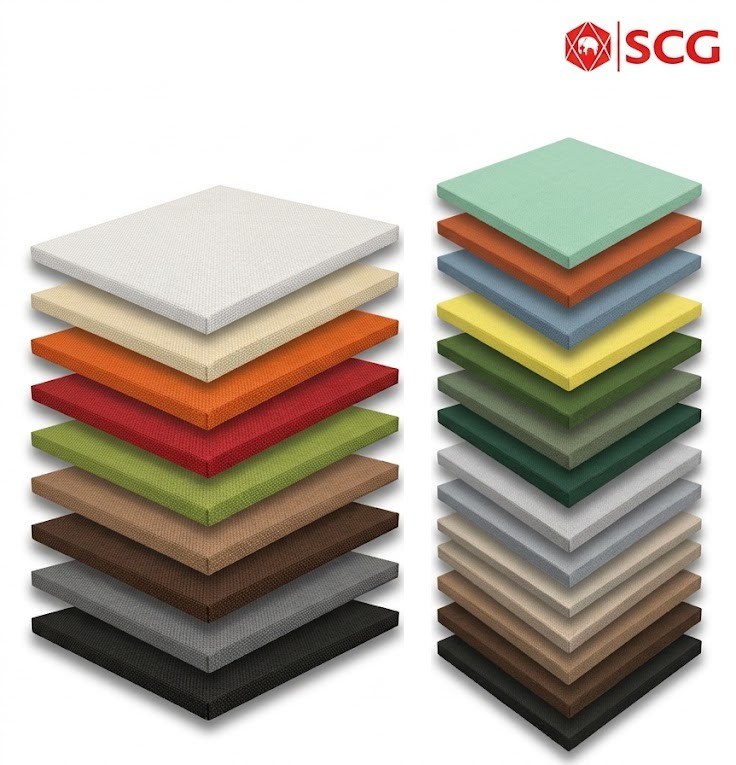
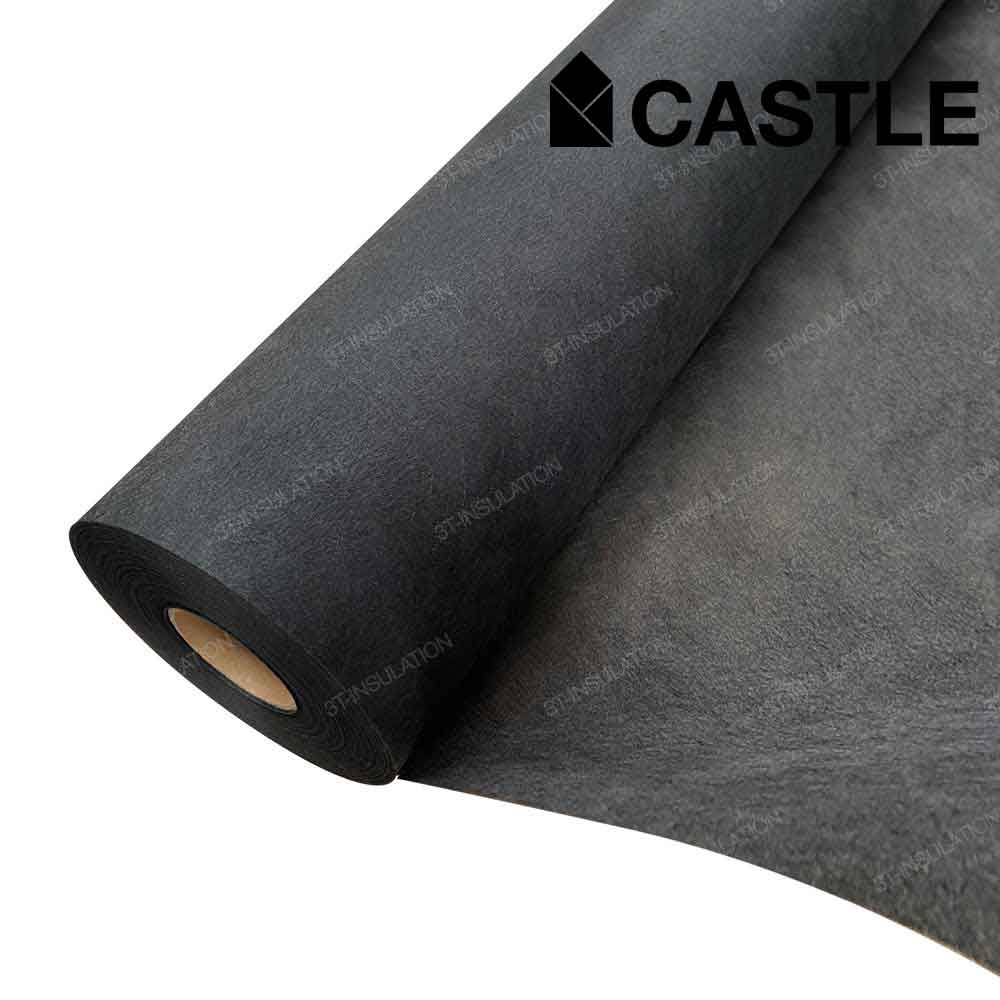
Fabric or glass-tissue facings, such as Castle Black Glass Tissue, cover the fibres and give a neat surface
A facing over the material (fabric, perforated foil, paint) can change its absorption. Check whether the published values were measured with that facing, and don't paint over a surface sound must pass through unless the manufacturer says it is fine
Ducts are a separate case: use duct liners designed for airflow, such as Microfiber PFL or Aeroflex Acoustex, as the HVAC designer specifies
6. Fire, moisture and care — check the datasheet
Fire behaviour — interior finishes may be subject to building regulations or project requirements; check the test results and standards stated in the documents. See Fire performance terms
Moisture and location — for humid rooms or semi-outdoor areas, check that the product is suitable
Cleaning — each facing is cared for differently; follow the manufacturer's instructions
Installation — use the fixing, adhesive or framing the manufacturer recommends
Don't choose on NRC alone
A higher NRC is not always the better choice. Consider the frequency of the problem, thickness, mounting, installed area and the project's fire requirements together.
Check the message below, then press “Open LINE”. On a phone LINE opens with this message; on a computer LINE shows a QR code to scan with your phone. If LINE does not open, copy the message into the chat, or call us.