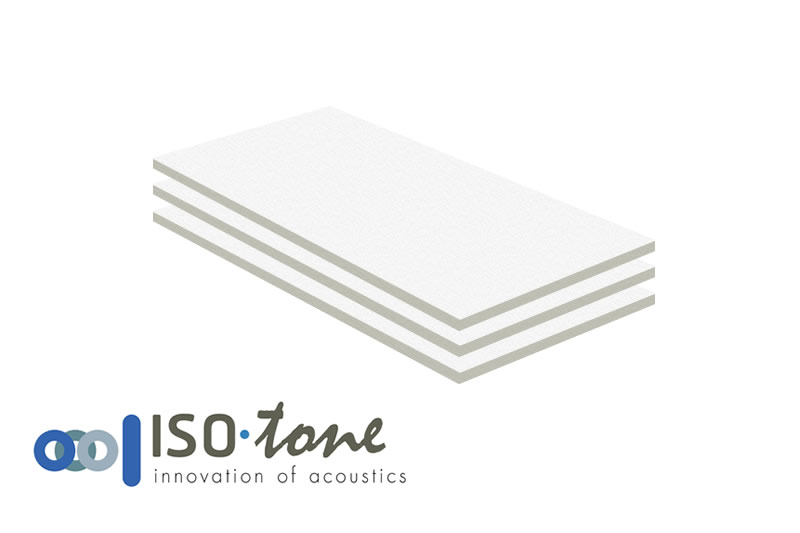
Sound absorption · Glass wool
SCG Cylence Zoftone
- Thickness
- 25–50 mm
- Density
- 32–64 kg/m³
- Sound absorption (NRC)
- up to 1.00
Sound coming in or going out (sound insulation)
Echoey rooms (sound absorption)
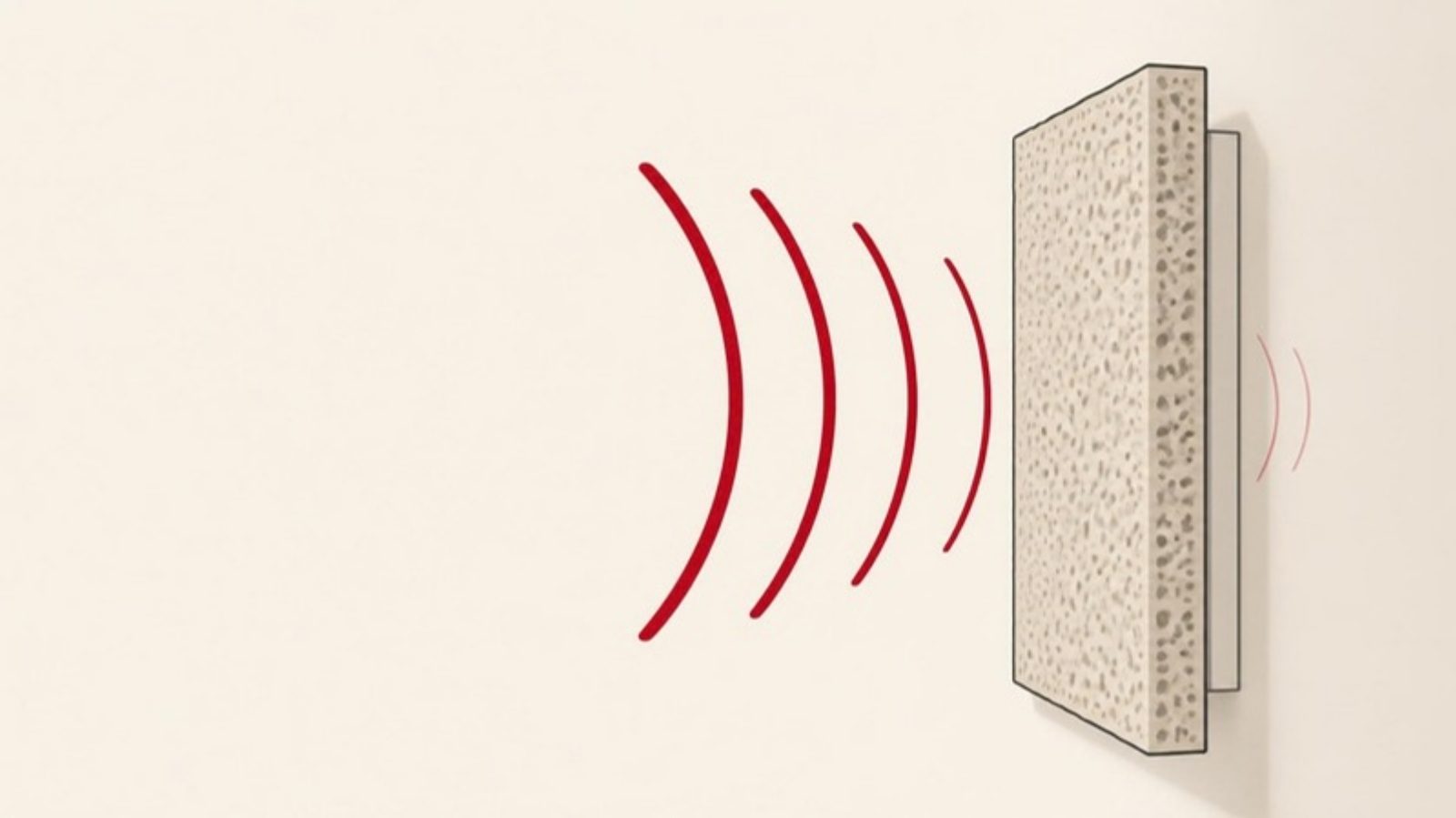
NRC (noise reduction coefficient) is a single number that tells you how much a material absorbs sound in the speech range. It is the average of the sound absorption coefficients at 250, 500, 1000 and 2000 Hz. Close to 0 means almost everything is reflected; close to 1 means almost everything is absorbed. NRC does not tell you how well a material blocks sound through a wall.
How well a surface reduces reflections inside a room. Use it to compare absorption panels, acoustic ceilings and other materials used against echo.
Average the absorption coefficients (α) at the four frequencies and round to the nearest 0.05, as set out in the test standard (for example ASTM C423).
| Frequency | 250 Hz | 500 Hz | 1000 Hz | 2000 Hz | NRC |
|---|---|---|---|---|---|
| --- | --- | --- | --- | --- | --- |
| α (made-up example) | 0.40 | 0.80 | 0.95 | 0.90 | 0.75 |
A made-up example to show the method, not a real product: (0.40 + 0.80 + 0.95 + 0.90) ÷ 4 = 0.7625, rounded to 0.75.
Blocking sound through a wall is rated by the STC or Rw of the whole wall system — a different thing from NRC. See Sound insulation vs sound absorption.
Categories and example products for this topic
Sound absorption · Glass wool
Sound absorption · Polyester fibre
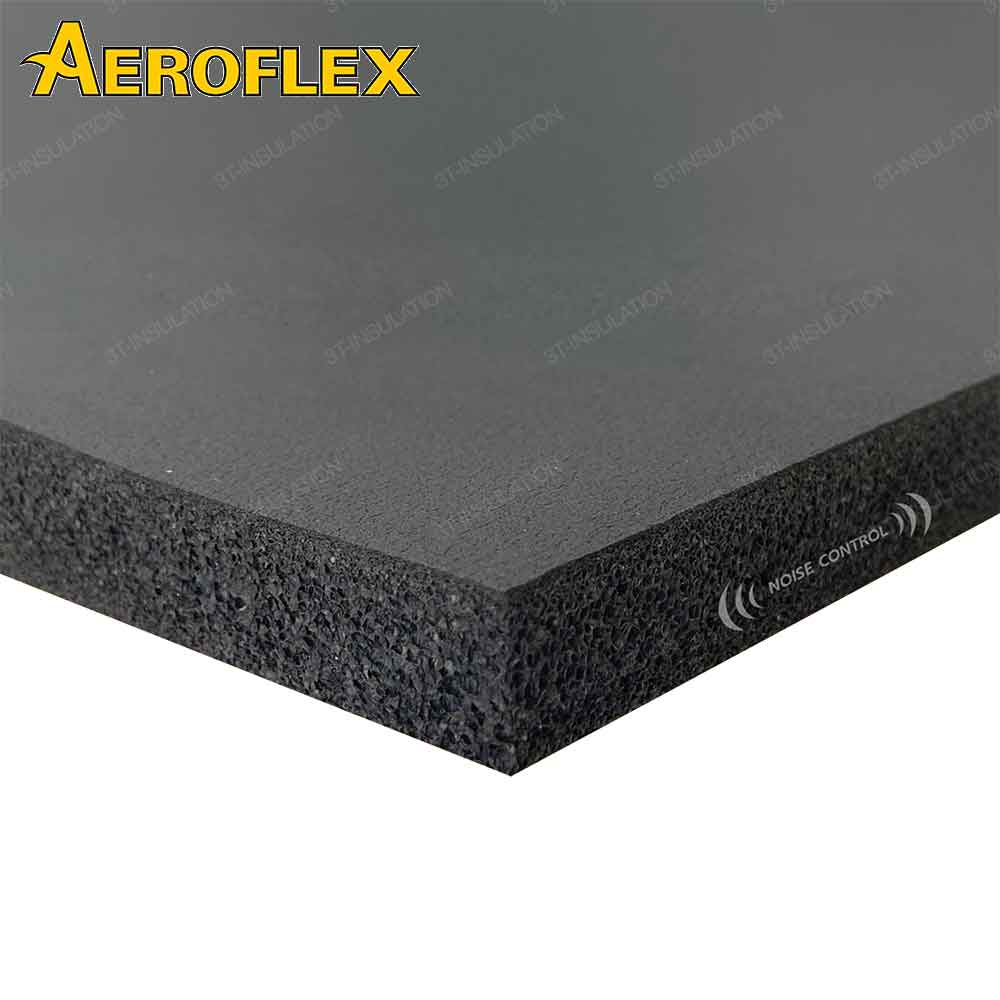
Duct and HVAC insulation · Acoustic foam
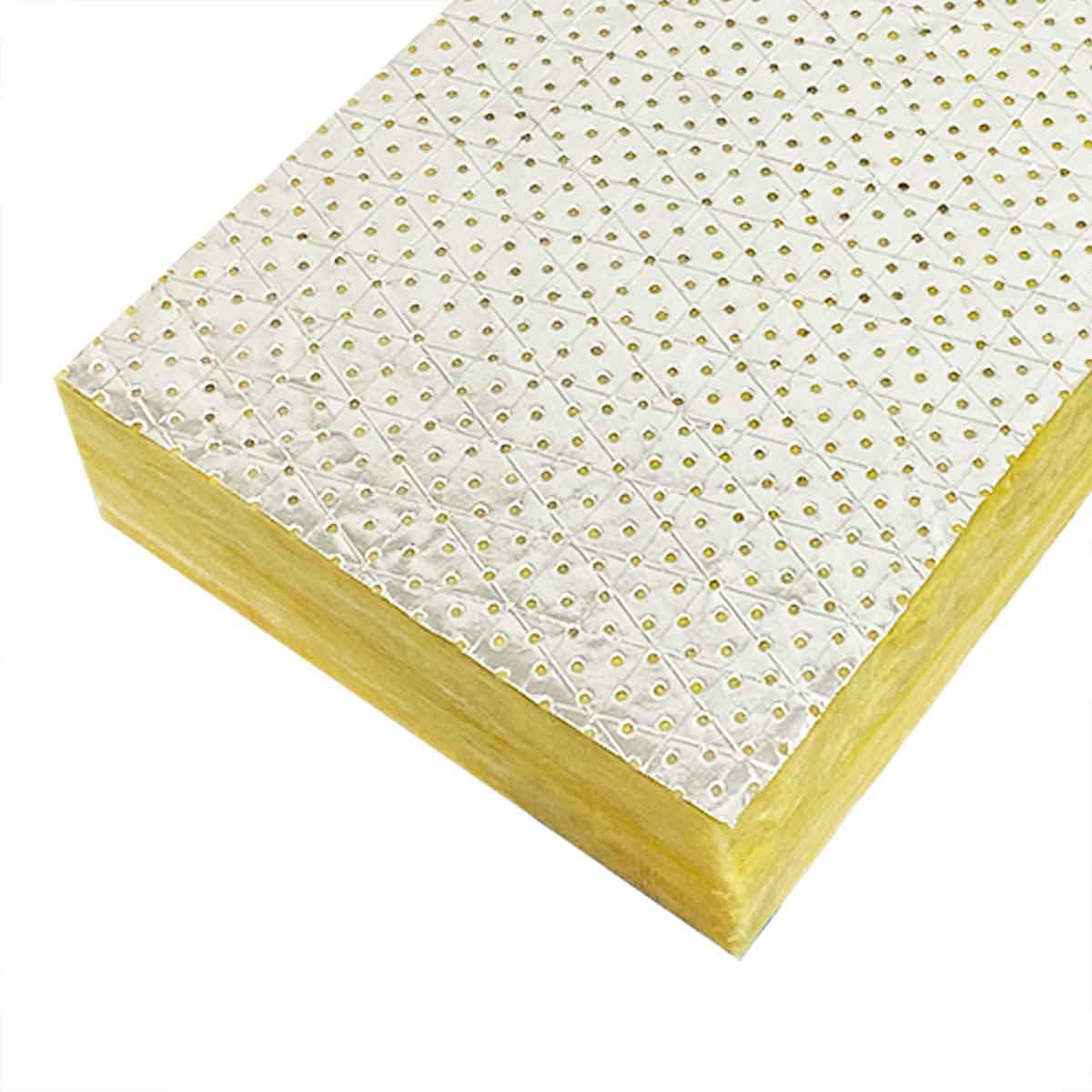
Duct and HVAC insulation · Glass wool
Check the message below, then press “Open LINE”. On a phone LINE opens with this message; on a computer LINE shows a QR code to scan with your phone. If LINE does not open, copy the message into the chat, or call us.
Add us on LINE: @x2525 · Call 062-195-1909