Building thermal insulation · Glass wool
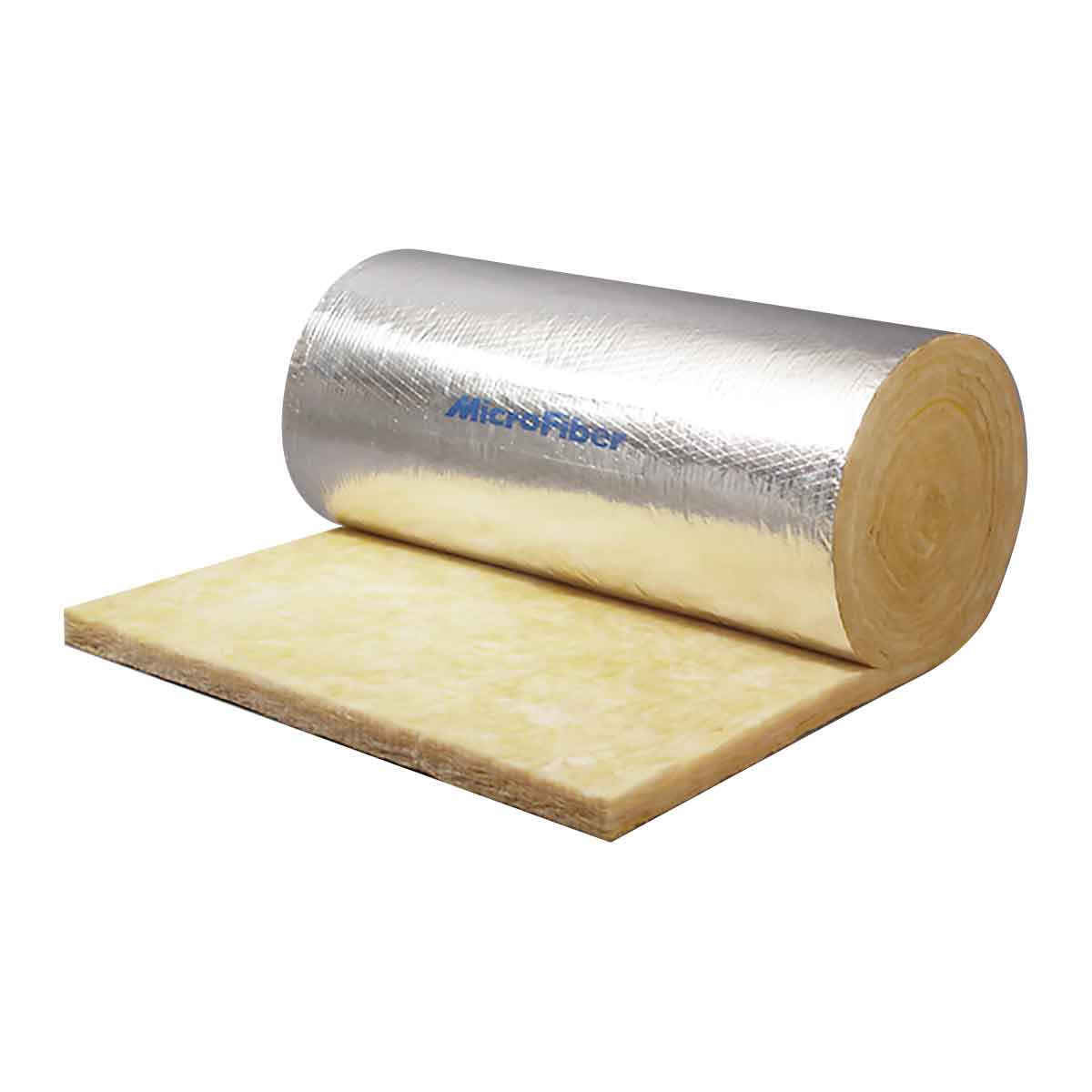
Microfiber MicroRoof FLS
- Thickness
- 25–75 mm
- Density
- 12–48 kg/m³
- Thermal conductivity (λ)
- 0.032–0.042 W/m·K
Sound coming in or going out (sound insulation)
Echoey rooms (sound absorption)
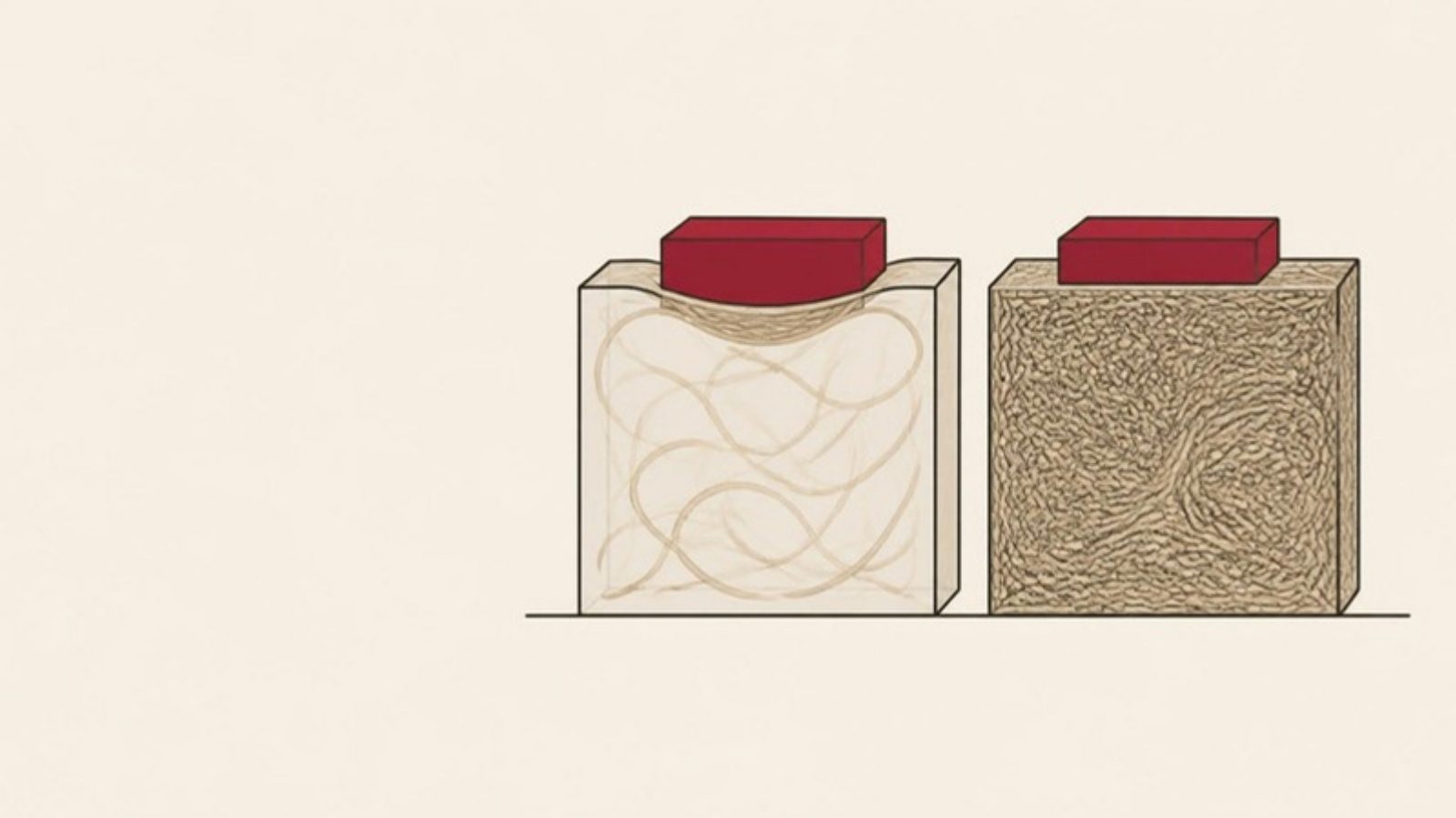
Density is the mass of insulation per unit volume, in kg/m³. It tells you how tightly the material is packed and affects stiffness, compression resistance, weight and, in some uses, acoustic behaviour. But higher density does not always mean better insulation. Compare products using the property that matches the job — for heat, the R-value at the thickness you will actually install.
Density is the weight of a sample divided by its volume. For flexible fibrous blankets and batts there are dedicated test methods for thickness and density, such as ASTM C167, because the thickness of a soft material changes with the pressure applied while measuring it. Manufacturers use density for production quality control and to separate product grades.
In fibrous insulation, heat passes through the fibres, through the air between them and by radiation. As fibres pack more tightly, less heat radiates through, but more is conducted along the fibres, so the net effect does not always go one way. Examples from published documents:
| Source | Density range | Reported λ |
|---|---|---|
| --- | --- | --- |
| Microfiber MicroRoof (FLS), glass wool | 12 / 16 / 24 / 32 / 48 kg/m³ | 0.042 / 0.038 / 0.035 / 0.033 / 0.032 W/m·K (24 °C mean, ASTM C518) |
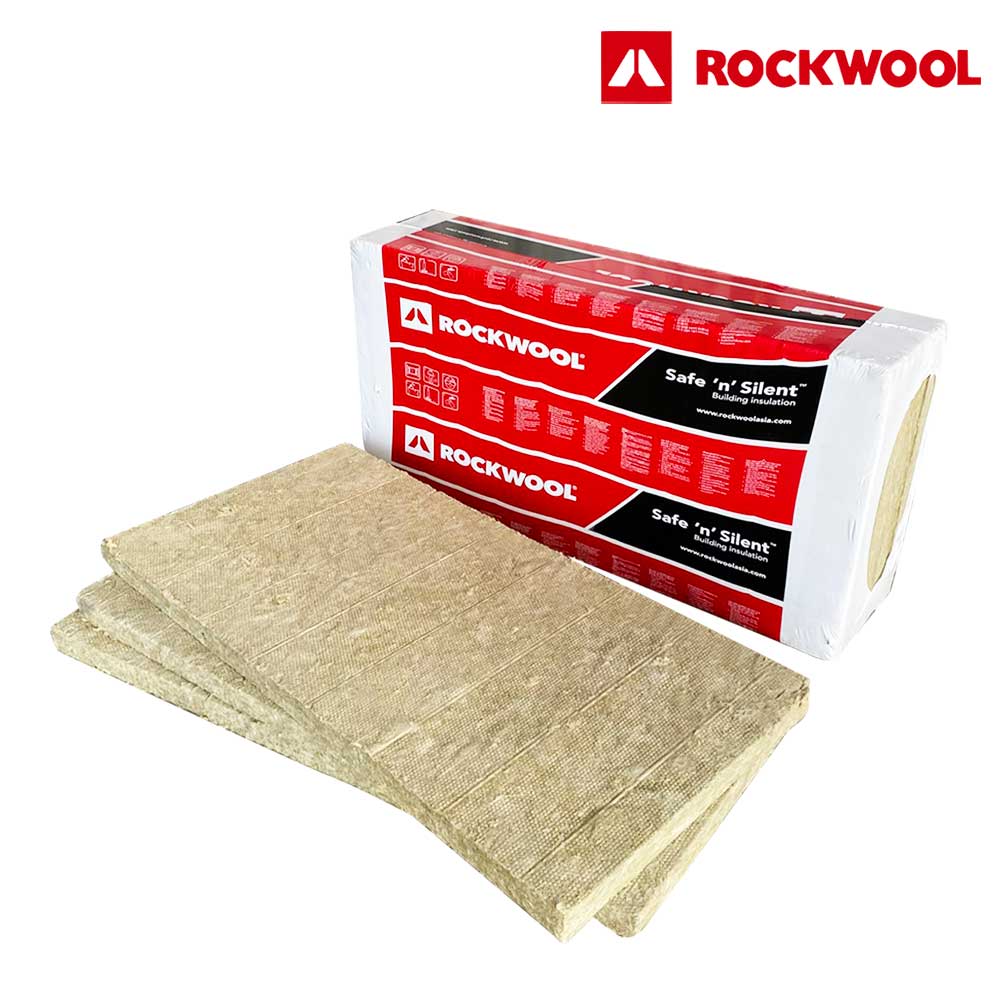
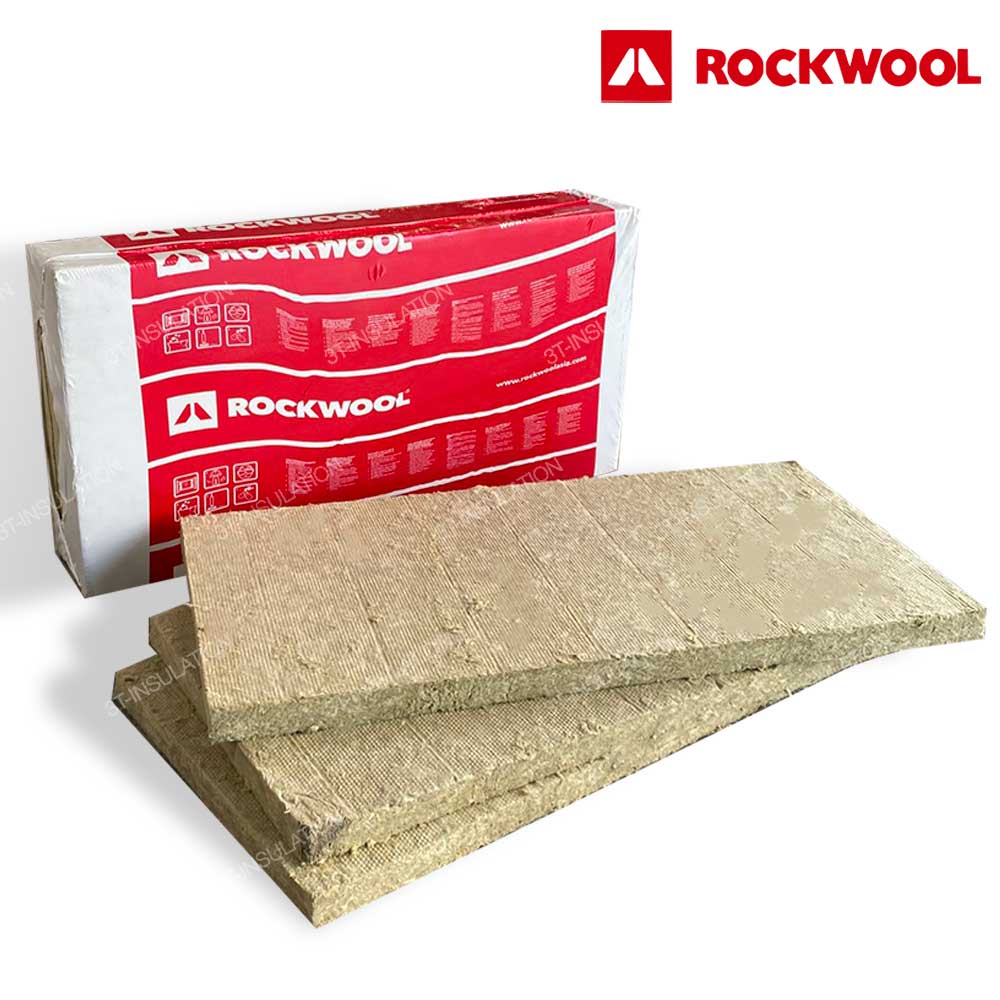
| ROCKWOOL Safe 'n' Silent Pro, stone wool | 40 / 60 / 80 / 100 kg/m³ | 0.036 / 0.035 / 0.034 / 0.033 W/m·K (20 °C, ASTM C518) |
| NIST reference material SRM 1450 (fibrous glass board) | about 60–180 kg/m³ | λ rises slightly as density increases |
In the first two examples λ falls as density rises, and falls less and less at the higher densities. The NIST data, covering a higher density range, show λ rising slightly instead. So do not conclude that "denser always insulates better" — check the λ of the actual product in its documents.
R-value = thickness ÷ λ. From the MicroRoof FLS table at 24 °C mean:
In this example the lighter but thicker roll gives the higher R-value. For thermal work, compare R-values at the thickness you can actually install. See Insulation thickness.
Sound insulation ratings STC / Rw belong to the whole wall system. Research on gypsum board walls by the National Research Council Canada found that the type of sound-absorbing material in the cavity has a relatively minor effect compared with isolating the two wall faces, the mass of the boards and the cavity depth. A denser infill therefore does not automatically make a wall block more sound. Use the density and thickness specified in the manufacturer's tested wall system. See How cavity insulation helps sound insulation.
The stated density is that of the product before installation. If fibrous insulation is squeezed thinner during installation, its density rises but its total R-value falls. See Gaps and compression.
Categories and example products for this topic
Building thermal insulation · Glass wool
Sound insulation · Stone wool
Sound insulation · Glass wool
Building thermal insulation · Stone wool
Check the message below, then press “Open LINE”. On a phone LINE opens with this message; on a computer LINE shows a QR code to scan with your phone. If LINE does not open, copy the message into the chat, or call us.
Add us on LINE: @x2525 · Call 062-195-1909