How do you fix a hot west-facing wall?
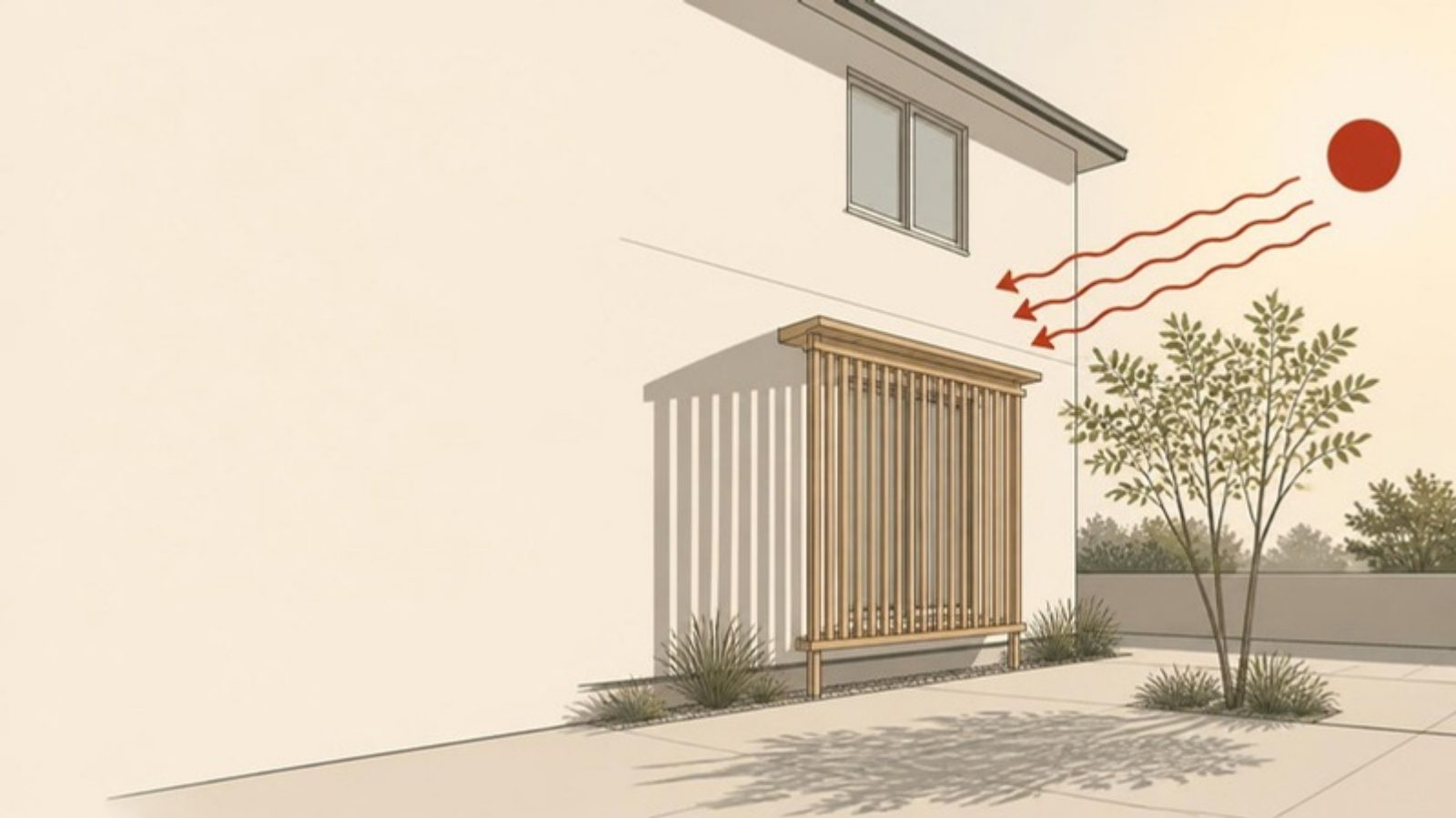
A west wall is hot because it takes low-angle afternoon sun for hours during the hottest part of the day. The wall soaks up heat and keeps passing it into the room until evening. The measures that work, in order, are shade the wall from outside first, then add a lightweight inner lining with an air gap, insulation and a reflective layer — and do not forget the windows in the same wall. The result is a cooler inside wall surface and less work for the air-conditioner, not a room that stays cool without air-conditioning.
Why west and south walls get hot
- Low afternoon sun — from afternoon to evening the sun is low in the west and strikes the wall almost square-on; a normal roof overhang does not shade it.
- It coincides with the hottest air of the day — the wall takes sun and hot air at the same time.
- Brick and concrete store heat — heavy materials absorb heat in the afternoon and release it into the room in the early evening, just when people come back to use it.
- South walls — in Thailand the sun tracks across the southern sky for several months a year, so south walls receive long hours of sun in that period.
How heat gets through a wall
Sun on the outer face makes the wall hotter than the air. Heat travels through the wall by conduction. As the inner face warms up, the wall radiates heat onto people and objects in the room and warms the room air. Someone sitting or sleeping near the wall feels hot even when a thermometer shows a moderate air temperature. For the basics see how heat enters buildings.
Windows in the same wall often let in more heat than the solid wall, because sunlight passes straight through the glass. If the wall has large windows, both need treatment.
Step 1: shade from the outside
Keeping the sun off the wall works at the source — the wall never heats up in the first place.
- Trees and climbers on a trellis — on the west side, trees with low foliage suit best because they must block low-angle sun. Keep them clear of the wall so that moisture and roots do not become a problem.
- Vertical fins, screens, awnings, external blinds — vertical devices suit east and west faces better than an overhang alone.
- A second outer skin with a ventilated gap — battens or cladding fixed away from the existing wall.
- Light-coloured outer finish — light surfaces absorb less solar heat than dark ones.
Step 2: add an inner lining with an air gap, insulation and a reflective layer
When outside shading is not possible or not enough, add a lightweight lining on the inside, made up of:
- An air gap between the existing wall and the new layer.
- A reflective sheet with its foil surface facing the air gap — foil cuts radiation from the hot wall across the gap, but it does not do this if it is pressed against the wall or sandwiched by insulation on both sides. See reflective foil.
- Insulation in the frame cavity — it slows conducted heat; the effect depends on the R-value at the thickness that actually fits.
- A facing board, such as gypsum or fibre cement.
Fill the cavity completely, leaving no gaps and not stuffing the insulation until it is crushed — see gaps and compression. Steel framing touching the hot wall can become a shortcut for heat — see thermal bridges. For an overview of wall insulation see how to choose wall insulation.
Which materials to use
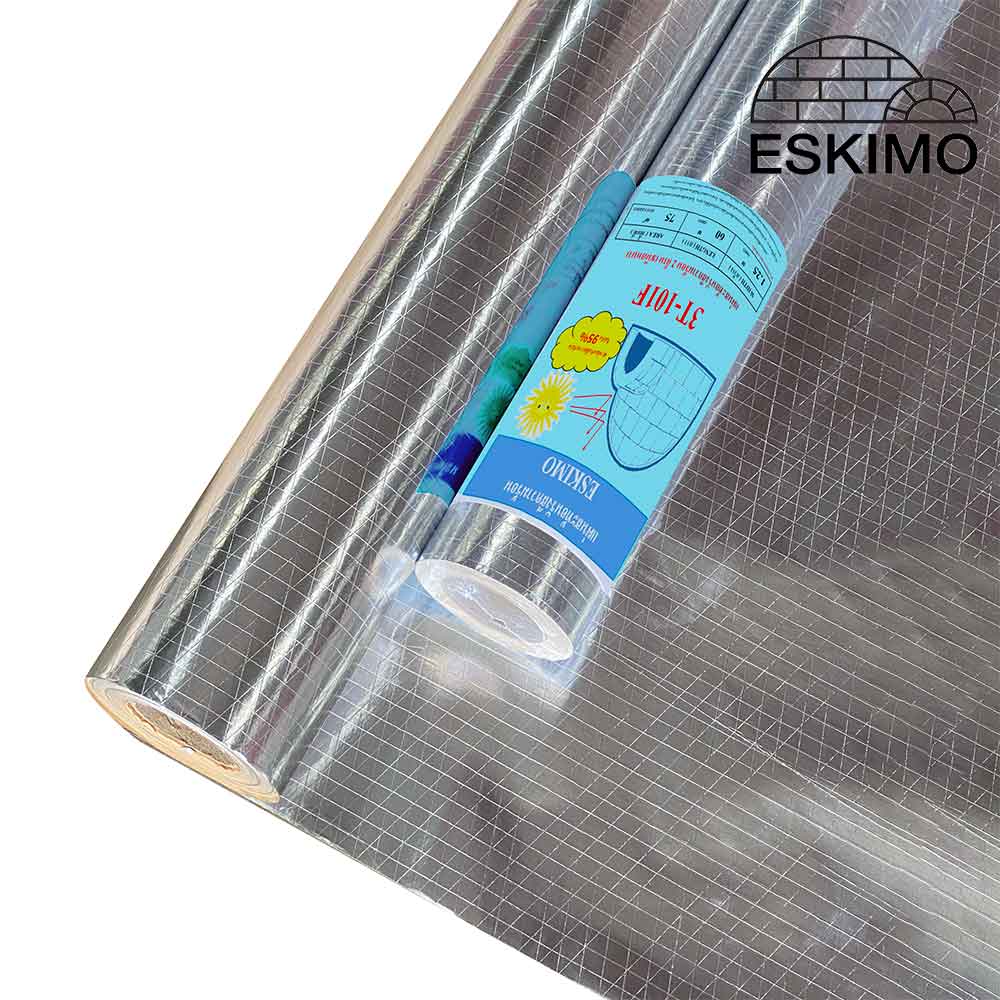
- Reflective sheet with foil on both sides — ESKIMO FOIL 101F, glass-fibre reinforced, used in wall cavities or together with other insulation.
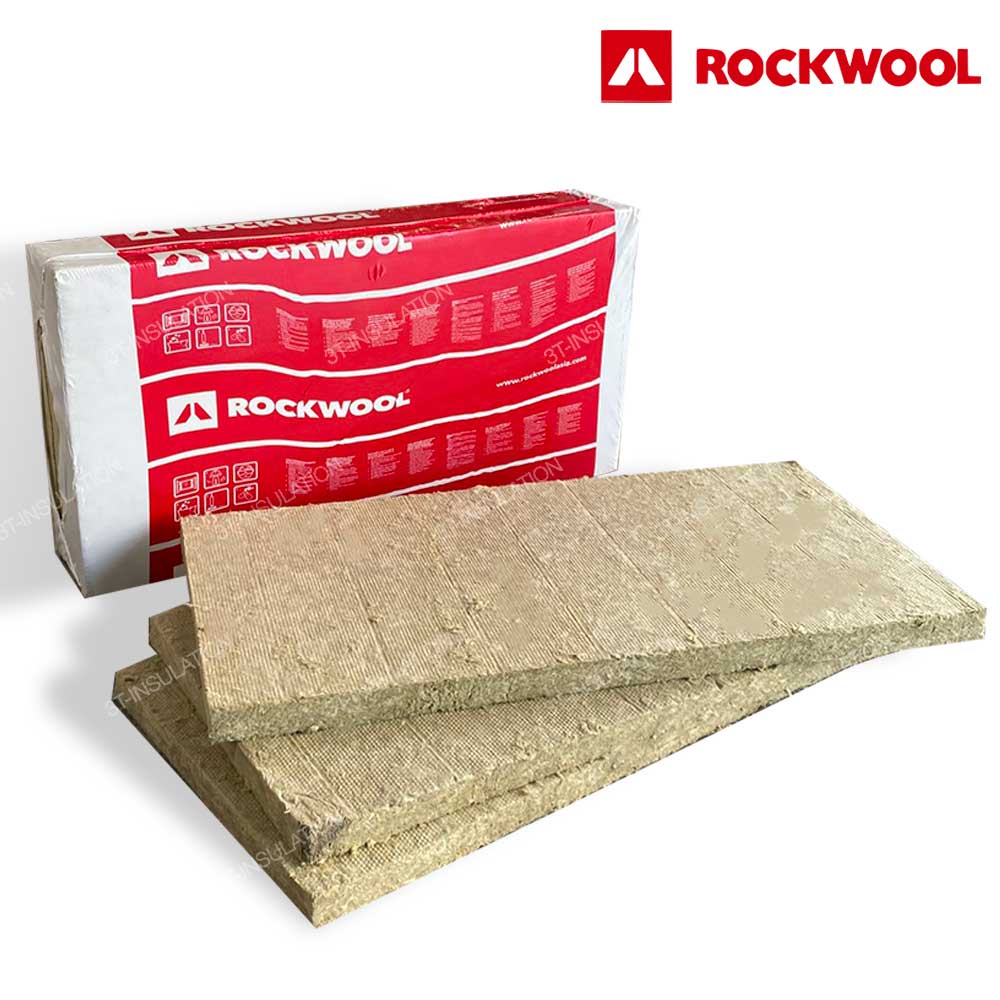
- Stone wool slab — ROCKWOOL Thermalrock S, fitted in the frame cavity; several densities, unfaced or foil-faced.
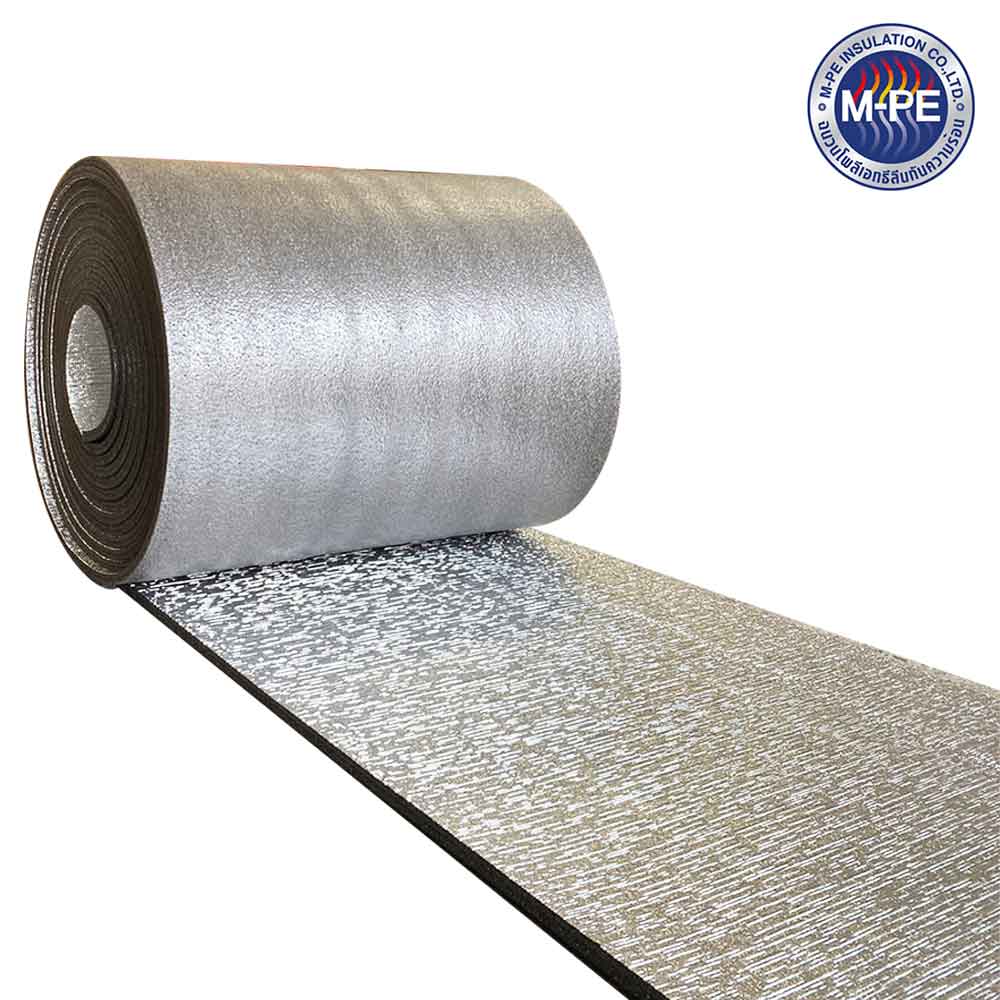
- PE foam with metalized film — M-PE (Standard), thin and light, suited to walls with little room for a lining.
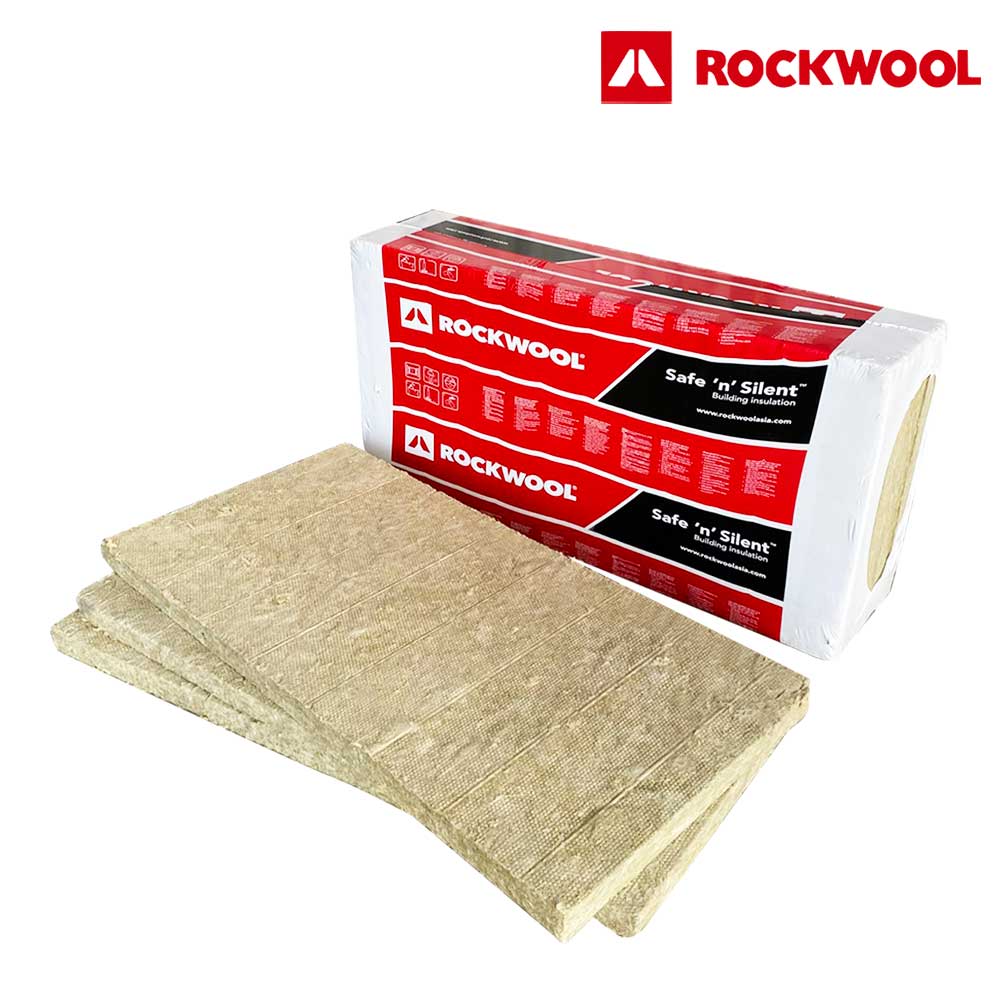
- If you also need sound insulation — a west wall facing a road, for example — use stone wool made for lightweight wall cavities, ROCKWOOL Safe 'n' Silent Pro, whose documentation also gives its thermal conductivity. The acoustic result belongs to the whole wall system; see STC / Rw.
Watch moisture in air-conditioned rooms
In a hot-humid climate, water vapour moves from the hot, humid outside towards the cool air-conditioned room. Foil and film are also vapour barriers. If a vapour-tight layer is placed against the inside of an air-conditioned room's wall, or there are vapour-tight layers on both sides of the insulation, moisture can stay in the wall and mould can grow. Building-science sources recommend that a wall should still be able to dry in at least one direction. Discuss the position of the foil with the designer, and repair any water leakage before covering the wall. See vapour barrier.
What to expect
- A cooler inner wall surface, less stuffy heat in the evening, and an air-conditioner that reaches its set temperature sooner.
- The effect on the electricity bill depends on what share of the room's heat comes through that wall. If the roof or windows are the main path, treating the wall alone will show little. See how insulation saves air-conditioning energy.
- A lining takes up room space equal to the depth of the frame and insulation.
- There is no temperature drop that applies to every house; it depends on the existing wall material, colour, shading and how the room is used.
Sources
- U.S. Department of Energy, Energy Saver — Consumer Guide to Home Landscaping (shading the west side and its effect on cooling load)
- Florida Solar Energy Center (FSEC) — Techniques for Shading Residential Walls and Windows (FSEC-DN-8-86)
- Florida Solar Energy Center (FSEC) — Radiant Barriers: A Question and Answer Primer
- Building Science Corporation — BSD-011: Thermal Control in Buildings
- Building Science Corporation — BSD-106: Understanding Vapor Barriers
Related products
Categories and example products for this topic
- ESKIMO FOIL 101F — Two-sided foil reflective sheet, glass-fibre reinforced, usable in wall cavities
- ROCKWOOL Thermalrock S — Stone wool slab in several densities, unfaced or foil-faced
- M-PE (Standard) — Closed-cell PE foam with metalized film, for roofs, ceilings and walls
- ROCKWOOL Safe 'n' Silent Pro — Stone wool for drywall cavities when sound matters too; λ is published
Building thermal insulation · Stone wool
ROCKWOOL Thermalrock S
- Thermal conductivity (λ)
- 0.034–0.036 W/m·K
- Sound absorption (NRC)
- 0.90–1.05
Building thermal insulation · PE foam
M-PE M-PE (Standard)
- Thickness
- 3–20 mm
- Density
- 35–45 kg/m³
- Thermal conductivity (λ)
- 0.029 W/m·K
Sound insulation · Stone wool
ROCKWOOL Safe 'n' Silent Pro
- Thickness
- 25–100 mm
- Density
- 40–100 kg/m³
- Sound absorption (NRC)
- 0.90–1.00