What is reflective foil (radiant barrier)?
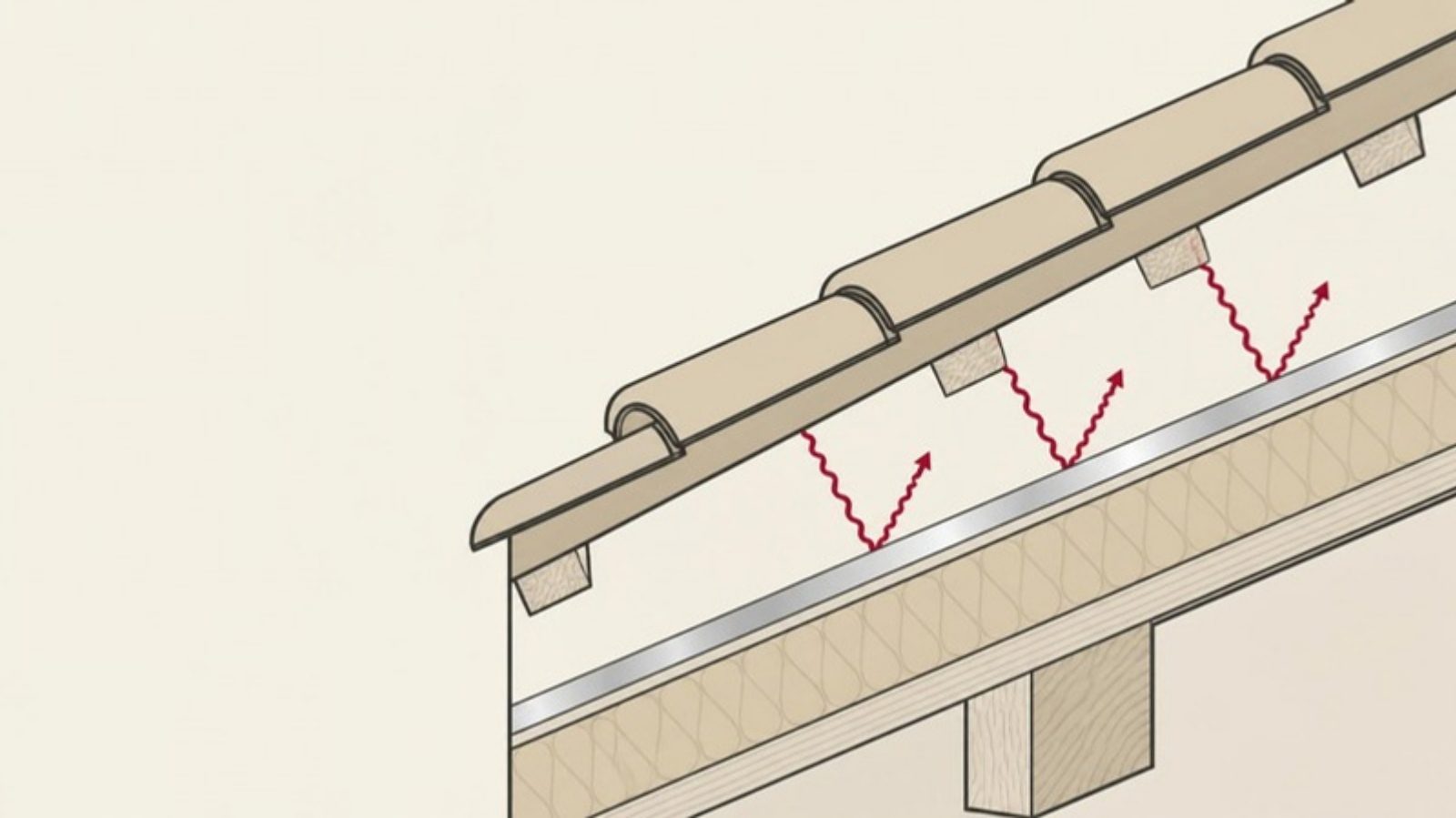
Reflective foil, or a radiant barrier, is a sheet with an aluminium-foil or shiny metallic surface that reduces radiant heat, such as heat radiated down from the hot underside of a roof. It only works when the foil surface faces an air space; if the foil is pressed tight against other materials on both sides, heat is conducted straight through. Reflective foil complements bulk or foam insulation; the two do not fully replace each other.
- 1An air space in front of the foil lets its low-emissivity surface cut radiant heat transfer
- 2Less heat comes through — foil mainly cuts radiant heat, unlike fibre or foam insulation, which cuts conducted heat
- 3Foil pressed against materials on both sides lets heat conduct straight through; the reflective surface hardly helps
Why does foil reduce heat?
Every hot surface gives off heat as radiation. An aluminium-foil surface helps in two ways:
- It reflects most radiant heat — most of the radiation that strikes the foil is reflected back.
- It emits little (low emittance or emissivity) — even when the foil itself gets hot, its surface gives off little heat towards the cooler side.
The lower the emittance, the less radiant heat the surface gives off. The U.S. Department of Energy's Building America Solution Center states that radiant barriers have an emittance below 0.1 under an ASTM test method. See the manufacturer's documents for each product's value.
Why is an air space needed?
Reflection and radiation only happen across a gap. If the foil surface is pressed against the roof sheet, ceiling board or another material with no air between them, heat is conducted easily through the thin metal and the foil does almost nothing. The working face must therefore face an air space.
A common use is under the purlins or roof structure, with the lower foil face towards the roof space, which reduces the heat radiated down to the ceiling. With single-sided foil, install the foil face the way the manufacturer specifies.
What does dust do?
Dust on the foil surface reduces its reflectance and makes the surface emit more. Upward-facing surfaces, such as foil laid flat on a ceiling facing up towards the roof, collect dust more easily than downward-facing ones. US agency guidance therefore recommends installing radiant barriers under the roof or roof structure rather than laying them flat on the attic floor. Think about dust over the long term when choosing the position.
How does reflective foil differ from bulk insulation?
| Reflective foil | Bulk or foam insulation (glass wool, stone wool, elastomeric, PE foam) | |
|---|---|---|
| --- | --- | --- |
| Mainly reduces | Radiant heat | Conduction and convection through the insulation |
| Figure to check | Surface emittance / reflectance | λ and R-value at the thickness used |
| Key condition | Needs an air space; surface must stay clean | Must be thick enough, cover the whole area, not be compressed |
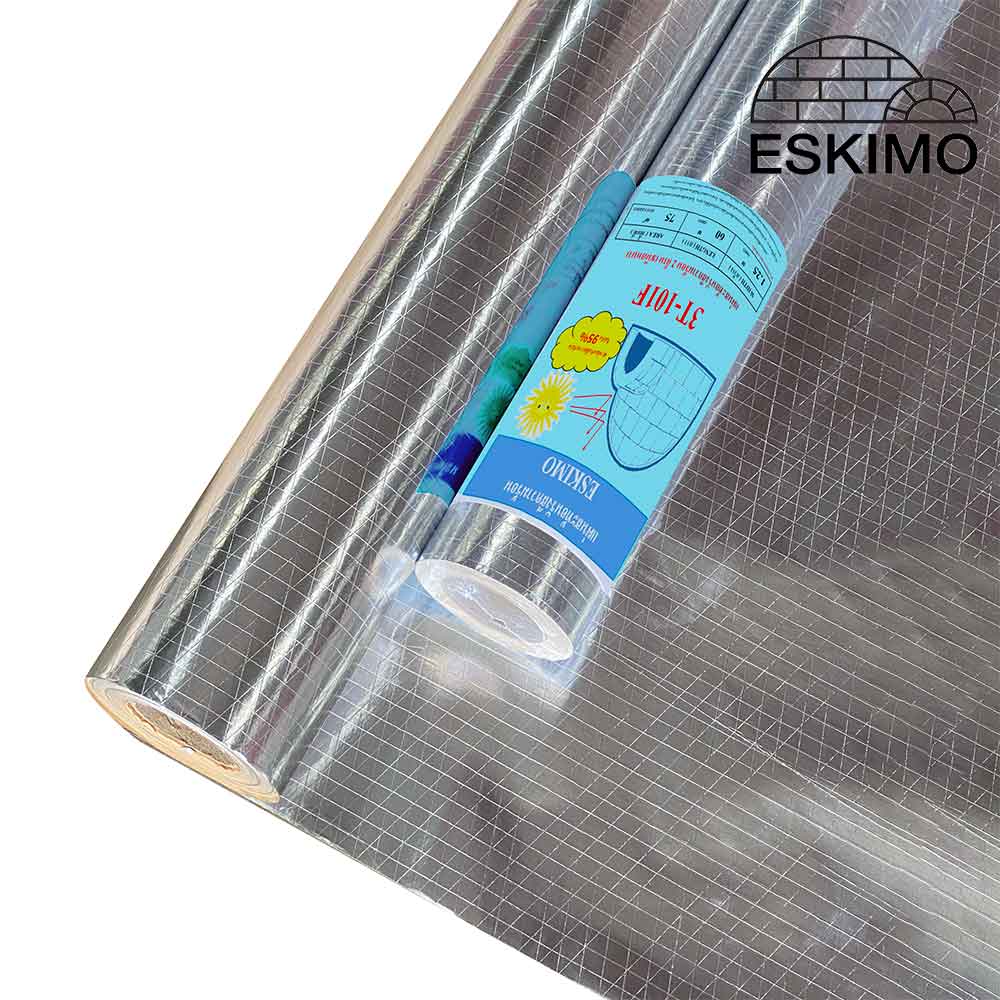
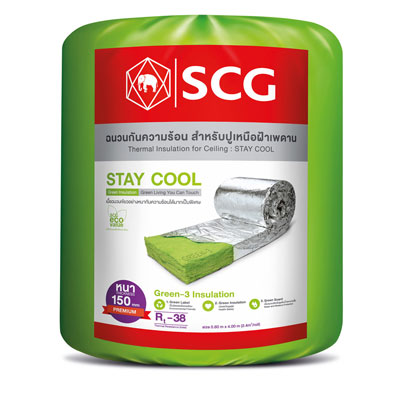
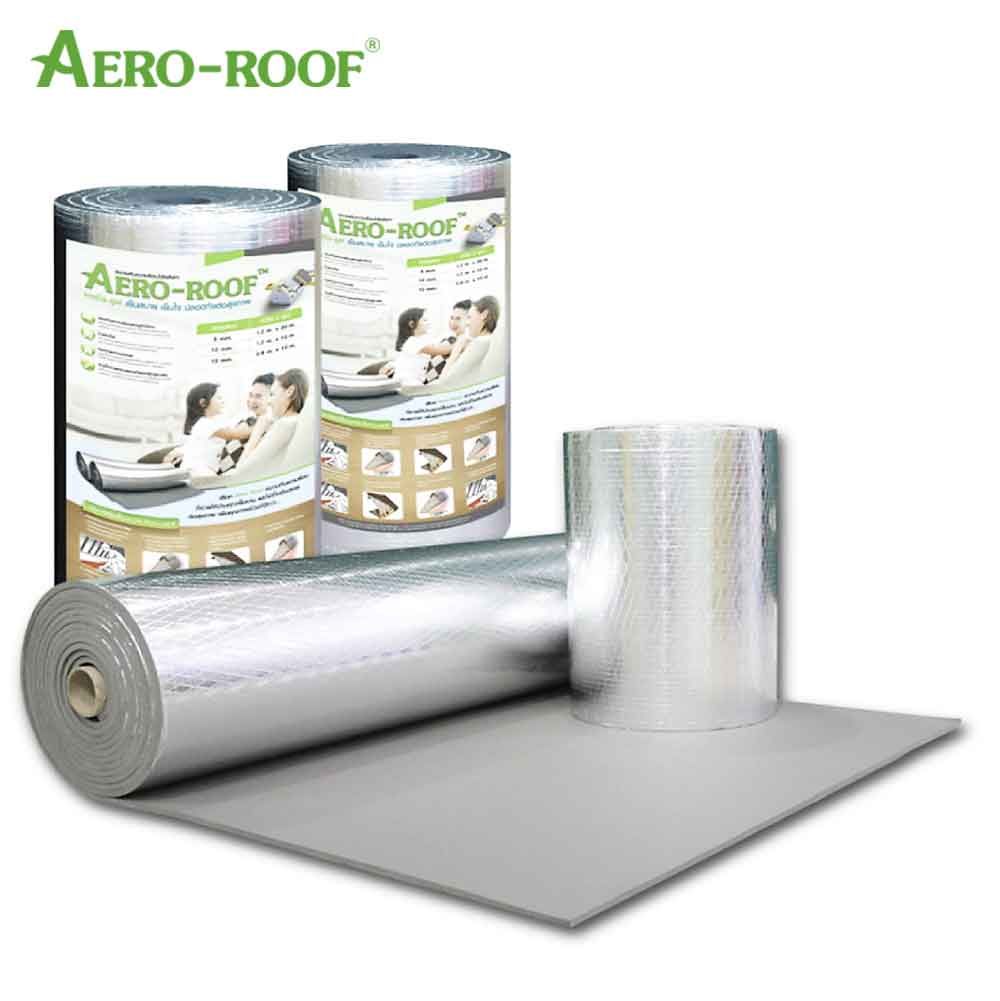
The two can be used together, and many products combine them in one sheet: foil-encapsulated glass wool such as SCG STAY COOL, foil-faced elastomeric AERO-ROOF, and PE foam with metalized film such as M-PE (Standard). Foil-only sheets such as ESKIMO FOIL 101F are used as a reflective layer or together with other insulation.
A thin foil sheet has almost no R-value from its own material; its effect depends on the air space and the direction of heat flow. If you see an R-value quoted for reflective foil, check what air-space arrangement it refers to and which standard it was measured to.
Cautions
Safety and moisture
- Foil is metal and conducts electricity. Keep it away from wiring and electrical terminals; have an electrician check work near electrical systems.
- Foil blocks water vapour. Installed on the wrong side or in the wrong place it can trap moisture in the structure, which is why sheets for some positions are perforated. Follow the manufacturer's installation instructions.
- Work under the roof is hot work at height. Use experienced installers and step only on structural members that can take the load.
To reduce roof heat as a whole system, read how to choose roof insulation and how heat gets into a building, or see Hot house / hot roof.
Sources
- U.S. Department of Energy, Building America Solution Center — Attic Radiant Barriers (emittance, positions, dust, safety)
- U.S. Department of Energy, Energy Saver — Radiant Barriers (air space, dust)
- Virginia Cooperative Extension — ENERGY SERIES: What about Radiant Barriers? (air space, moisture, difference from bulk insulation, R-value)
- ASTM C1313 — Standard Specification for Sheet Radiant Barriers for Building Construction Applications
- ASTM C1371 — Standard Test Method for Determination of Emittance of Materials Near Room Temperature Using Portable Emissometers
- 3T / ESKIMO — ESKIMO FOIL 101F product information
Related products
Categories and example products for this topic
- ESKIMO FOIL 101F — Double-sided, glass-fibre-reinforced foil, 97% reflectivity; needs an air space to work
- SCG STAY COOL — Example of bulk glass wool fully wrapped in reinforced foil, laid on the ceiling
- AERO-ROOF — Closed-cell rubber sheet, reinforced foil one side, under roofs or on ceiling frames
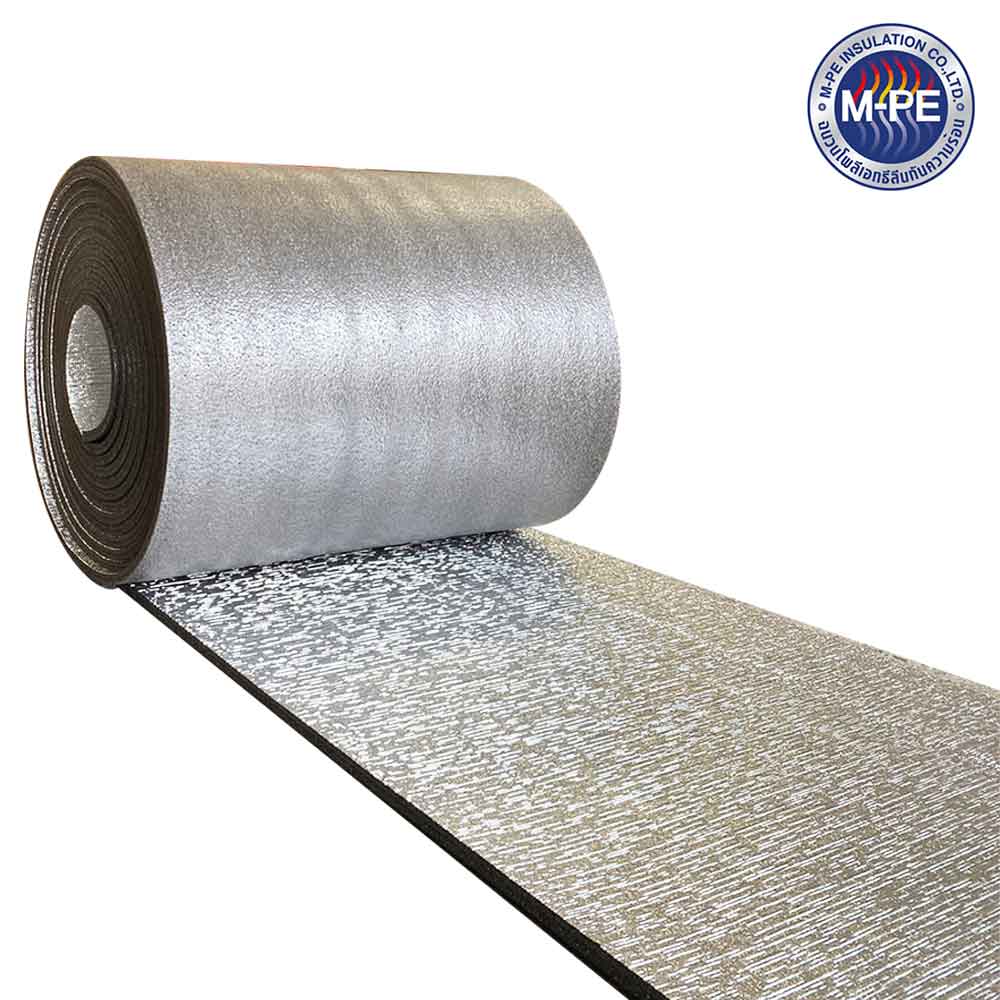
- M-PE (Standard) — PE foam with metalized film facing, reflectivity 86% (emissivity 0.14)
Building thermal insulation · Glass wool
SCG STAY COOL
- Thickness
- 75–150 mm
- Thermal resistance (R)
- 1.79 m²·K/W (75 mm)
Building thermal insulation · Elastomeric foam
Aeroflex AERO-ROOF
- Thickness
- 10–25 mm
- Thermal conductivity (λ)
- 0.035 W/m·K
- Service temp.
- 0 – 100 °C
Building thermal insulation · PE foam
M-PE M-PE (Standard)
- Thickness
- 3–20 mm
- Density
- 35–45 kg/m³
- Thermal conductivity (λ)
- 0.029 W/m·K