Sound insulation · Stone wool
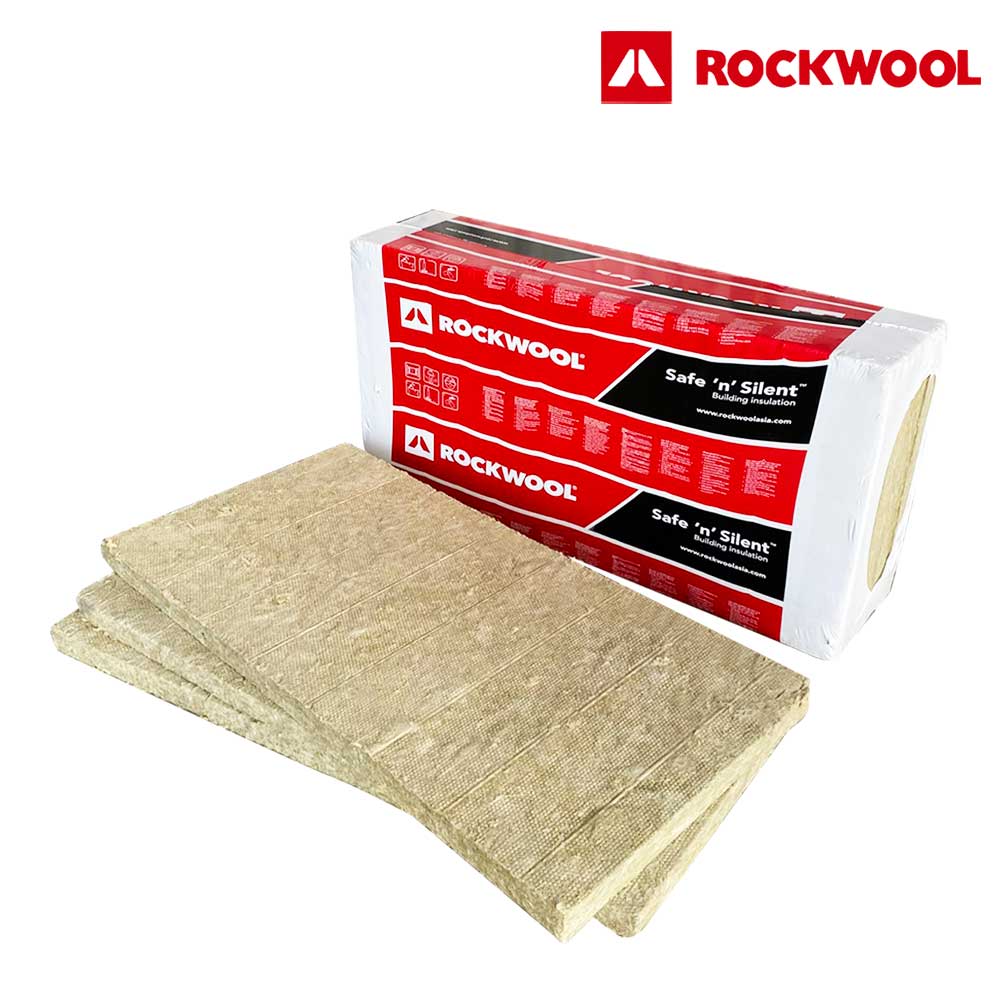
ROCKWOOL Safe 'n' Silent Pro
- Thickness
- 25–100 mm
- Density
- 40–100 kg/m³
- Sound absorption (NRC)
- 0.90–1.00
Sound coming in or going out (sound insulation)
Echoey rooms (sound absorption)
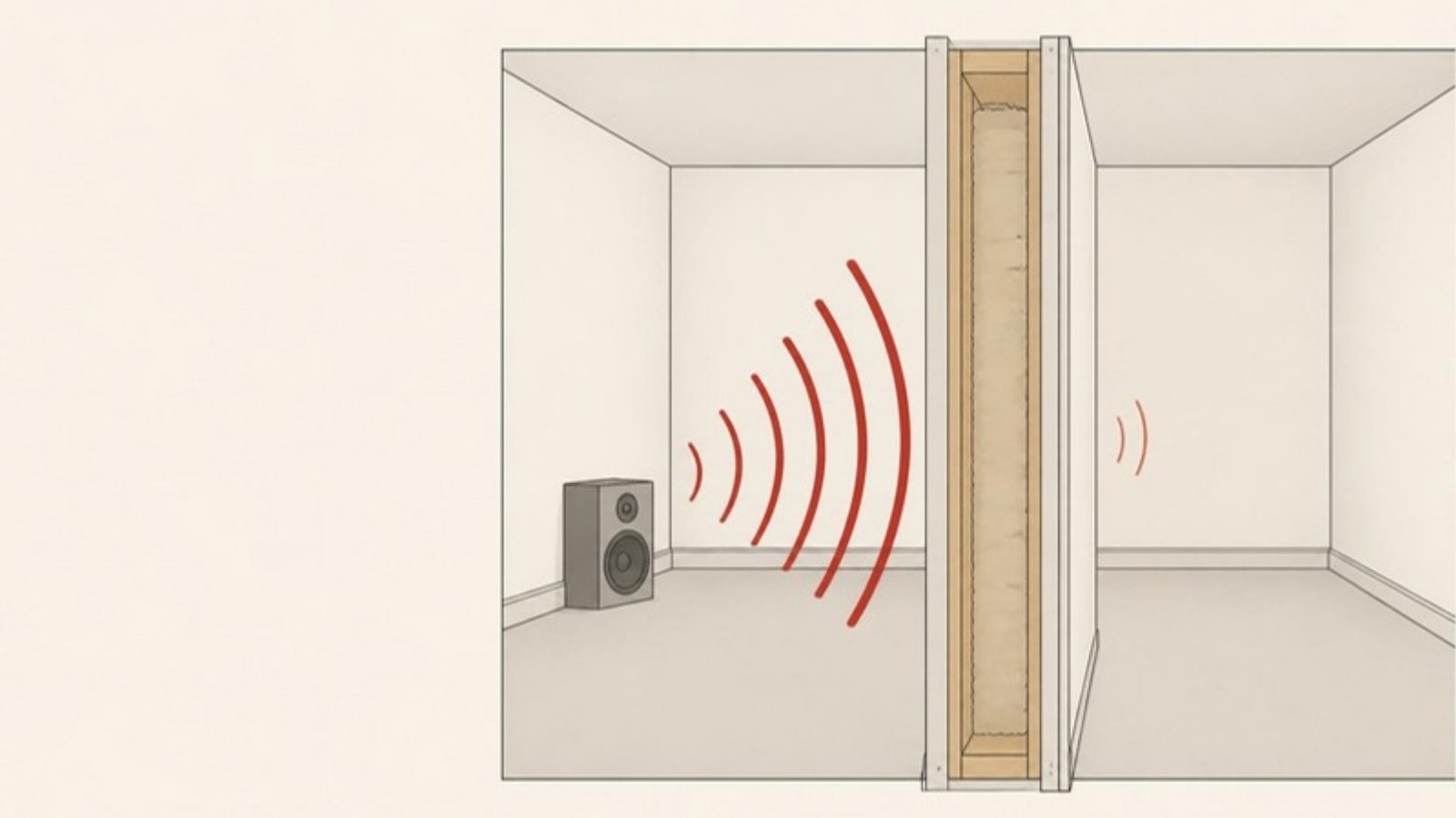
STC (Sound Transmission Class) and Rw (weighted sound reduction index) are single numbers that say how much a whole wall, ceiling or floor system reduces sound passing from one room to another. Higher is better. They belong to the tested system — boards, framing, insulation and installation details — not to the insulation on its own.
| STC | Rw | |
|---|---|---|
| --- | --- | --- |
| Rating standard | ASTM E413 | ISO 717-1 |
| Mostly used in | US-style documents | European and international documents |
| Meaning | Higher = better insulation | Higher = better insulation |
The two are calculated slightly differently, so do not compare the numbers directly.
Sound insulation comes from several parts working together:
Change one part and the result changes, which is why manufacturers give STC or Rw together with the details of the tested wall.
Most published values are laboratory results. On site the result is usually lower because of flanking paths, gaps and workmanship. Some documents give calculated or software-predicted values — check whether a figure is a lab test or an estimate.
If you see an STC next to an insulation product, check which wall system it belongs to. A single insulation product has no STC of its own.
Read next: Sound insulation vs sound absorption · Noise from next door
Categories and example products for this topic
Sound insulation · Stone wool
Sound insulation · Glass wool
Check the message below, then press “Open LINE”. On a phone LINE opens with this message; on a computer LINE shows a QR code to scan with your phone. If LINE does not open, copy the message into the chat, or call us.
Add us on LINE: @x2525 · Call 062-195-1909