Industrial and high-temperature insulation · Calcium silicate
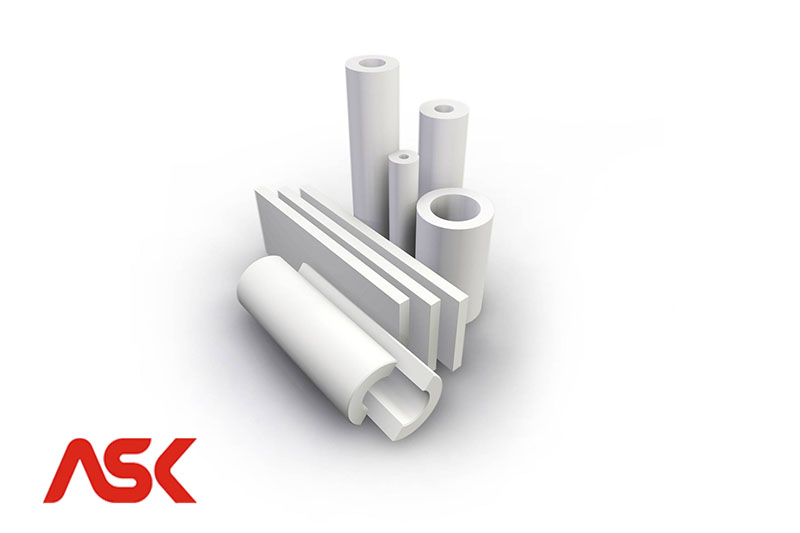
ASK CS 220
- Max. temp.
- 650 / 1,000 °C
- Thermal conductivity (λ)
- ≤ 0.060 W/m·K (93 °C)
- Density
- ≤ 220 kg/m³
Sound coming in or going out (sound insulation)
Echoey rooms (sound absorption)
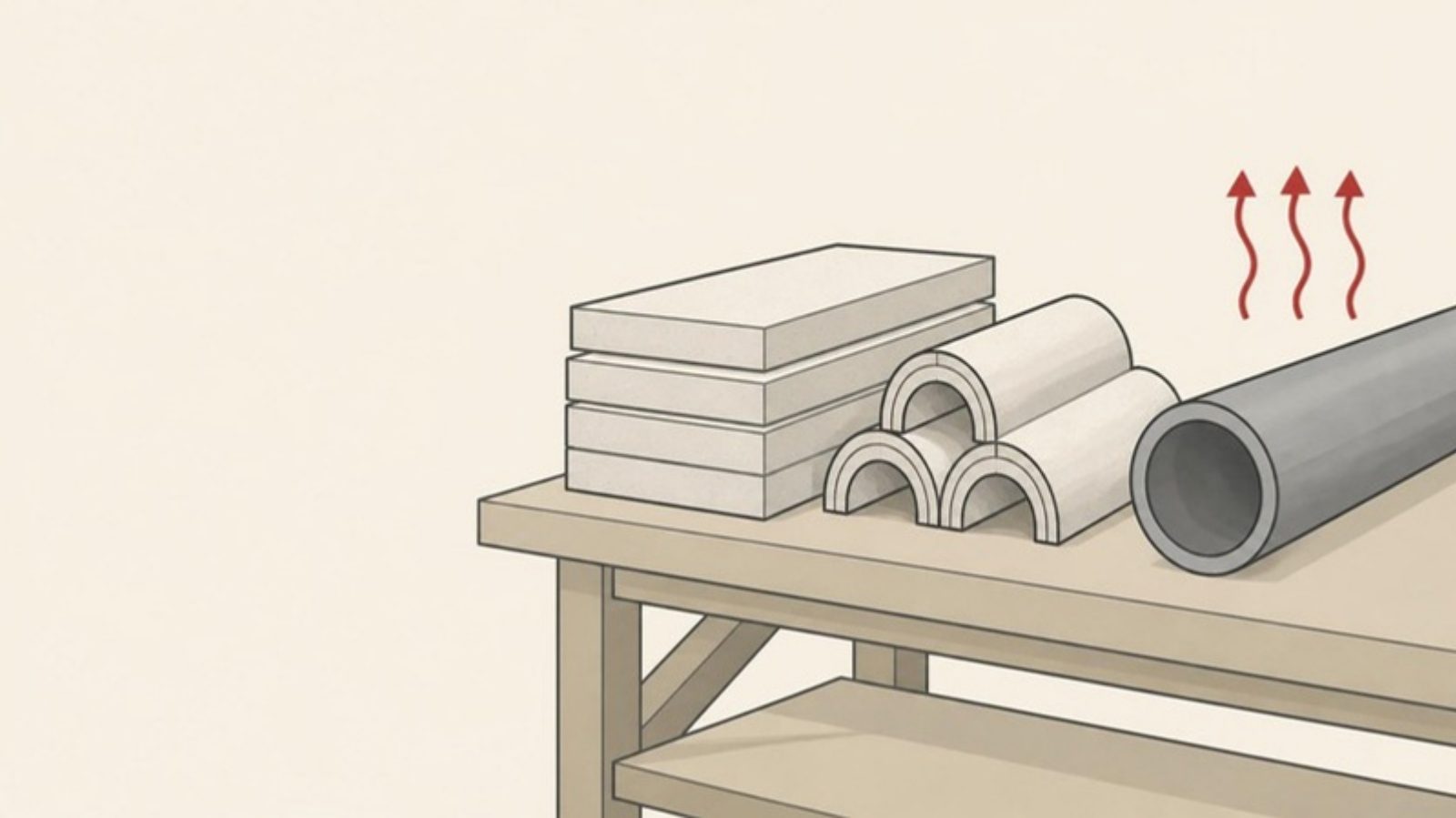
Calcium silicate is a rigid, white thermal insulation made as slabs, curved segments and pre-formed pipe sections. It is used on high-temperature pipes and equipment in power plants, refineries and petrochemical plants. Its main strength is that it resists compression and impact better than fibrous insulation, so it suits places where the insulation carries load or gets stepped on. Its limits: it is hard and brittle, harder to cut to shape, and porous, so it must be stored and clad to keep water out.
The US National Insulation Association (NIA) describes the process: silica, lime, reinforcing fibres and additives are mixed with water into a slurry, moulded, then cured with steam under pressure for several hours until calcium silicate crystals form. The pieces are then dried and trimmed. The result contains a very large number of tiny air cells separated by thin crystalline walls, which is why it conducts little heat even though it is hard.
Early calcium silicate insulation used asbestos as the reinforcing fibre. Manufacturers today use other fibres, so when buying, check that the manufacturer's document states asbestos-free — for example ASK CS 220, whose product sheet states inorganic fibre reinforcement and no asbestos.
Do not confuse asbestos with stone wool; they are different materials. See is stone wool safe?
The usual reference standard is ASTM C533, which covers calcium silicate block and pipe insulation for surfaces at 27–927 °C. It defines Type I, Type IA and Type II and requires tests such as thermal conductivity, linear shrinkage, flexural strength, compressive strength and mass loss by tumbling.
Example values from the ASK CS 220 product sheet:
| Property | Manufacturer's value |
|---|---|
| --- | --- |
| Maximum service temperature | Type I 650 °C / Type II 1,000 °C |
| Density | no more than 220 kg/m³ |
| Thermal conductivity (at 93 °C) | no more than 0.060 W/m·K |
| Compressive strength | at least 0.688 MPa |
| Flexural strength | at least 0.35 MPa |
| Linear shrinkage | no more than 2.0% |
These values belong to this product only; they cannot stand in for another brand or grade.
No material suits every job. This table shows which jobs point to which material.
| Aspect | Calcium silicate | Industrial stone wool | Ceramic fibre |
|---|---|---|---|
| --- | --- | --- | --- |
| Nature | Rigid, holds its shape | Fibrous, flexible; slabs, blankets, pipe sections | Fibrous, light and soft; blankets |
| Compression / foot traffic | Suitable | Compresses; some jobs need a support structure for the cladding | Not suited to carrying load |
| Fitting uneven surfaces | Must be cut and shaped | Fits easily, especially wired mats | Fits very easily |
| Vibration | Strong, but brittle under hard knocks | Wired mats are designed for it | Depends on fixing |
| Temperature range | By type (see product documents) | By grade (see product documents) | Higher than the other two |
| Points to watch | Dust when cutting; keep dry | Keep dry; cladding | Stricter health requirements; follow the SDS |
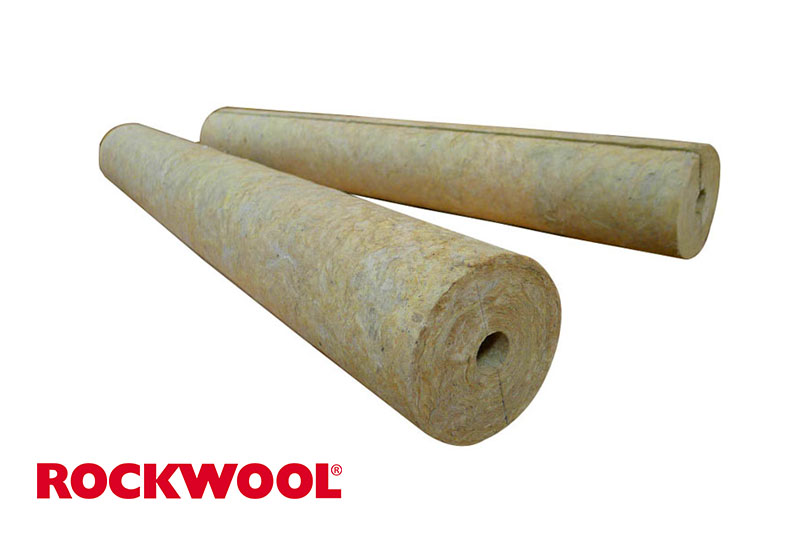
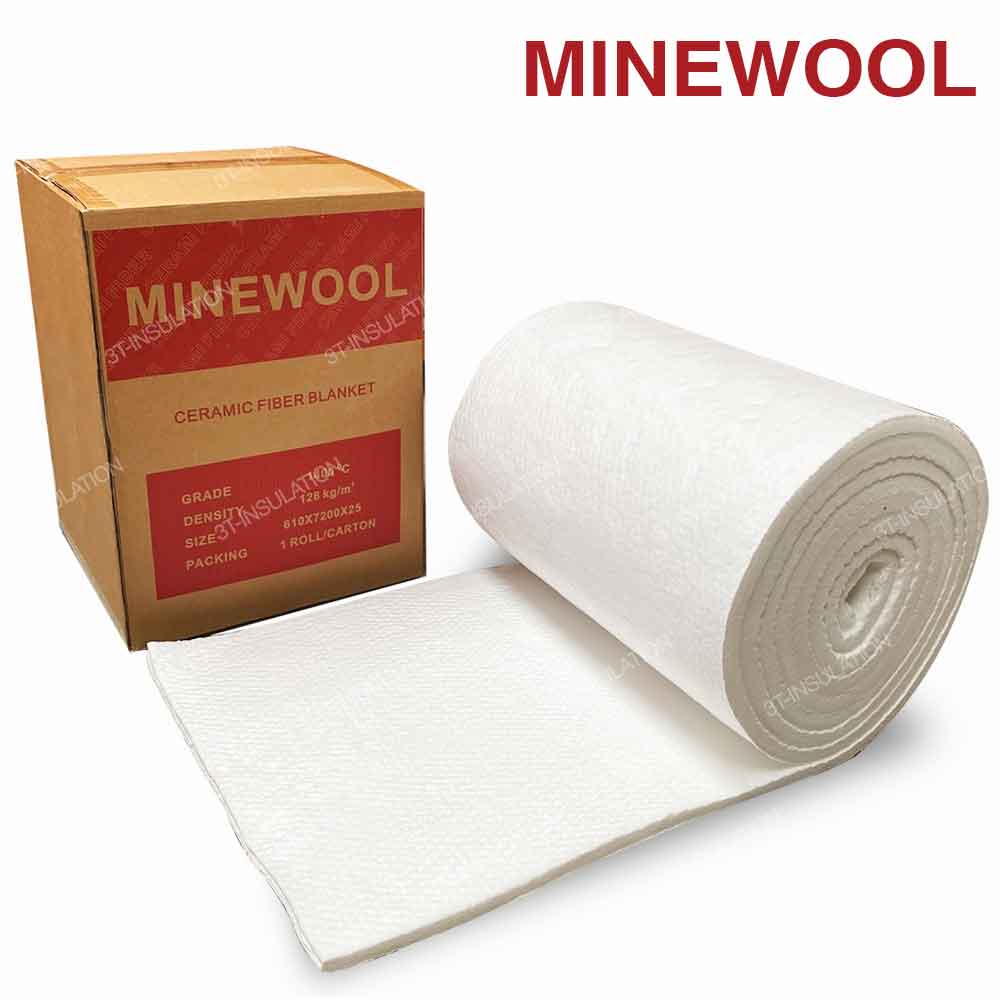
Example products for each group: stone-wool pipe sections ROCKWOOL ProRox PS 960 SA for industrial pipework, and MINEWOOL Ceramic Fiber Blanket for work hotter than the range of stone wool and Type I calcium silicate.
In practice they are often combined — calcium silicate only where load is carried, stone wool for the rest. The mix of materials should be decided by the designer.
The type (Type I / II), thickness and fixing method must be designed for the temperature and site conditions. Have an engineer or industrial-insulation specialist specify and install it. See what is service temperature? and choosing high-temperature insulation.
Categories and example products for this topic
Industrial and high-temperature insulation · Calcium silicate
Industrial and high-temperature insulation · Stone wool
Industrial and high-temperature insulation · Ceramic fibre
Check the message below, then press “Open LINE”. On a phone LINE opens with this message; on a computer LINE shows a QR code to scan with your phone. If LINE does not open, copy the message into the chat, or call us.
Add us on LINE: @x2525 · Call 062-195-1909