Industrial and high-temperature insulation · Stone wool
ROCKWOOL ProRox SL
- Max. temp.
- 450–850 °C
- Density
- 60–160 kg/m³
- Thickness
- 50–100 mm
Sound coming in or going out (sound insulation)
Echoey rooms (sound absorption)
Industrial and high temperature
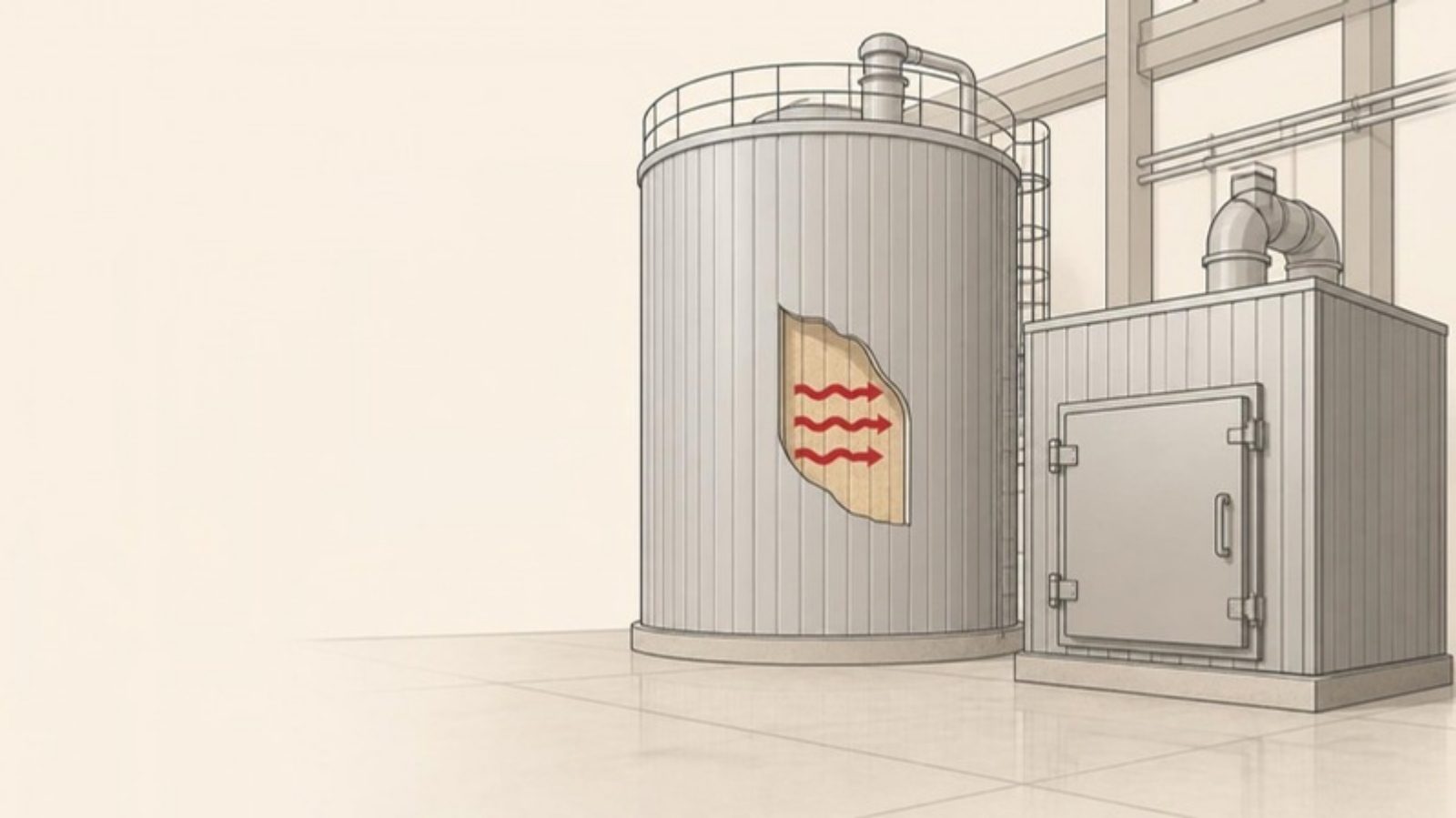
Look at two things first: the shape of the surface and the real maximum temperature. Flat walls — boiler walls, ovens, rectangular hot ducts — suit stone wool slabs on pins. Curved or irregular surfaces and equipment that vibrates suit wired mats. Large tanks that do not vibrate can take stone wool blankets. Thick or very hot work should go on in several layers with staggered joints, allow for the metal's expansion, and be finished with water-shedding cladding. Ceramic fibre comes in only when the temperature is beyond the range of stone wool. Thickness and fixing details should be designed by a specialist.
| Equipment | Surface | What needs particular thought |
|---|---|---|
| --- | --- | --- |
| Storage tanks and vessels | Wide-radius walls, tank roofs, dished heads | Weight of insulation on tall walls, rain on the roof, places people step |
| Boilers | Flat and curved walls with stiffeners, openings and many pipes | High temperature, expansion, vibration |
| Ovens and drying cabinets | Flat walls, doors, inspection hatches | Cyclic running, joints around doors |
| Hot-air ducts and flues | Rectangular or round, with external stiffeners | Flow-induced vibration, lengthwise expansion |
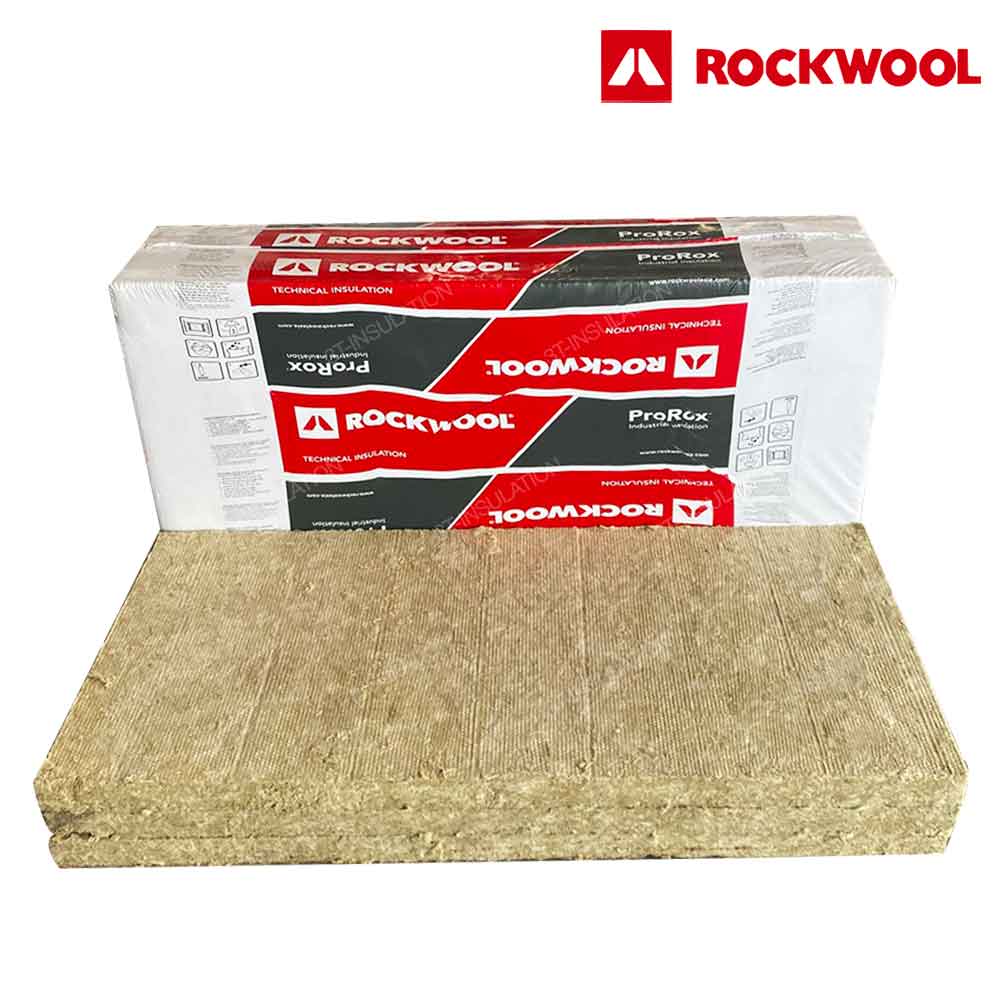
Slabs hold their shape, close wide areas flat and support the cladding well. ROCKWOOL's documents describe the fixing: slabs are fastened to the equipment on insulation pins that are welded or mechanically fixed to the surface; the edges of each slab must be butted tightly; and steel in a corrosive environment should be cleaned and given a protective coating before it is insulated.
Product to consider: ROCKWOOL ProRox SL, stone wool slabs for equipment walls, boilers, columns, tanks and hot ducts, in six grades with maximum service temperatures of 450–850 °C by grade.
Worth knowing:
A wired mat is stone wool stitched to wire mesh. It wraps around curves, vessel heads, bends and complex shapes, and the mesh holds the fibres together when the equipment vibrates. The mesh edges of adjoining mats are stitched together with wire or hooks.
Product to consider: ROCKWOOL ProRox WM. The manufacturer states its use on pipework, boiler walls, furnaces and flue ducts (WM 950 SA), and on high-pressure steam pipes, reactors and furnaces (WM 960 SA / 970 SA). Maximum service temperature is 650 / 650 / 750 °C by grade.
Wired mats have little resistance to compression, so spacers or a support structure for the cladding are usually needed to stop the cladding's weight crushing the insulation. On vertical surfaces, support rings carry the insulation's weight so it cannot slide down.
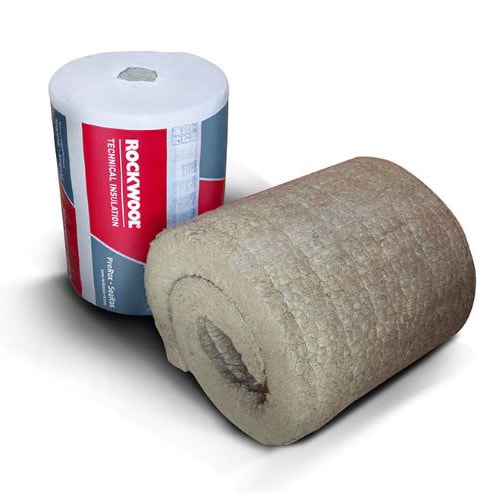
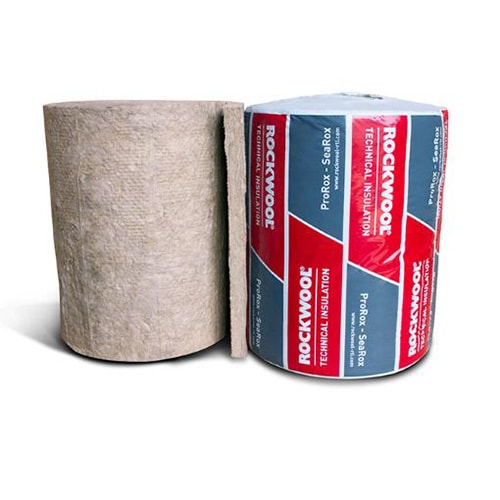
Large storage tanks have wide-radius walls and a lot of area, so long rolls go on quickly with few joints.
Product to consider: ROCKWOOL ProRox BL, stone wool blankets in three grades with maximum service temperatures of 350 / 450 / 650 °C. The manufacturer specifies them for equipment that does not vibrate; where there is vibration, consider wired mats.
Extra points for tanks:
When a large thickness is needed, or the temperature is high, splitting it into two or more layers and offsetting the joints of each layer has clear benefits:
ROCKWOOL's installation guidance calls for the joints of the outer layers to be staggered lengthwise and, where possible, across, and for every layer to be fixed for a tight fit. Working out the temperature at the interface between layers (to choose each layer's material) is a design calculation.
Steel grows when it heats up. Large equipment and long ducts therefore move a good deal relative to the cooler cladding outside.
The type of cladding also affects the outer surface temperature — see personnel protection insulation.
Industrial stone wool covers most tank, boiler and hot-duct work, within each grade's maximum service temperature (in the range we sell, the highest is 850 °C for ProRox SL 978 SA). Ceramic fibre comes in when:
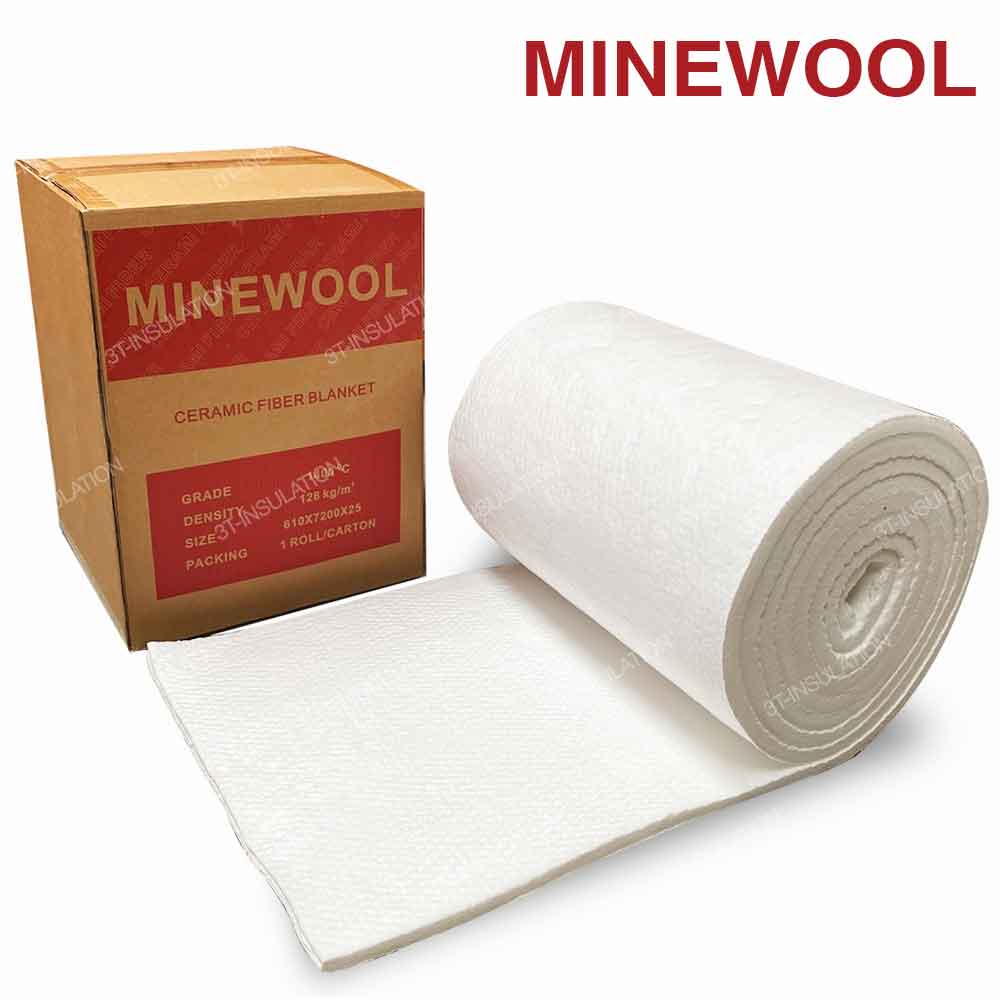
Product to consider: MINEWOOL Ceramic Fiber Blanket, 128 kg/m³, in two grades with working temperatures of 1,050 °C (Standard) and 1,350 °C (Zirconium).
Ceramic fibre should not be used where stone wool already does the job, because its health requirements during installation are stricter. See what is ceramic fibre?
Read next: stone wool slab, blanket, wired mat or pipe section · choosing high-temperature insulation · insulation fixing accessories
Categories and example products for this topic
Industrial and high-temperature insulation · Stone wool
Industrial and high-temperature insulation · Stone wool
Industrial and high-temperature insulation · Stone wool
Industrial and high-temperature insulation · Ceramic fibre
Check the message below, then press “Open LINE”. On a phone LINE opens with this message; on a computer LINE shows a QR code to scan with your phone. If LINE does not open, copy the message into the chat, or call us.
Add us on LINE: @x2525 · Call 062-195-1909