I can hear the next room through the wall. How do I improve it?
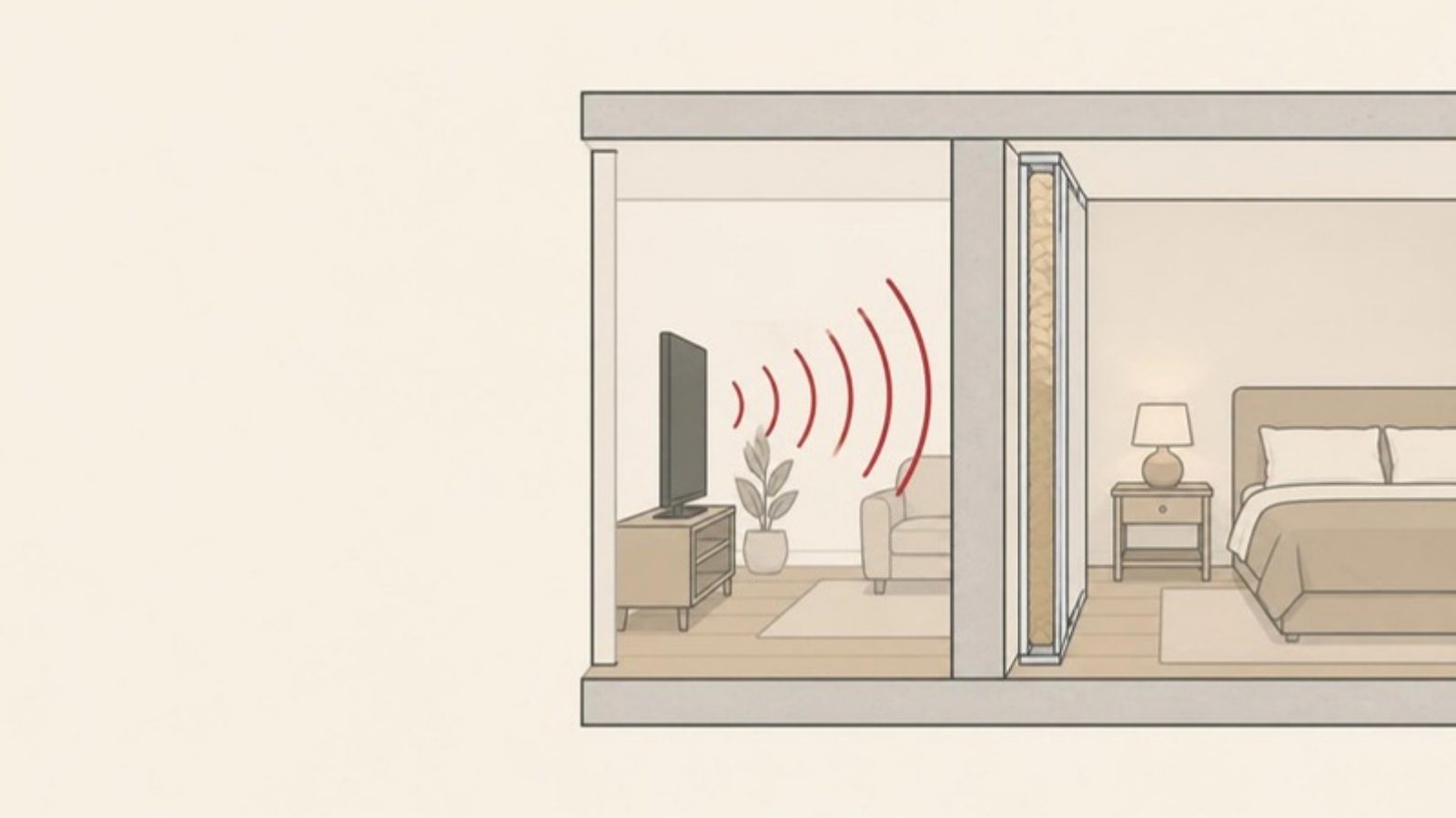
The usual approach is to build an extra drywall lining on your side with a new frame separated from the existing wall (not touching it, or fixed only through resilient mounts), fill the cavity with sound insulation, cover it with two layers of board with staggered joints, and seal the perimeter and outlets airtight. The result depends on the whole system and is limited by sound that goes around via the ceiling, floor or structure; bass and impact noise are harder to deal with than speech.
Before you start: where is the sound really coming from?
The wall is only one of several paths. If most of the sound arrives another way, a new lining will help little. Check first:
- Where is it loudest? — the middle of the wall, the top edge under the ceiling, outlets, a connecting door, or an AC diffuser
- How high does the separating wall go? — in some townhouses and shophouses the wall between units only reaches the ceiling, with an open void above shared by both. Sound then crosses over the ceiling easily, and the ceiling or void has to be treated too, not just the wall
- What kind of sound is it? — speech, TV and ordinary music are airborne sound, which a new lining helps with. Footsteps, slamming doors, dropped objects and heavy bass often travel through the structure and can only be improved to a limited extent from the listener's side
More on sound paths in Sound transmission through walls and flanking.
What an effective lining looks like
| Component | Why it matters |
|---|---|
| --- | --- |
| New stud frame separated from the existing wall | If the new frame is rigidly fixed to the old wall, vibration passes straight through to the new boards. NRC research found that when the two faces of a wall are rigidly connected, cavity insulation hardly helps |
| Full-cavity sound insulation (glass wool, stone wool or polyester-fibre acoustic batts) | Reduces sound reflecting in the cavity and damps the drum-like air-layer effect. CMHA notes that insulated furring spaces give better results than empty ones |
| Two layers of board with staggered joints | Adds mass, and offset joints reduce leaks. Board type and thickness should follow the wall system or designer |
| Airtight sealing on every edge | Small gaps at the edges, under the ceiling or around pipes let sound through even in a heavy wall |
Why insulation helps: Why cavity insulation improves a wall's sound insulation.
Thin board fixed close to the old wall can make things worse
Fixing gypsum board on a shallow frame close to the old wall with no insulation can create a low-frequency "board–air–wall" resonance. CMHA gives an example of a concrete block wall lined on both sides over a shallow air space whose sound rating went down. A lining should have an adequately deep cavity filled with insulation, following a design with supporting data.
The work in outline
- Get permission first — condominiums usually have rules on alterations, working hours and moving materials; check with the juristic person or building management. In hotels and buildings with fire-protection systems, have a designer confirm the new wall does not affect them
- Locate pipes and cables in the existing wall — use a wall scanner or building drawings before drilling or screwing, so you do not hit water pipes or wiring
- Protect furniture and floors from dust during the work
- Install the new frame without touching the old wall, or through resilient mounts as the system manufacturer specifies. Make sure screws are not long enough to touch the old wall
- Fill the cavity completely with no gaps at the edges and without over-compressing the batts. See What to know before insulating a drywall partition
- Fix the first and second board layers with staggered joints and finish the joints properly
- Seal the perimeter where the wall meets the floor, ceiling and side walls with a sealant that stays flexible (e.g. acoustical sealant), then paint and fit trims
The new lining should run up to the ceiling soffit or structure above as site conditions allow. If it stops below a ceiling with an open void above, sound will simply go over it.
Outlets, switches and services
- Back-to-back outlets on both sides of the wall are a common leak in condos and hotels. NRC research found that outlet box position affects a wall's sound insulation
- On the new lining, keep penetrations to a minimum and seal around boxes as the wall system recommends
- Moving or extending wiring must be done by a qualified electrician
Limitations to know before you decide
- The room gets narrower — frame, gap, insulation and two layers of board all take up width. The actual thickness depends on the frame size and system chosen; measure the space and furniture layout first
- Flanking sets the ceiling on the result — if sound travels through a continuous floor or structure, upgrading the wall alone gives limited improvement. NRC notes that where flanking through the floor dominates, changing the separating wall alone is ineffective
- Bass and impact noise are harder — loudspeaker bass, footsteps or slamming doors often need to be tackled at the source, e.g. talking to the neighbour about speaker isolation pads, rugs or door closers
- No ready-made numbers — sound insulation belongs to the whole wall system together with the real rooms, so we do not state how many dB or percent it will reduce. If you need confirmed figures, measure on site before and after using a field method (e.g. ASTM E336 / ISO 16283-1). See What are STC and Rw
Acoustic panels or foam on the wall reduce echo inside your room but do very little to stop sound coming through from next door. See Does sound absorption block noise? and Soundproofing vs sound absorption.
Common situations
- Condo / apartment — the wall between units is usually masonry or an existing drywall partition; a lining on your side is the main option. Also check back-to-back outlets and the entrance door (Soundproof doors)
- Townhouse / shophouse — first check whether the wall between houses reaches the roof or stops at the ceiling. If the void above is open, the ceiling usually needs work too
- Hotel — connecting doors, AC ducts running through several rooms and aligned bedside outlets should be checked before building a new wall
- Music practice room or home theatre next door — loud sound and heavy bass need a specifically designed system. See How to soundproof a music room
Common mistakes
- Fixing the new frame tightly to the old wall, or boarding a shallow frame with no insulation
- Filling only part of the cavity or leaving gaps at the top and bottom
- Not sealing the perimeter, or cutting an outlet directly opposite the neighbour's
- Stopping the wall below a ceiling with an open void above
- Expecting footsteps from above or bass to be reduced as much as speech
See the solution and related products: Noise from next door / neighbours · Sound insulation · How to choose wall insulation
Sources
- National Research Council Canada — Construction Technology Update No. 1, Control of Sound Transmission through Gypsum Board Walls (Warnock & Quirt, 1997)
- National Research Council Canada — Construction Technology Update No. 13, Controlling Sound Transmission through Concrete Block Walls (Warnock, 1998)
- National Research Council Canada — Construction Technology Update No. 27, Effect of Electrical Outlet Boxes on Sound Isolation of Gypsum Board Walls (1999)
- National Research Council Canada — Construction Technology Update No. 66, Airborne Sound Insulation in Multi-Family Buildings (Quirt & Nightingale, 2008)
- Concrete Masonry & Hardscapes Association — TEK 13-01D, Sound Transmission Class Ratings for Concrete Masonry Walls
- ASTM E336 / ISO 16283-1 — field measurement of sound insulation between rooms
Related products
Categories and example products for this topic
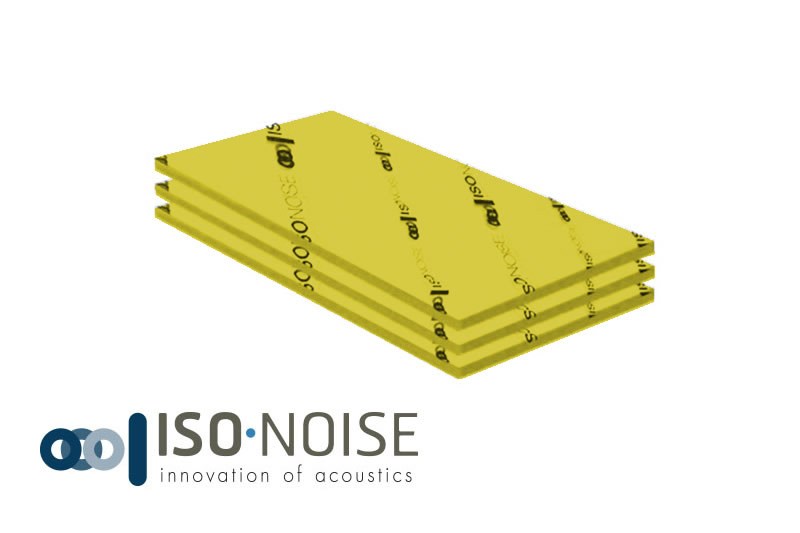
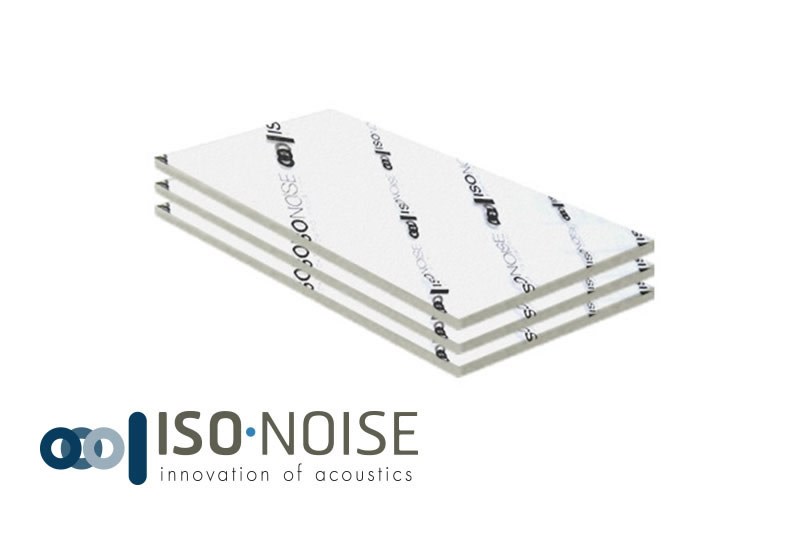
- ISO NOISE Standard — Fills the stud cavity of the added drywall lining; 0.60 × 1.20 m, 50 mm thick
- ISO NOISE Premium — 100% polyester batt, 65 mm, for the drywall cavity if you prefer not to use glass wool
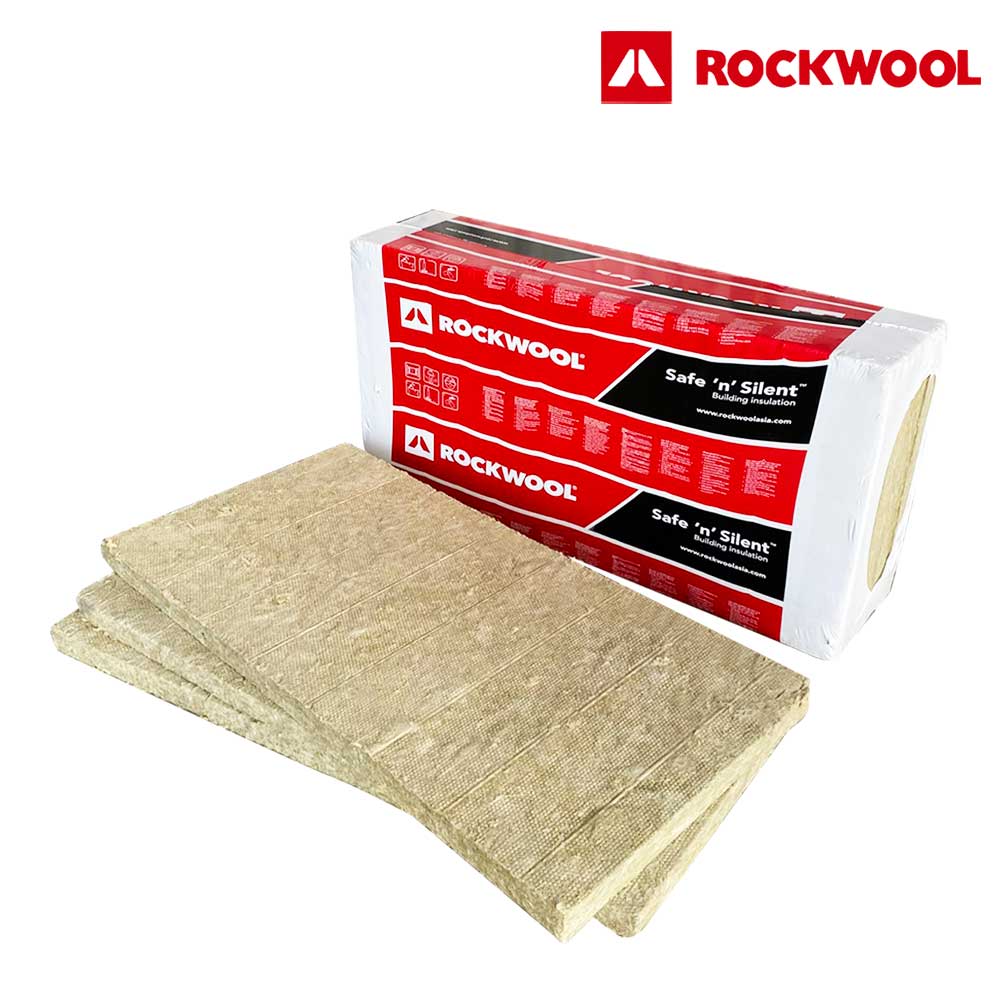
- ROCKWOOL Safe 'n' Silent Pro — Stone wool slab for the wall cavity; the STC rating belongs to the wall, not the slab
- SCG Cylence ZoundBlock — Glass wool for wall cavities, used with gypsum, SmartBoard, AAC block or brick systems
Sound insulation · Stone wool
ROCKWOOL Safe 'n' Silent Pro
- Thickness
- 25–100 mm
- Density
- 40–100 kg/m³
- Sound absorption (NRC)
- 0.90–1.00
Sound insulation · Glass wool
SCG Cylence ZoundBlock
- Thickness
- 50–100 mm
- Density
- 32 kg/m³
- Thermal conductivity (λ)
- ≤ 0.033 W/m·K