Do sound absorbing panels (high-NRC materials) stop sound leaving a room?
5 min read · Written by our team · Updated 26 Sept 2026
In short
Only very slightly. Absorption panels and materials with a high NRC are designed to reduce reflections inside a room, not to stop sound passing through a wall. They are light and porous, so air — and most of the sound — goes straight through. To keep sound from reaching the next room you have to work on the walls, ceiling, floor, doors and air leaks as a system.
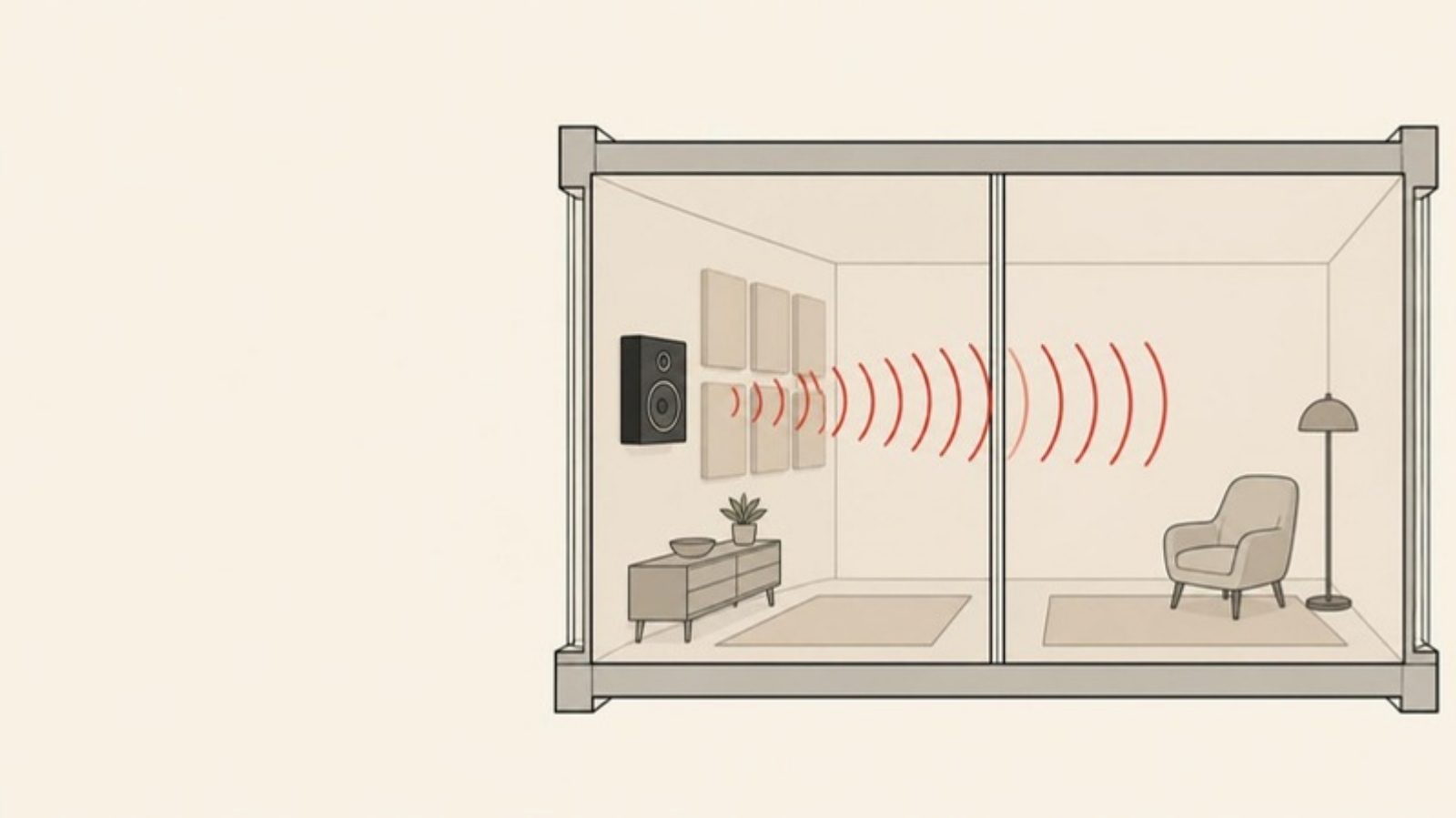
1The complete wall: linings, cavity, cavity insulation and sealed gaps work together
2Less sound reaches the next room — rated with the STC / Rw of the whole wall
3An absorbing panel on the wall takes up part of the sound energy — rated with NRC
4Less sound is reflected back, so the room echoes less
5Some sound still passes through the wall — an absorbing panel is not sound insulation
Absorption panels make a room less echoey, but they do not stop sound passing through a wall
Why can the neighbours still hear after panels go up?
Sound gets from one room to another in two main ways:
Through the wall itself — sound makes the wall vibrate, and the far side radiates sound again
Through gaps and indirect paths — gaps under doors, around frames, electrical outlets, the space above a suspended ceiling, ducts and continuous structure
Panels fixed to the wall surface do not make the wall meaningfully heavier or more airtight, and they do not close these indirect paths. Most of the sound still gets through.
How absorption and insulation differ
Absorbing material
Sound-insulating system
---
---
---
Job
Reduce reflections in the room
Reduce sound passing to another room
Character
Light, porous, lets air through
Has mass, airtight, better if the two sides are decoupled
Less build-up of reflected sound inside a noisy room, so that room itself feels somewhat less loud. The effect on sound reaching other rooms is limited, and it does not make up for a weak wall or air leaks
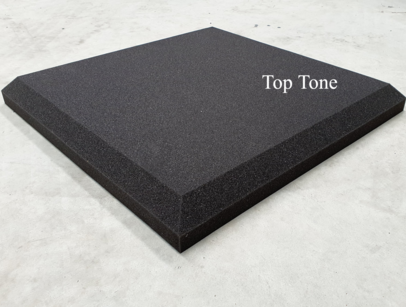
Foam or panels on the wall do not make a soundproof room
Covering walls with wedge foam or absorption panels makes a room less echoey, but it does not make it soundproof. If the goal is to stop disturbing the neighbours, start by checking the walls, doors and air leaks.
What to do if you need to keep sound in
Seal leaks first — under doors, around frames, wall-to-floor and wall-to-ceiling joints, outlets cut through the wall
Look for indirect paths — walls that stop at the suspended ceiling, ducts serving both rooms. See Sound transmission and flanking
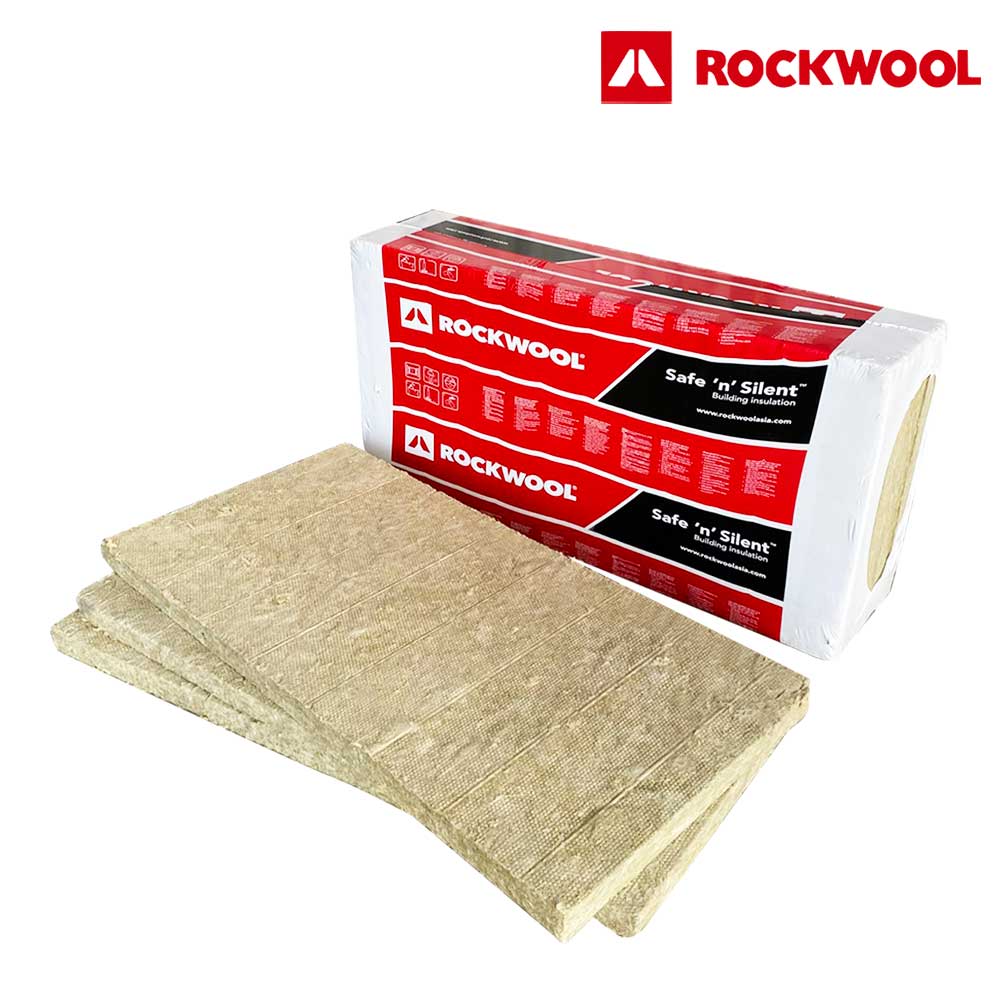
Upgrade the wall as a system — heavier boards, decoupled framing, cavity insulation, installed to the system the manufacturer tested or specifies
Add absorption as well if the room is still echoey, so sound inside is clearer
Results depend on the whole system and the site; no single material guarantees a sound insulation result. Send us your wall design and a description of the problem and we can help.
ROCKWOOL International — 5 facts about Acoustics and stone wool (2020): definitions of sound absorption and sound transmission loss
National Research Council Canada — Construction Technology Update No. 66, Airborne Sound Insulation in Multi-Family Buildings (Quirt & Nightingale, 2008)
National Research Council Canada — Construction Technology Update No. 1, Control of Sound Transmission through Gypsum Board Walls (Warnock & Quirt, 1997)
ASTM C423 / ISO 354 — measurement of sound absorption in a reverberation room (basis of NRC and absorption coefficients)
ASTM E413 / ISO 717-1 — rating of sound insulation, STC / Rw
Check the message below, then press “Open LINE”. On a phone LINE opens with this message; on a computer LINE shows a QR code to scan with your phone. If LINE does not open, copy the message into the chat, or call us.