What are emissivity and the reflectivity of a foil surface?
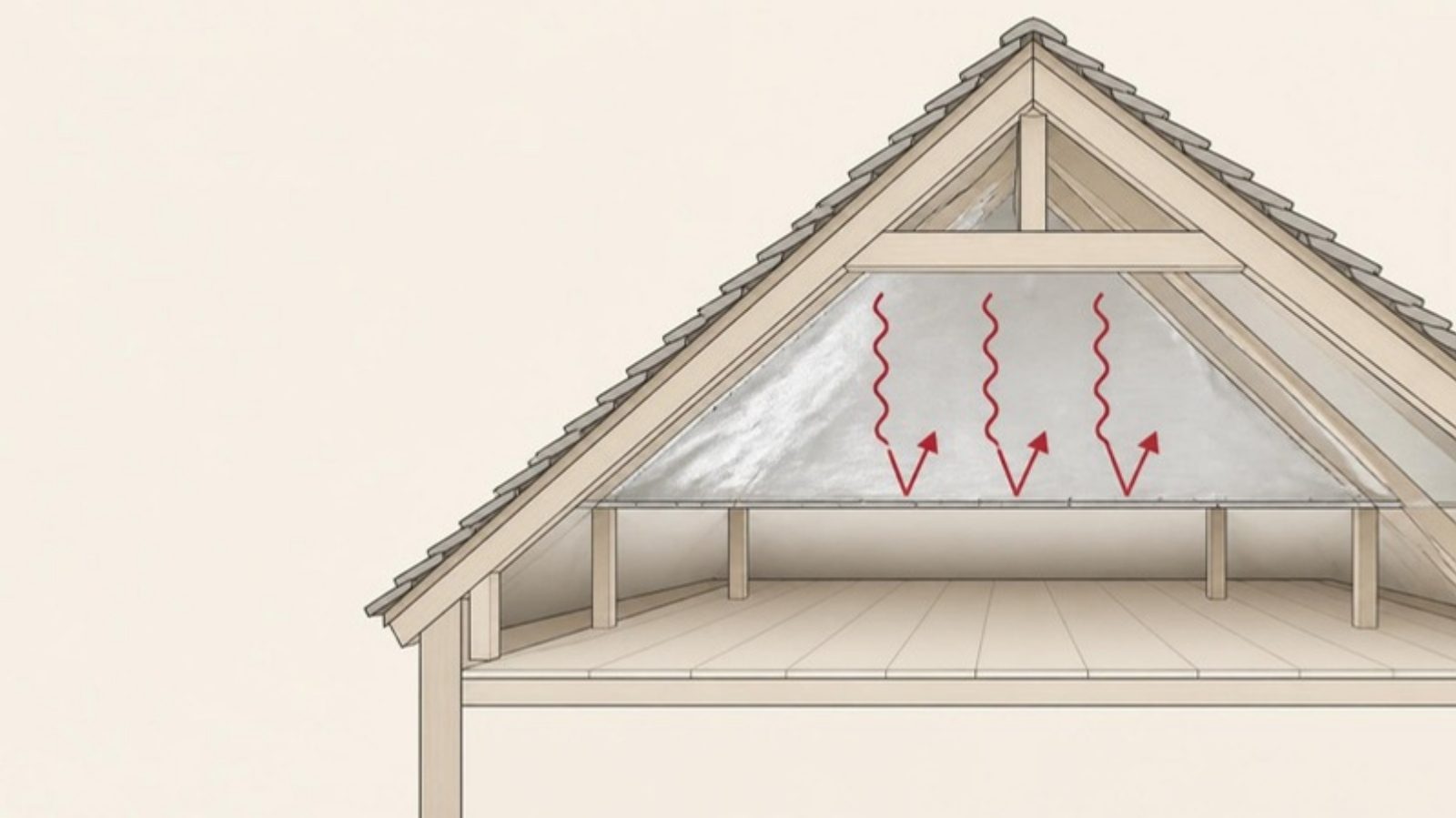
Emissivity (or emittance, ε) is a number between 0 and 1 that says how much radiant heat a surface gives off compared with a perfect black surface. Bright aluminium foil has low emissivity: it emits and absorbs little radiant heat — in other words it reflects most radiant heat. That effect exists only when the foil faces an air space. If the foil is pressed against another material, heat simply conducts through. And emissivity is a surface property, not the thermal resistance (R-value) of an insulation.
How are emissivity and reflectivity related?
Heat travels in three ways: conduction, convection and radiation. See how heat enters buildings. Emissivity concerns only the third.
For an opaque surface that radiation cannot pass through, radiant heat that strikes it is either absorbed or reflected, and a surface that absorbs radiation well also emits it well. So:
- Low emissivity = absorbs little, emits little, reflects a lot
- High emissivity = absorbs a lot, emits a lot, reflects little
Ordinary building materials such as wood, brick, concrete, plasterboard and bare glass-wool insulation have high emissivity; bright aluminium has very low emissivity. The reflective insulation manufacturers' association (RIMA-International) uses an emittance of 0.1 or less to define a radiant barrier.
This is about thermal (infrared) radiation, not visible light. A white surface reflects light well but still has high emissivity; a bright metal surface has low emissivity.
Why does foil need an air space?
Radiation needs a gap to cross from one surface to another — for example from a hot roof sheet across the roof space down to the ceiling. Put a low-emissivity surface on either side of that gap and much less radiation crosses it.
If the foil is sandwiched tightly between other materials with no air space, there is no radiation to reduce. Heat conducts through the foil, and aluminium is a very good conductor, so almost all of the reflective effect disappears.
In practice:
- Let the foil face an air space on at least one side
- Take care that insulation or other materials do not press against it and close the gap
- The size of the air space, the direction of heat flow and ventilation all affect how the whole system performs
For real applications see how reflective foil works.
What do dust and surface ageing do?
Low emissivity belongs to a clean, bright surface. Change the surface and the value changes.
- Dust — dust settling on foil turns the surface into more of an absorber. Foil facing upward collects dust over time; foil facing downward stays clean longer
- Corrosion and oxidation — moisture, chemicals or contact with alkaline materials can dull an aluminium surface
- Coatings and deposits — a coating, adhesive or oily film on the surface can change its emissivity
The test standard notes that a surface's emittance can degrade with age, which is why there is a portable method for re-checking it in the field. The figure in a product document is for a new surface.
How is emissivity different from R-value?
| Emissivity (ε) | R-value | |
|---|---|---|
| --- | --- | --- |
| A property of | A surface | A layer of material with thickness |
| Heat transfer mode | Radiation | Mainly conduction through the material |
| Depends on thickness? | No | Yes; thicker means higher R |
| Needs an air space? | Yes | No |
| Example test standards | ASTM C1371, ASTM E408 | ASTM C518, ASTM C177 |
A thin foil has almost no R-value of its own. Its benefit comes from reducing radiation across an air space, which depends on how the whole system is installed. "Reflects 95% of heat" therefore means the share of radiation striking the surface that is reflected; it does not mean heat entering the house falls by 95%. And the more R-value a house already has, the less a reflective surface adds. See what is R-value?.
Products that use a foil surface
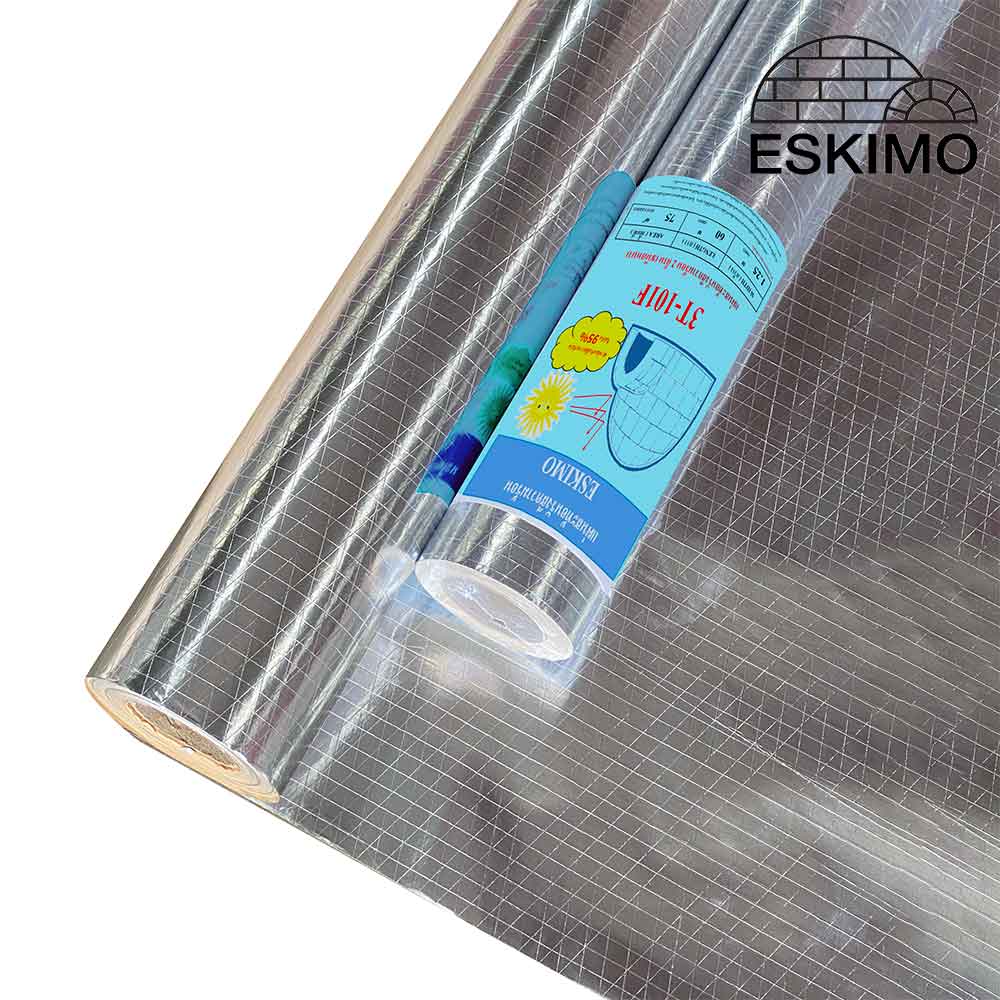
- Double-sided reflective foil: ESKIMO FOIL 101F — the document gives a foil surface reflectivity of 97%. It is used under the roof structure, on ceilings or in wall cavities, and needs an air space in front of the foil
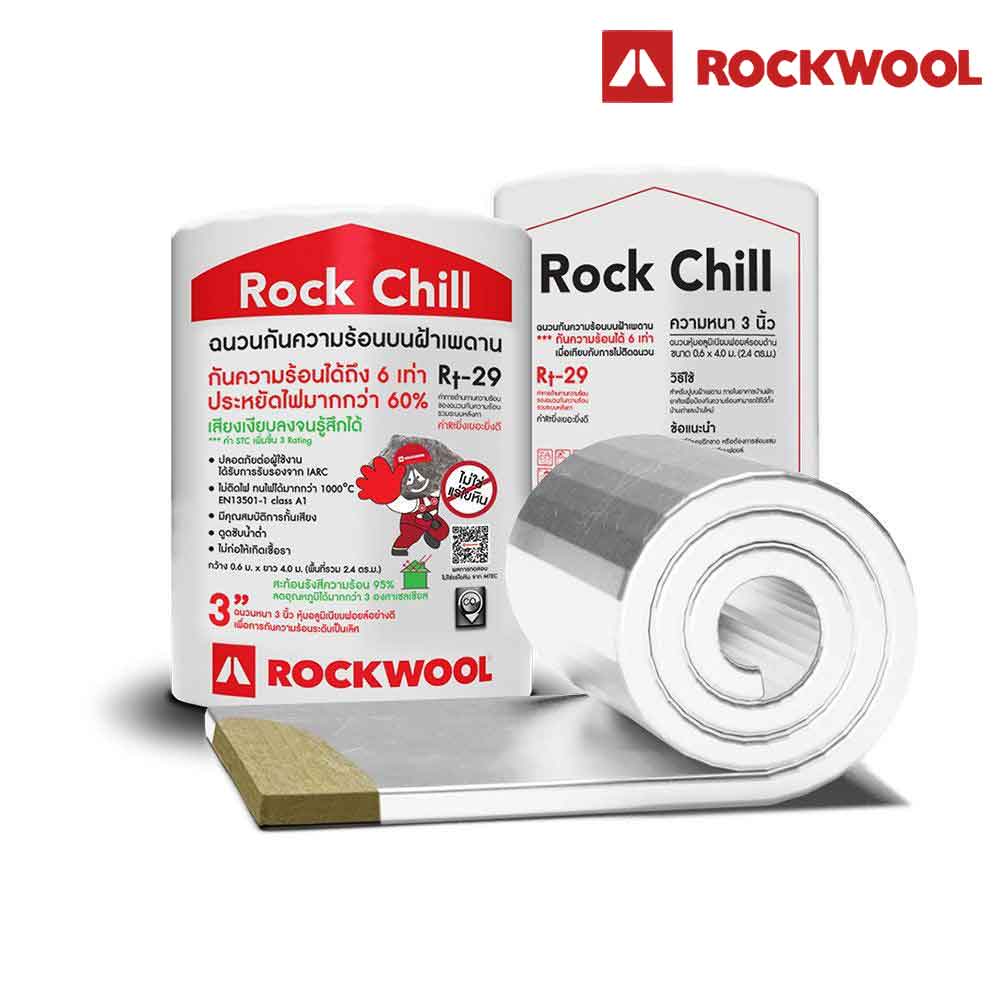
- Foil-wrapped stone wool laid on ceilings: ROCKWOOL Rock Chill — the document gives heat reflection of up to 95% and an R-value for the insulation of 12.17 hr·ft²·°F/Btu; these are two separate figures
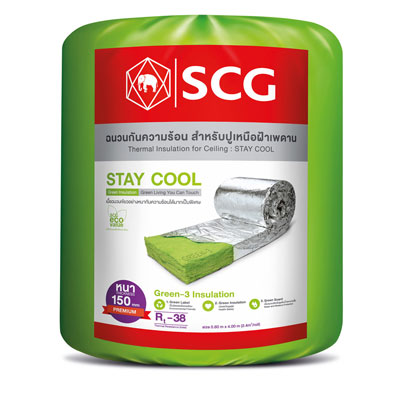
- Foil-encapsulated glass wool laid on ceilings: SCG STAY COOL — encapsulated in reinforced aluminium foil; the document gives an R-value of 1.79 m²·K/W for the 75 mm insulation
- Closed-cell rubber insulation with foil on one side: AERO-ROOF — reinforced foil on one side, installed under the roof or on ceiling frames with the foil side up. Its document does not state a surface emissivity
For foil-wrapped insulation laid on a ceiling, the upper face will collect dust over time, but the insulation itself still resists heat according to its R-value. On these products the foil also contains the fibres and keeps moisture out.
Foil conducts electricity
Aluminium foil is an electrical conductor. Roof spaces and ceilings usually contain wiring and light fittings. Do not let foil touch connections or cables with damaged insulation, never staple over wiring, and keep clear of hot light fittings as the manufacturer specifies. If unsure, have an electrician check first.
Sources
- Florida Solar Energy Center (University of Central Florida) — Radiant Barriers: A Question and Answer Primer (FSEC-EN-15) (air space, which way the foil faces, dust, relation to existing insulation level, wiring cautions)
- ASTM International — ASTM C1371 Standard Test Method for Determination of Emittance of Materials Near Room Temperature Using Portable Emissometers (scope; emittance degrading with age)
- ASTM International — ASTM E408 Standard Test Methods for Total Normal Emittance of Surfaces Using Inspection-Meter Techniques (definition of emittance relative to a blackbody)
- RIMA-International — Technical Bulletins (index: TB 102 definition of a radiant barrier, TB 105/106 oxidation of aluminium surfaces, TB 110 enclosed air spaces)
- GetBestInsulations — verified product data for ESKIMO FOIL 101F, ROCKWOOL Rock Chill, SCG STAY COOL and AERO-ROOF (based on the manufacturer documents listed on each product page)
Related products
Categories and example products for this topic
- ESKIMO FOIL 101F — Double-sided reflective foil; document gives a foil surface reflectivity of 97%
- ROCKWOOL Rock Chill — Foil-wrapped stone wool laid on ceilings; document gives heat reflection up to 95%
- SCG STAY COOL — Glass wool encapsulated in reinforced foil, laid on ceilings; R 1.79 m²·K/W at 75 mm
- AERO-ROOF — Closed-cell rubber insulation, reinforced foil one side, for roofs and ceiling frames
Building thermal insulation · Stone wool
ROCKWOOL Rock Chill
- Thickness
- 75 mm
- Width
- 600 mm
- Length
- 4,000 mm
Building thermal insulation · Glass wool
SCG STAY COOL
- Thickness
- 75–150 mm
- Thermal resistance (R)
- 1.79 m²·K/W (75 mm)
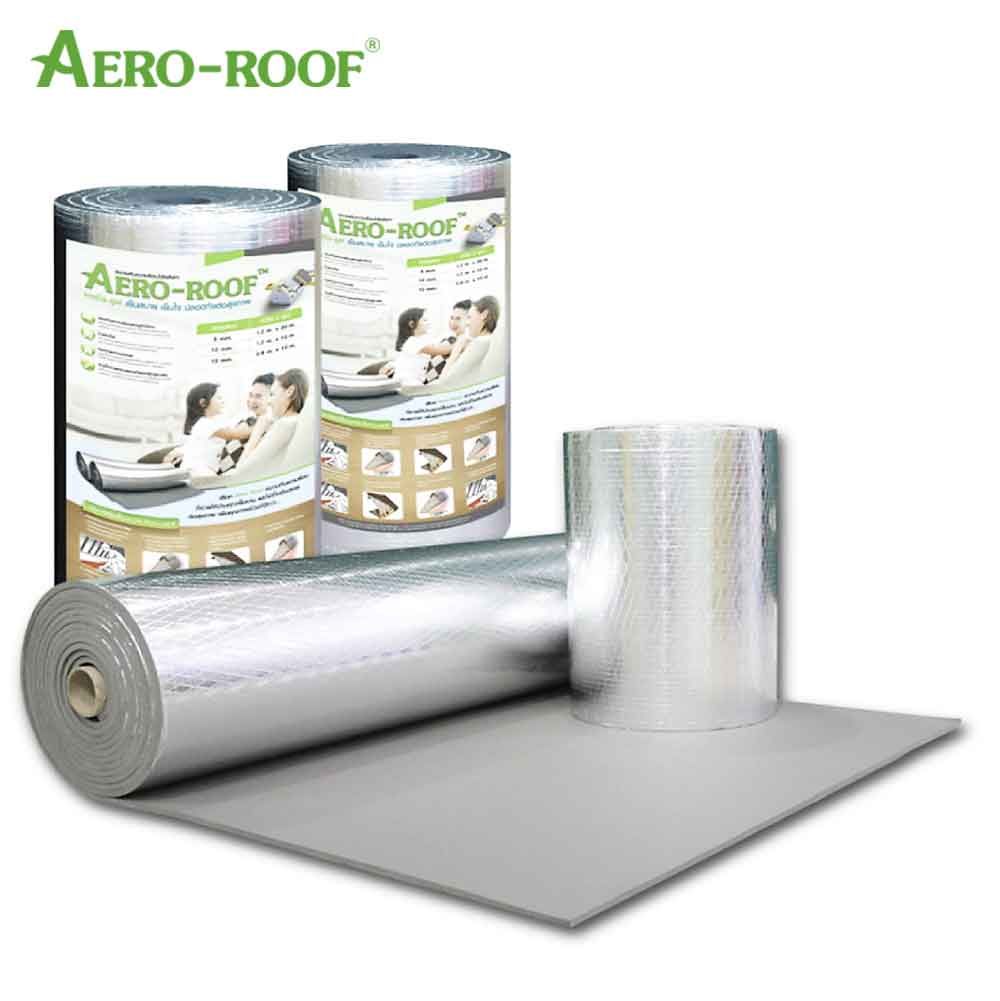
Building thermal insulation · Elastomeric foam
Aeroflex AERO-ROOF
- Thickness
- 10–25 mm
- Thermal conductivity (λ)
- 0.035 W/m·K
- Service temp.
- 0 – 100 °C