Building thermal insulation · Stone wool
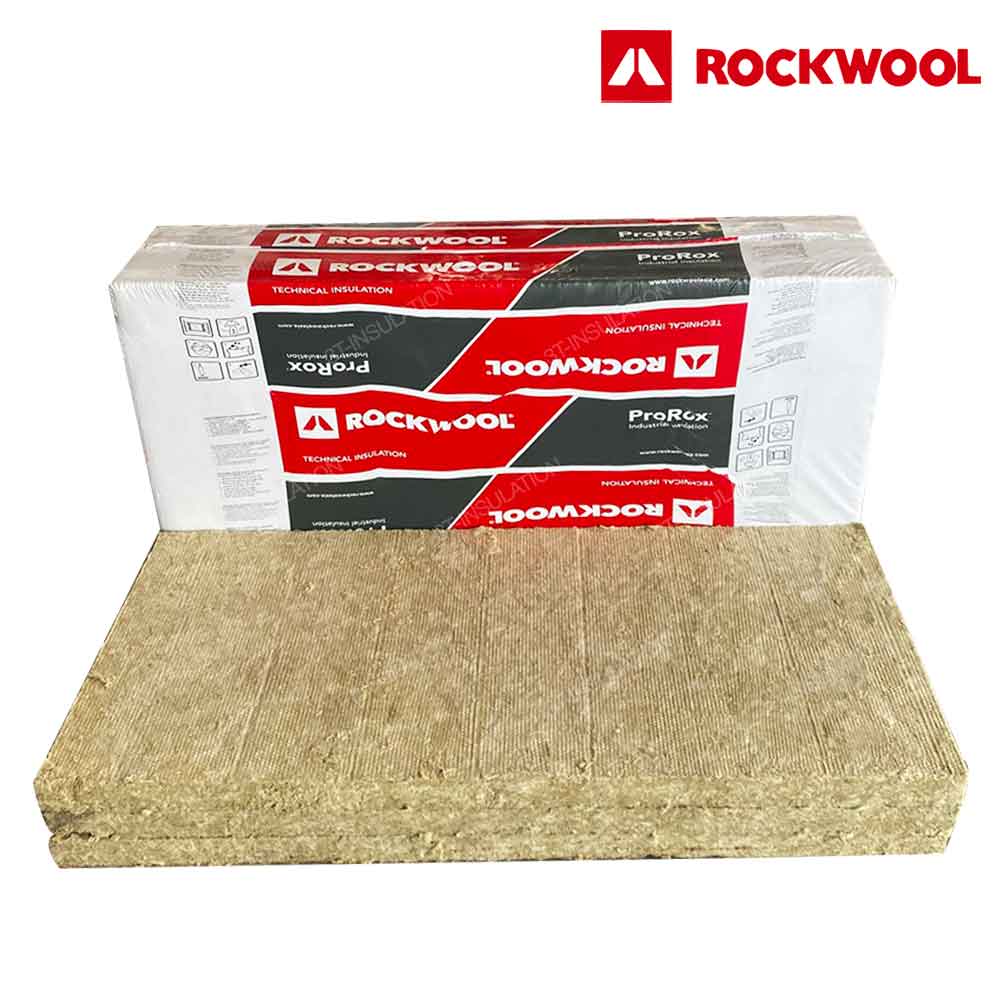
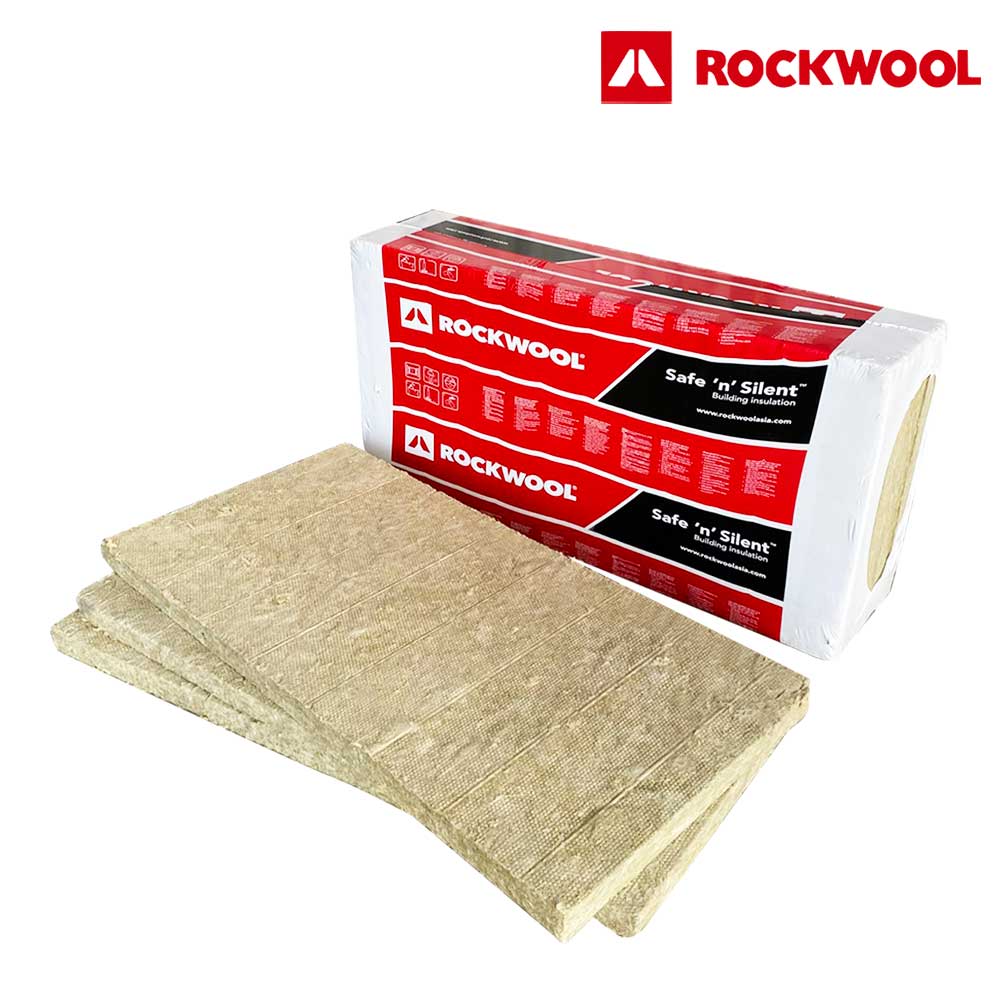
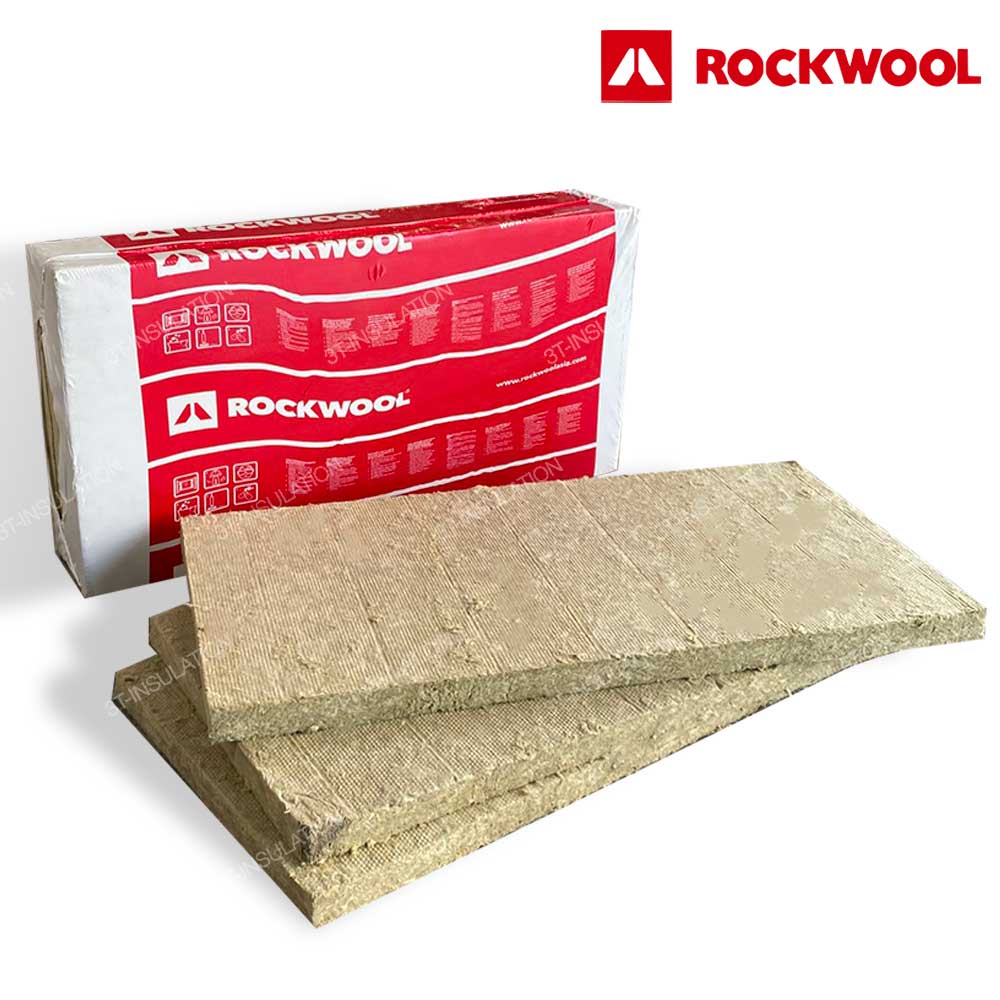
ROCKWOOL Thermalrock S
- Thermal conductivity (λ)
- 0.034–0.036 W/m·K
- Sound absorption (NRC)
- 0.90–1.05
Sound coming in or going out (sound insulation)
Echoey rooms (sound absorption)
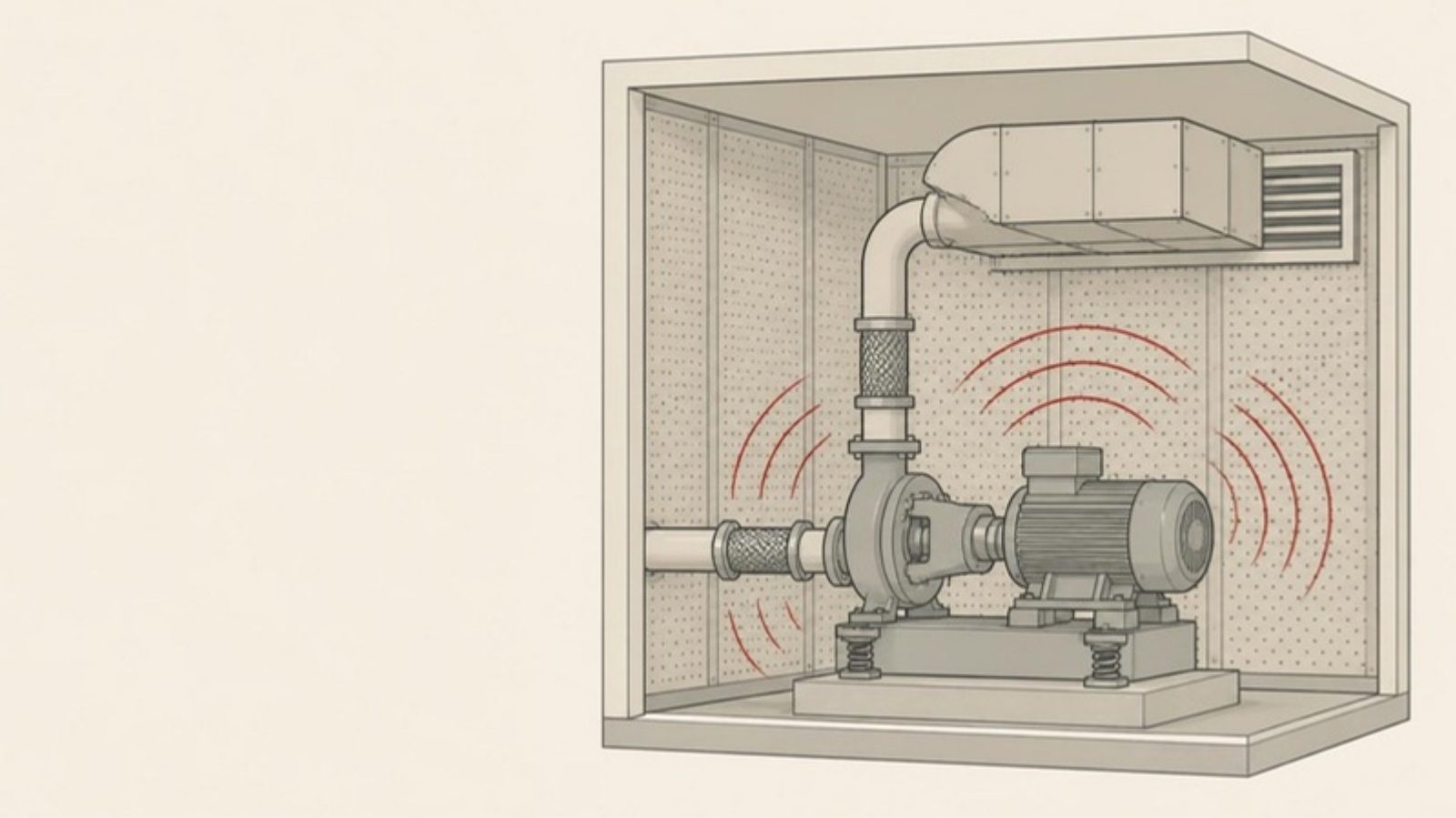
Machine noise leaves a plant room two ways — through the air and through the structure — so four measures have to work together: block it with a wall or enclosure that is solid, heavy and airtight; absorb sound inside with fibrous insulation so sound does not build up in the room; isolate vibration with resilient mounts and flexible connections; and treat the ventilation openings, which are the main weak point. If any one is missing, the others cannot deliver their full effect.
| Path | Example | Dealt with by |
|---|---|---|
| --- | --- | --- |
| Airborne, through walls, doors, ceilings | Motor, fan and engine noise | Solid, heavy walls or enclosures; sealed doors |
| Leaks and openings | Air inlets and outlets, pipe penetrations, the gap under a door | Silencers, acoustic louvres, sealing around pipes |
| Structure-borne | Vibration from the machine base runs through the floor and beams and radiates as sound in other rooms | Anti-vibration mounts, flexible connectors, resilient pipe hangers |
| Build-up inside the room | A bare-concrete room where sound reflects back and forth | Sound-absorbing lining on the inside of walls and ceiling |
Safety authorities such as CCOHS and OSHA recommend starting at the source — replacing worn bearings, balancing, reducing fan speed — because that is usually more cost-effective than blocking afterwards. Then treat the paths.
In a room or enclosure with hard surfaces all round, sound reflects back and forth and the level inside rises. CCOHS explains that a machine close to several reflecting surfaces is louder. Lining the inside with sound-absorbing material reduces this build-up, so the walls have less to block.
Lining plant-room walls with insulation, without solid walls and sealed leaks, only reduces reflections inside the room. It does not reduce the direct sound from the machine and does very little to the sound passing out. NRC is a material's sound-absorption figure, not a wall's sound-insulation rating. See Does sound absorption block noise?
If the neighbouring room or the floor below hears a low hum even though the walls are heavy, it is usually structure-borne sound.
OSHA warns that incorrectly selected or installed isolators can make noise and vibration worse, so they should be chosen by an engineer or the isolator manufacturer for the machine's weight and running speed.
Machines need air for cooling, and engines need combustion air and an exhaust route. OSHA lists heat build-up as a limitation of enclosures that has to be managed. The openings therefore cannot simply be closed — but a plain opening lets out almost as much sound as having no wall.
Building insulation is not designed for high-temperature surfaces. For boiler walls, hot ducts or hot equipment use industrial insulation with a stated service temperature, such as ROCKWOOL ProRox SL, with a maximum service temperature of 450–850 °C depending on grade and Euroclass A1. Thickness and cladding should be calculated by the designer. See Service temperature of insulation.
Generator, boiler and compressor rooms involve exhaust gases, fuel, heat, electricity and fire-protection systems. Closing air openings or boxing in a machine without calculation can cause overheating or danger. Have an engineer and the machine manufacturer review the design before starting.
See the solution and related products: Machine noise · Sound insulation · Sound absorption · Choosing a stone-wool slab grade
Categories and example products for this topic
Building thermal insulation · Stone wool
Industrial and high-temperature insulation · Stone wool
Sound insulation · Stone wool
Check the message below, then press “Open LINE”. On a phone LINE opens with this message; on a computer LINE shows a QR code to scan with your phone. If LINE does not open, copy the message into the chat, or call us.
Add us on LINE: @x2525 · Call 062-195-1909