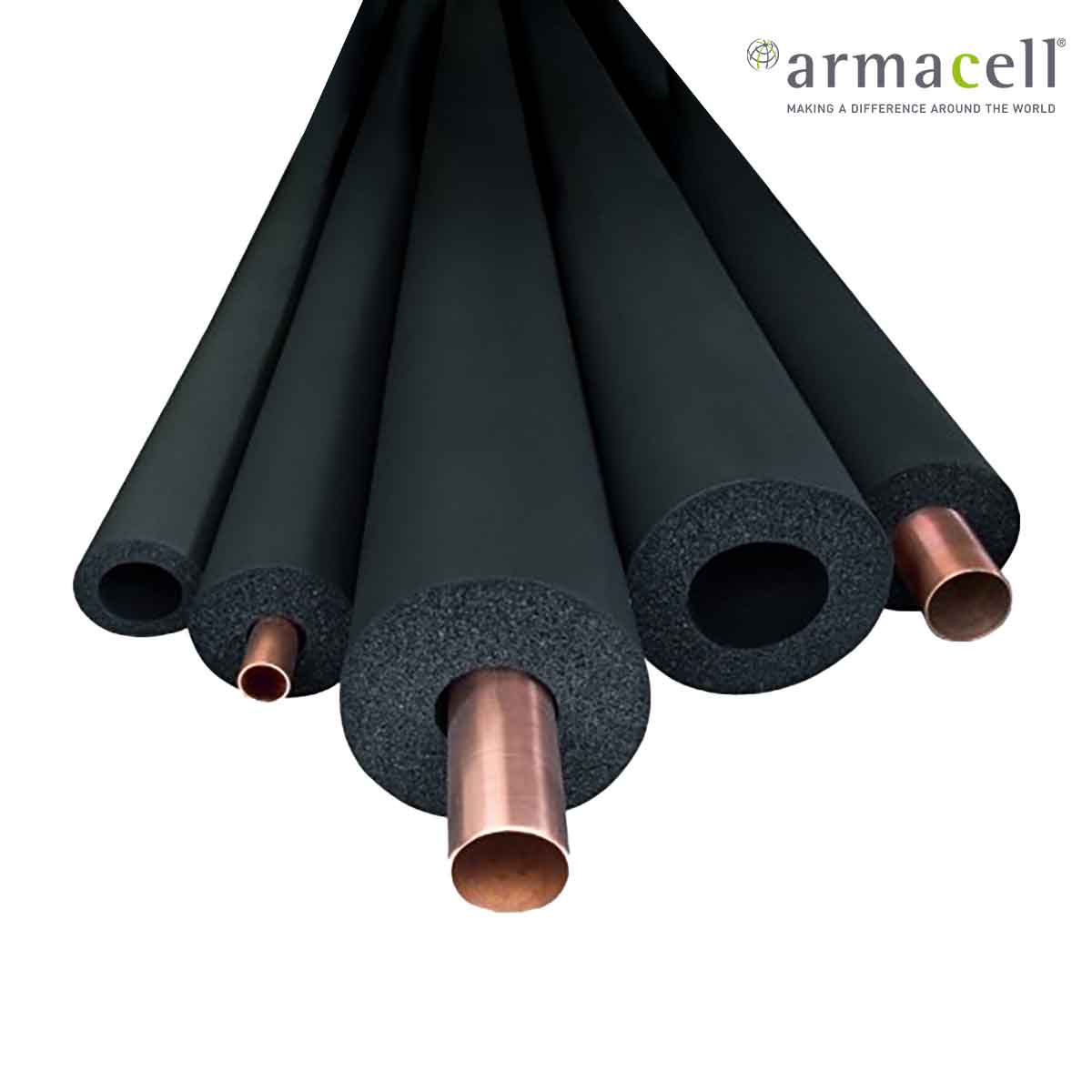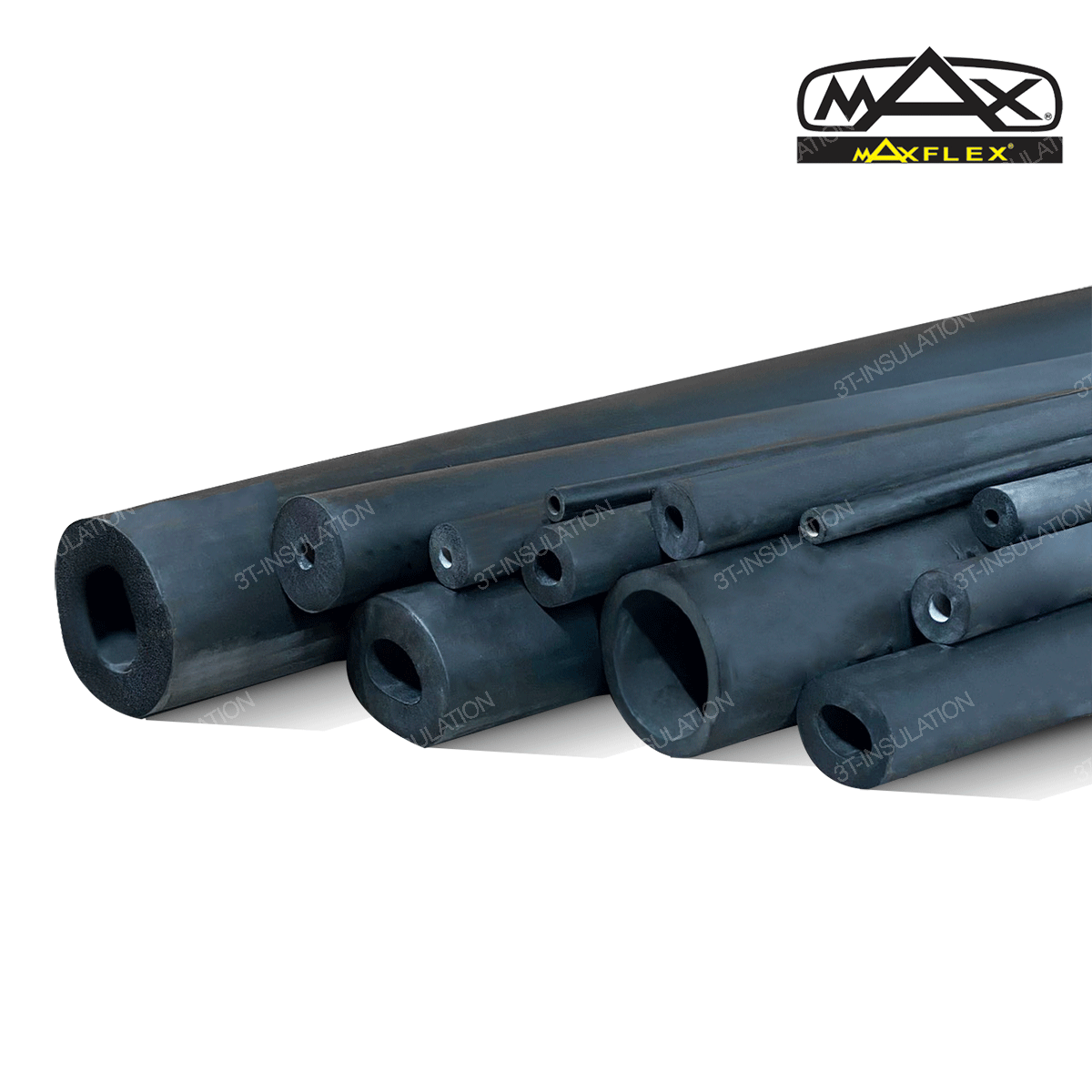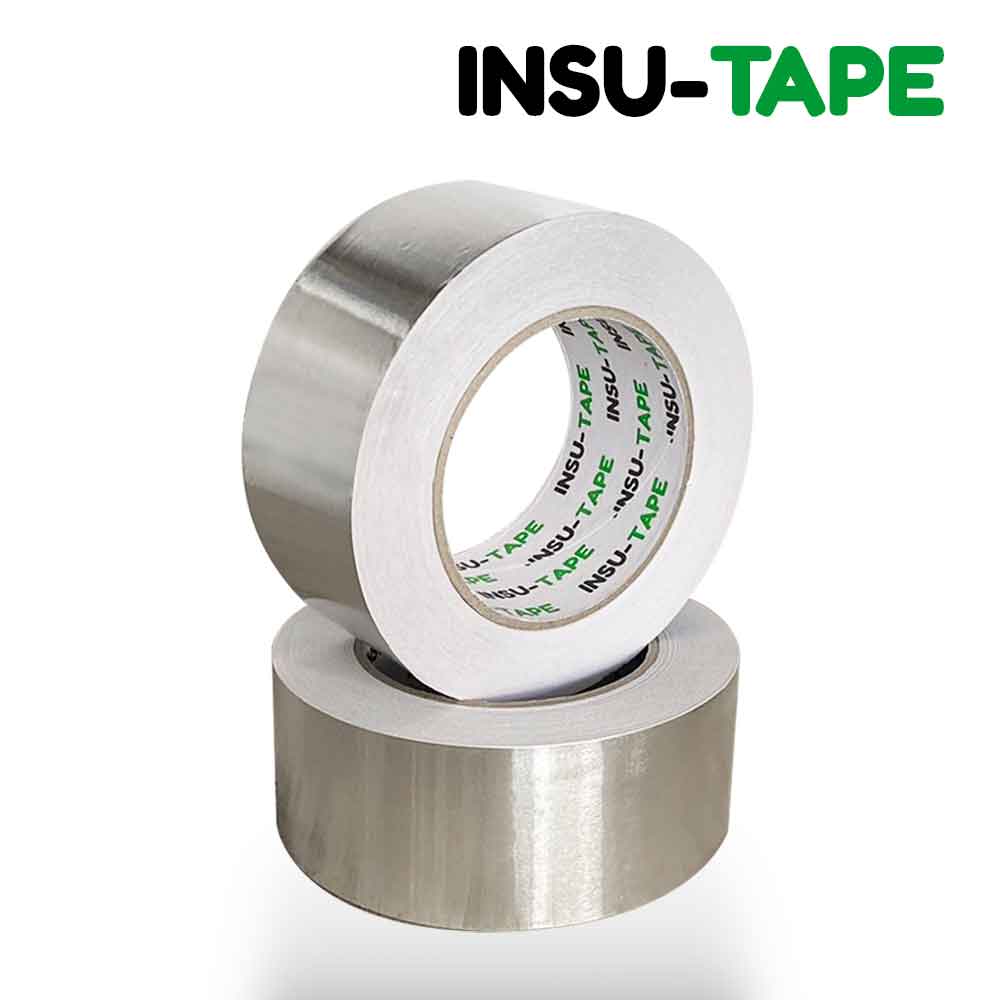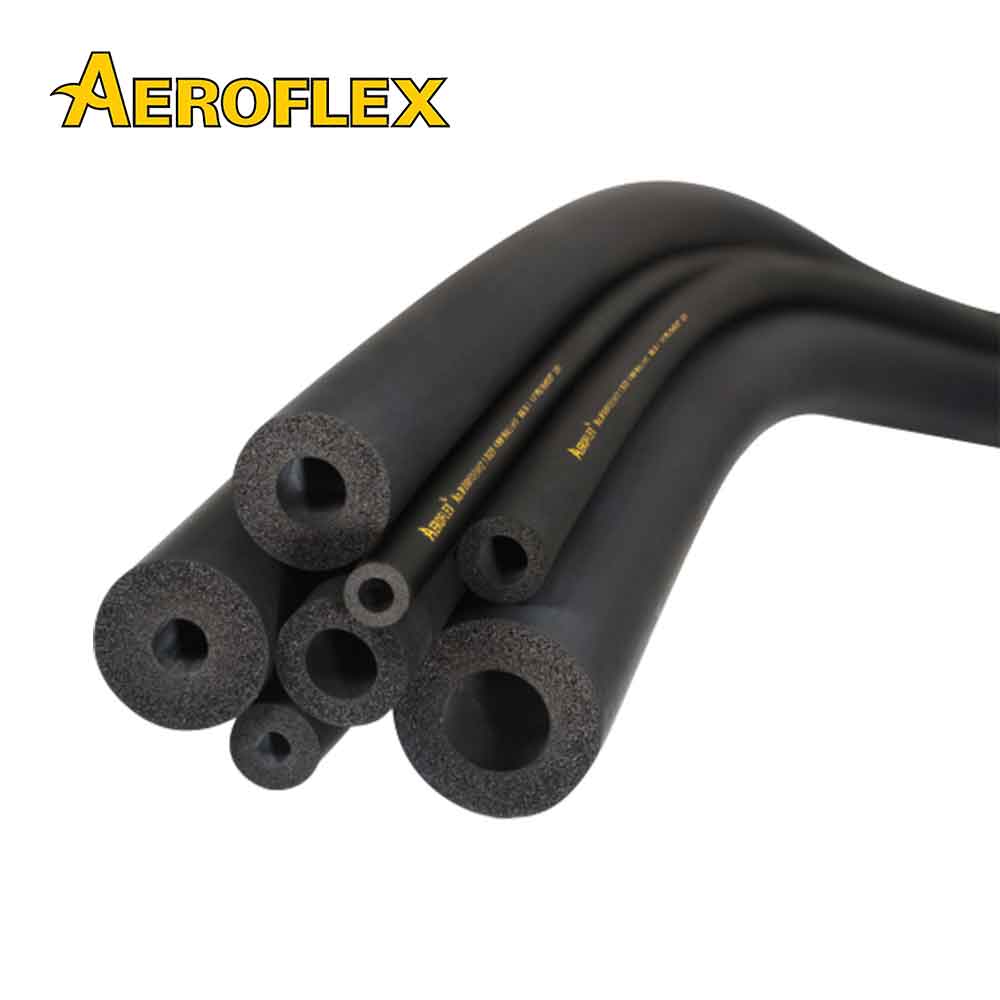
Pipe insulation · Elastomeric foam
AEROFLEX Tube Insulation
- Tube bore
- 6–165 mm
- Wall thickness
- 6–50 mm
- Service temp.
- -57 – 125 °C
Sound coming in or going out (sound insulation)
Echoey rooms (sound absorption)
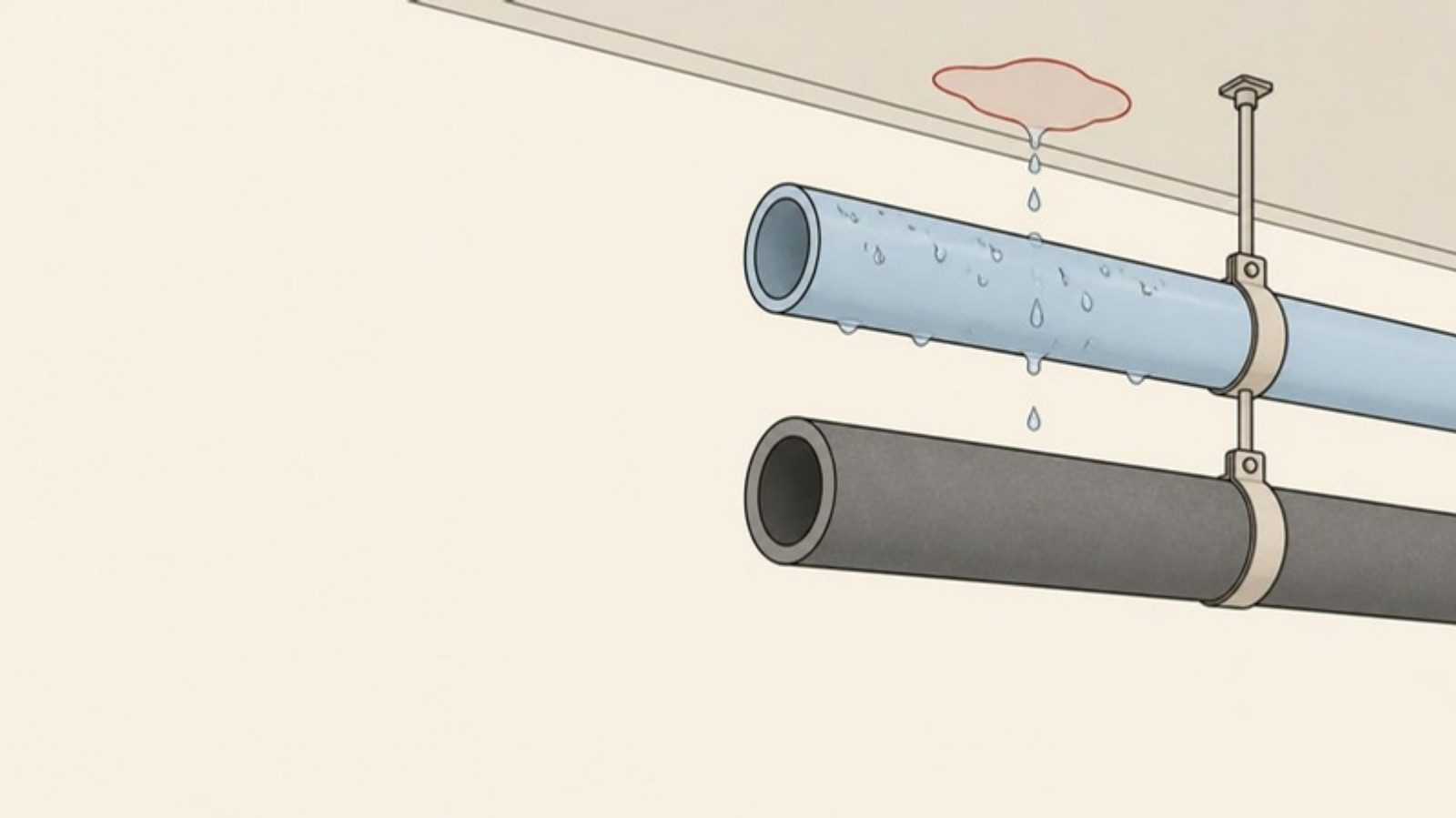
Water drips form when the pipe or insulation surface is colder than the dew point of the surrounding air, so water vapour condenses. Common causes are sections with no insulation, joints that were never glued or taped, insulation that is torn or crushed, or insulation that is not enough for the temperature and humidity of the space. The fix is to find the actual cause, then replace or add insulation suited to the real conditions and seal the joints so the system is continuous.
Air always contains water vapour. When it touches a surface colder than its dew point, the vapour condenses into droplets — like the outside of a glass of iced water. AC refrigerant lines and chilled-water pipes are much colder than the air around them. In Thailand's hot, humid air the dew point is high, so an uninsulated cold pipe will almost certainly drip. The principle is in What are dew point and condensation?
| What you see | Possible cause |
|---|---|
| --- | --- |
| Drips only at certain points, e.g. fittings, valves, elbows | That section was not insulated, or not completely |
| Drips along insulation joints | Joints not glued or taped, or the glue/tape has come loose |
| Drips at hangers or ties | Insulation crushed, or the hanger touches the cold pipe directly |
| Insulation torn, sun-damaged and brittle, or chewed by rodents | Damaged insulation lets vapour reach the pipe |
| The whole run drips although the insulation looks intact | Insulation may be too thin for the space's temperature and humidity, or already wet inside |
| Glass-wool insulation on a cold pipe is soaked | The vapour-retarding jacket is not continuous; vapour has entered and condensed inside |
Once water is inside the insulation, its ability to resist heat drops, the surface gets colder and more water condenses — a cycle. Insulation that is wet inside usually needs replacing, not just covering.
These jobs should be done by an experienced AC technician or contractor.
Categories and example products for this topic
Pipe insulation · Elastomeric foam
Pipe insulation · Elastomeric foam
Pipe insulation · Elastomeric foam
Installation accessories · Tape
Check the message below, then press “Open LINE”. On a phone LINE opens with this message; on a computer LINE shows a QR code to scan with your phone. If LINE does not open, copy the message into the chat, or call us.
Add us on LINE: @x2525 · Call 062-195-1909