Building thermal insulation · Stone wool
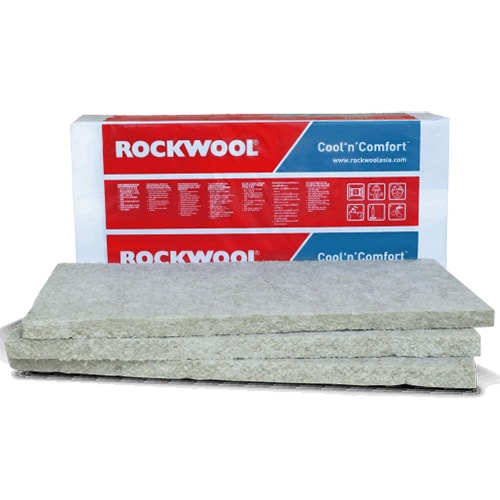
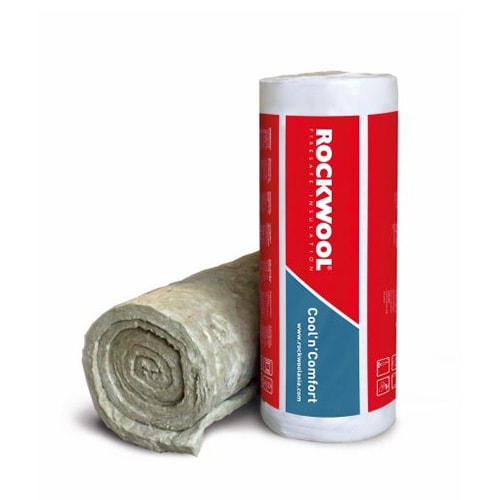
ROCKWOOL Cool 'n' Comfort RL
- Thickness
- 25–50 mm
- Density
- 40–60 kg/m³
- Thermal conductivity (λ)
- 0.034–0.035 W/m·K
Sound coming in or going out (sound insulation)
Echoey rooms (sound absorption)
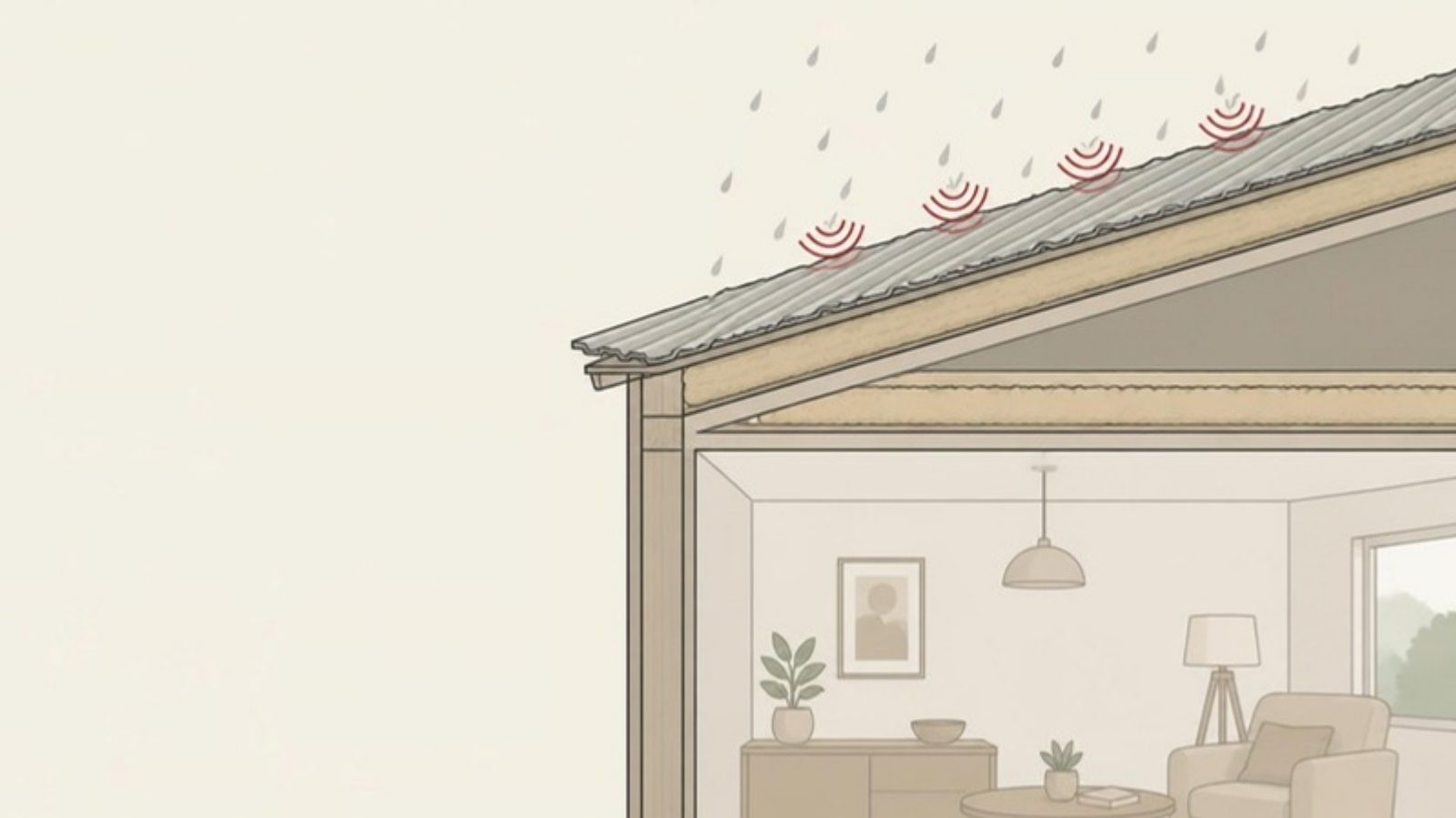
Raindrops hitting a metal sheet make the thin, light steel vibrate across its whole area, so the roof radiates sound downwards like a drum skin. There are two places to deal with it: at the roof, with an insulation blanket held tight against the underside of the sheet to damp the vibration, or an insulated sandwich roof panel; and at the ceiling, with an airtight ceiling without openings and sound insulation above it — plus a second ceiling layer if it is still too loud. The result depends on the whole roof and ceiling system, so no product can promise a specific dB reduction.
Rain noise is impact sound. Each drop strikes the roof surface; the sheet that takes the hit vibrates and radiates sound both upwards and downwards. Metal roofing is thin steel with little mass per square metre and high stiffness, so it vibrates easily and radiates sound well. Heavier roofs such as tiles or a concrete slab vibrate less.
The noise you hear in the room therefore comes in two steps:
Rooms without a ceiling, open to the roof — such as loft rooms or carports — get the full noise because there is no second layer.
Rain noise can be measured in the laboratory with artificial rain under ISO 10140 (an annex of ISO 10140-1 covers rainfall sound on roofs and roof/ceiling systems, and ISO 10140-5 specifies the artificial rain source; this replaced the former ISO 140-18). The result belongs to the roof system tested as a whole, not to one insulation product.
Steel roofing manufacturer Lysaght recommends laying an insulation blanket over the foil laminate or support mesh before the roofing goes on, with the laminate pulled tight enough to hold the blanket hard against the underside of the sheet. The blanket damps the vibration where the rain strikes. If the blanket is not in contact with the sheet, the noise reduction is smaller.
In a finished house the roof usually cannot come off, so the practical route is to turn the ceiling into a sound-insulating layer. The logic is the same as a sound-insulating wall: mass, airtightness and insulation in the cavity (why cavity insulation improves sound insulation).
| Situation | Options to consider |
|---|---|
| --- | --- |
| New house / re-roofing | Insulation tight under the roof sheet, or sandwich panels, and plan the sound-insulating ceiling at the ceiling stage — usually cheaper than fixing it later |
| Existing house, roof stays | Seal leaks in the ceiling, add sound insulation above it, and for more effect add a second ceiling layer |
| Bedrooms or rooms that need to be especially quiet | Focus on an airtight double ceiling, and also check windows and walls (outside noise in the bedroom) |
Insulation and a second ceiling add weight to the roof framing and ceiling frame. Have an engineer or knowledgeable contractor confirm the structure can take the extra load. Roof work is work at height, and working in the roof space carries the risk of falling through the ceiling — use experienced installers. See the precautions in how to insulate a ceiling properly.
A bonus: insulation under the roof and above the ceiling also reduces heat. Read how to choose roof insulation and how heat gets into a building, or browse sound insulation · thermal insulation.
Categories and example products for this topic
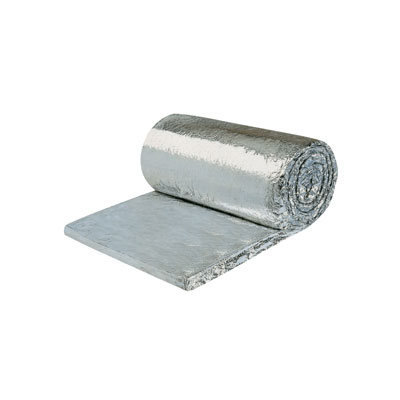
Building thermal insulation · Stone wool
Building thermal insulation · Glass wool
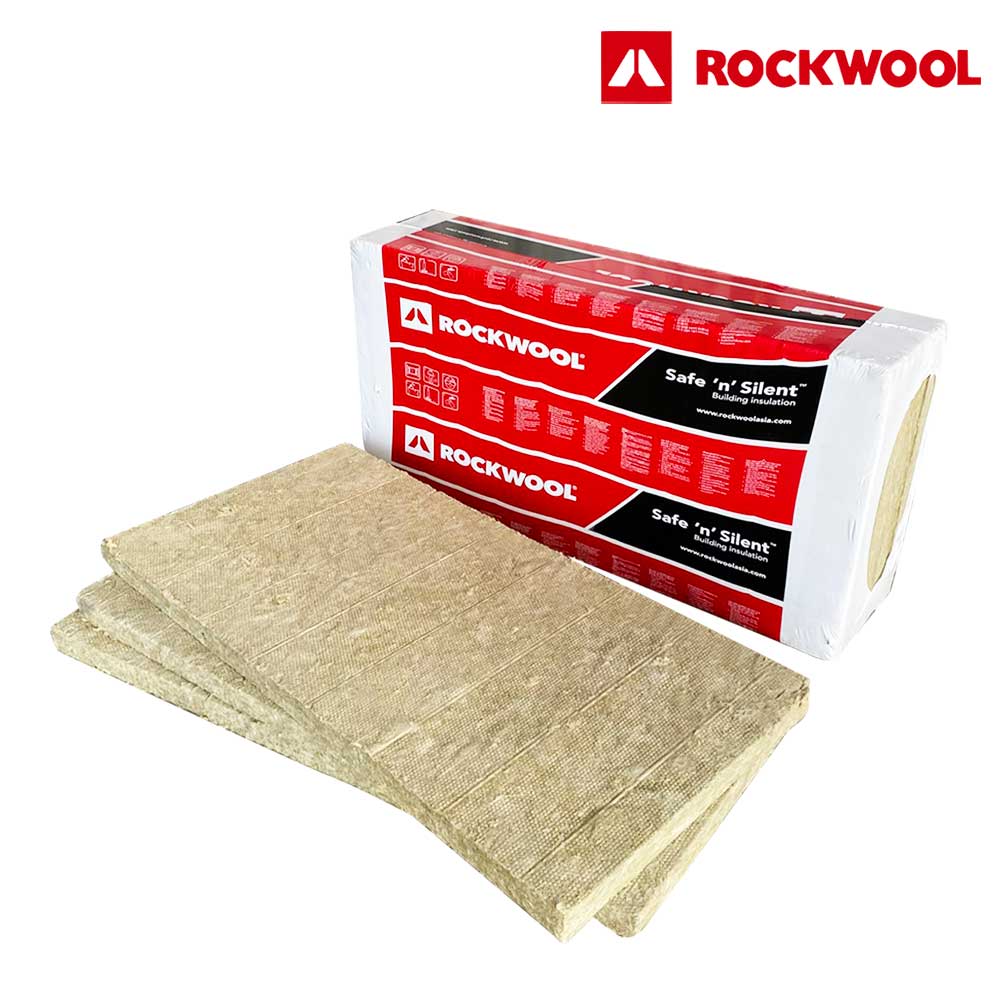
Building thermal insulation · Stone wool
Sound insulation · Stone wool
Check the message below, then press “Open LINE”. On a phone LINE opens with this message; on a computer LINE shows a QR code to scan with your phone. If LINE does not open, copy the message into the chat, or call us.
Add us on LINE: @x2525 · Call 062-195-1909