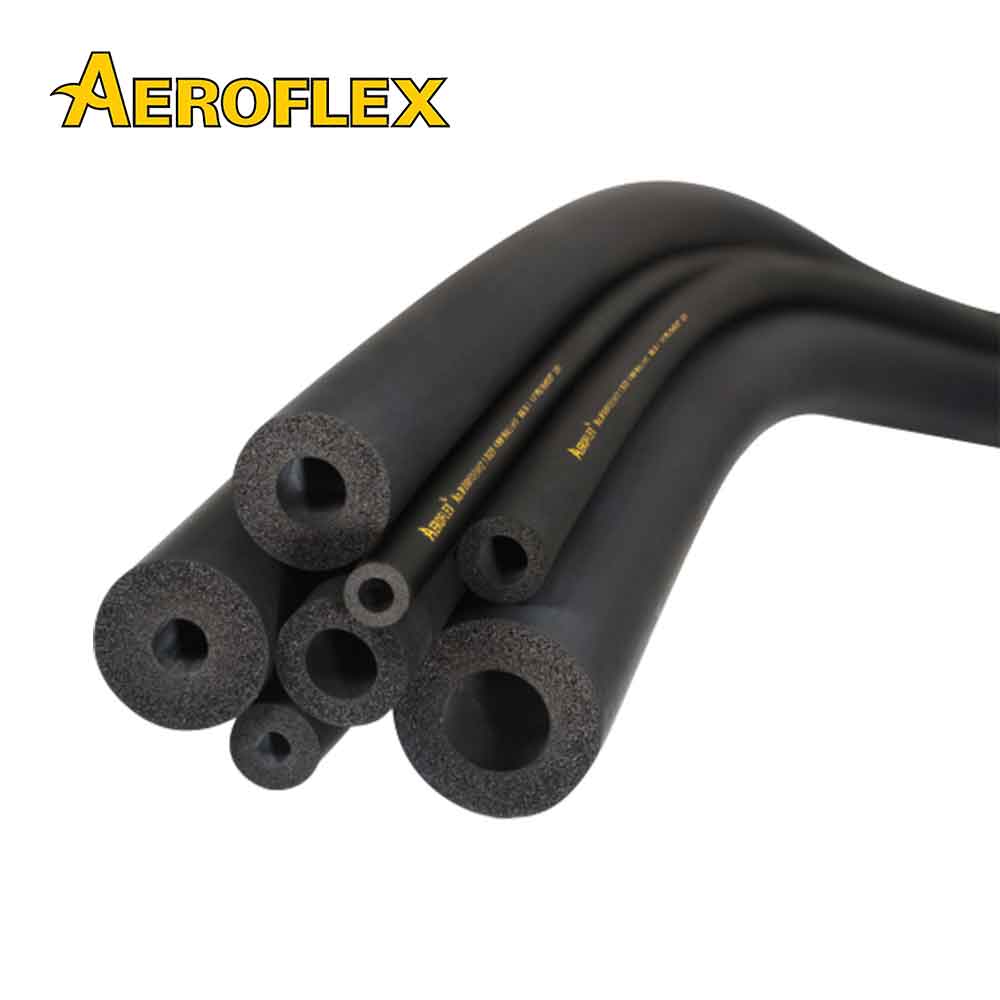
Pipe insulation · Elastomeric foam
AEROFLEX Tube Insulation
- Tube bore
- 6–165 mm
- Wall thickness
- 6–50 mm
- Service temp.
- -57 – 125 °C
Sound coming in or going out (sound insulation)
Echoey rooms (sound absorption)
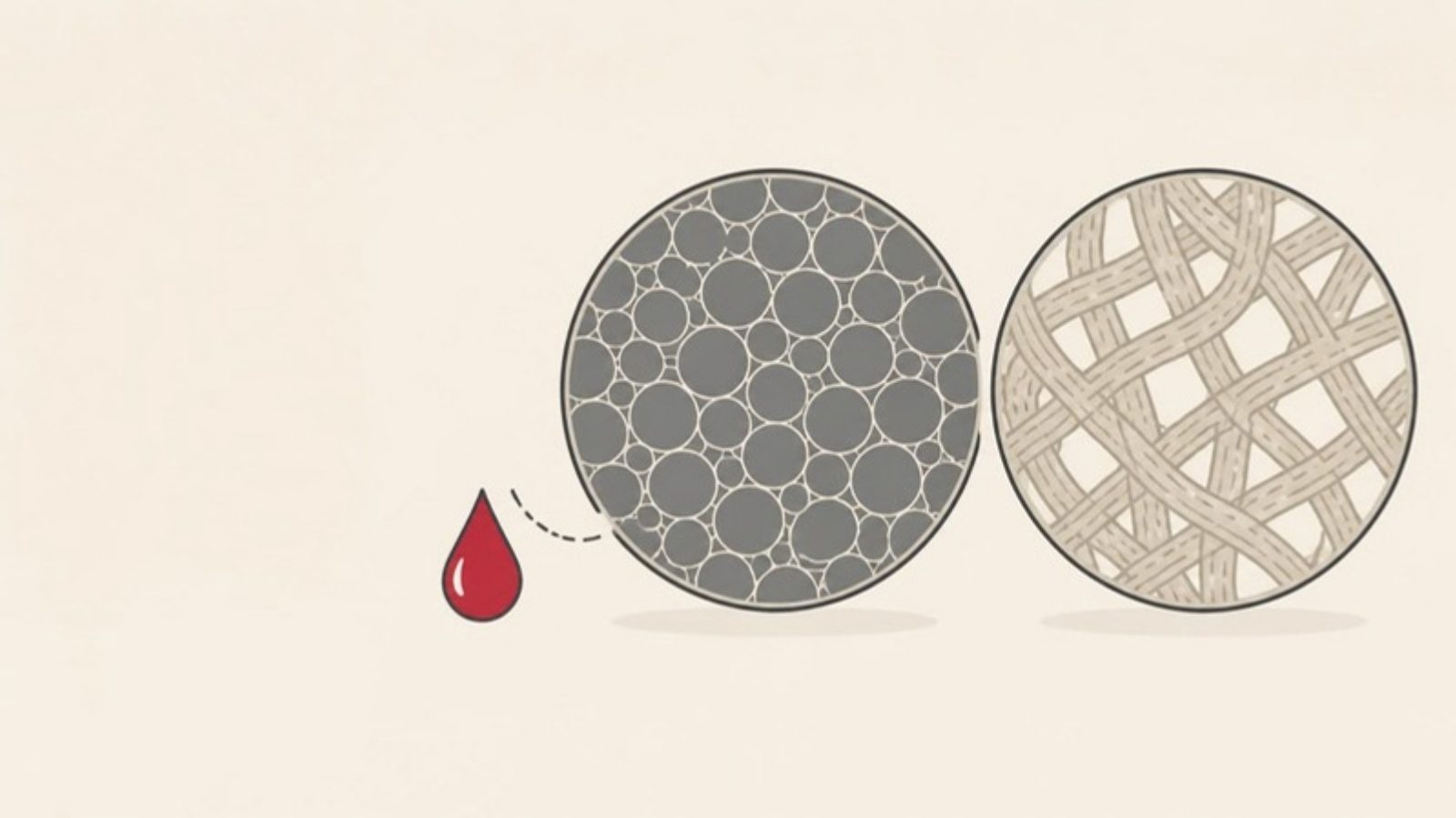
Closed-cell insulation, such as elastomeric foam and PE foam, holds its gas in separate cells, so vapour and water pass through the body with difficulty; it is widely used on cold work where condensation must be prevented. Fibrous insulation, such as glass wool and stone wool, has connected air spaces, so it absorbs sound better and includes grades for high temperatures, but on cold work it relies on a vapour-retarder facing. Neither is better for every job.
Both insulate on the same principle, by keeping air still. The actual thermal conductivity depends on the product, its density and temperature, and must be read from the manufacturer's datasheet (thermal conductivity λ).
| Closed cell | Fibrous | |
|---|---|---|
| --- | --- | --- |
| Vapour through the body | Difficult; resistance is in the material | Passes; relies on a vapour-retarder facing on cold work |
| Points to watch | Joints, slits, ends must be glued | Torn foil facings, untaped joints |
| If wetted | Little water enters the body, per manufacturer data | Moisture can collect in the body and performance drops |
Each product's vapour resistance is given as a value tested to a standard, such as ASTM E96 or a μ value to EN 12086; compare only values tested the same way. Read more: what is a vapour barrier.
Sound is absorbed when sound waves enter connected air spaces and lose energy through friction. That is why fibrous insulation is widely used as a sound absorber, for example as duct liner or inside walls. Closed-cell insulation lets much less sound into its body, so it is not designed mainly for sound absorption.
If you need absorption, check the NRC or absorption coefficients of that product in its datasheet (what is NRC), and remember that absorbing sound is not the same as blocking it (soundproofing vs sound absorption).
These are broad tendencies. Before choosing, answer: is the surface cold or hot, is there moisture, is noise reduction needed, and are there fire requirements? Then compare values from the datasheets of the products you are considering.
Categories and example products for this topic
Pipe insulation · Elastomeric foam
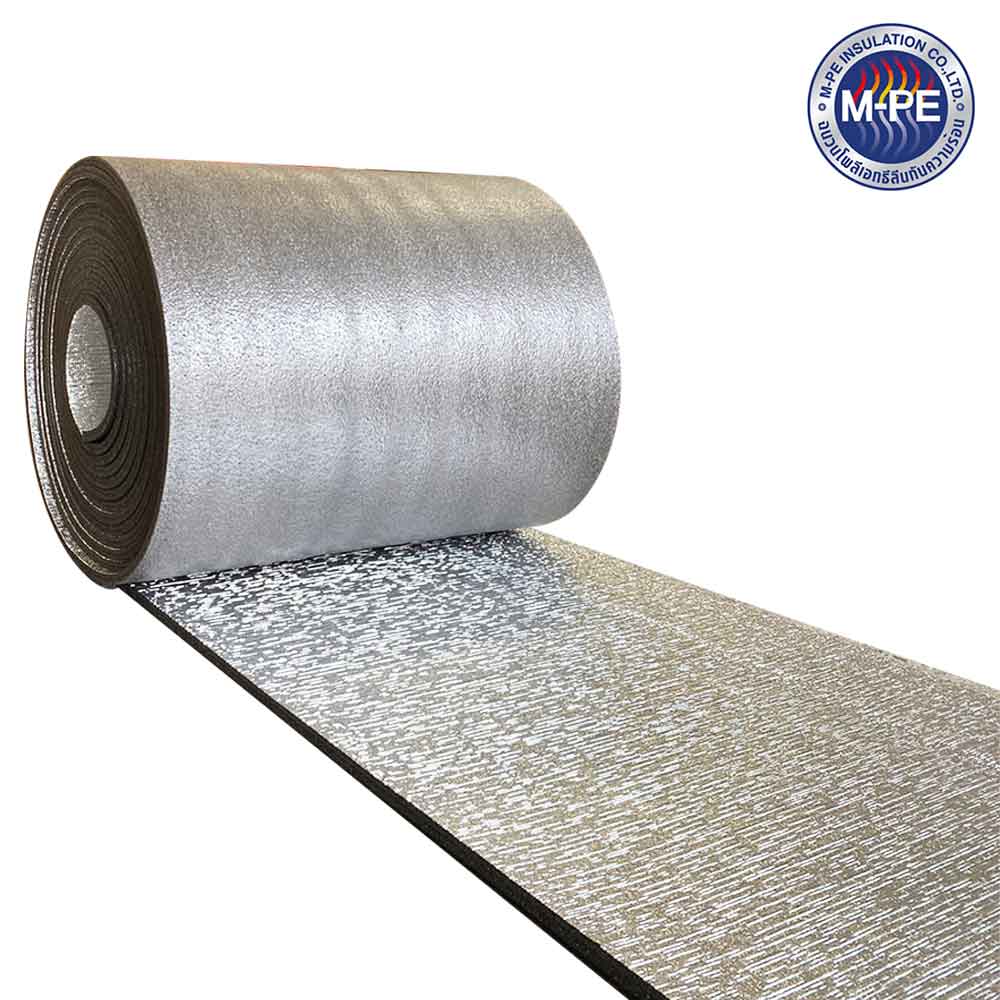
Building thermal insulation · PE foam
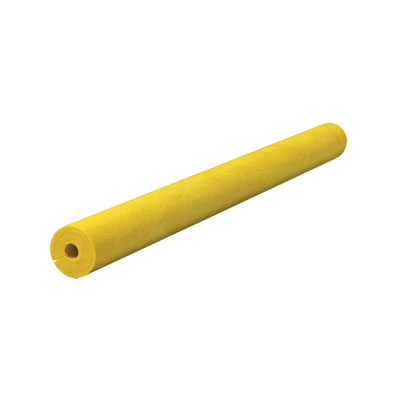
Pipe insulation · Glass wool
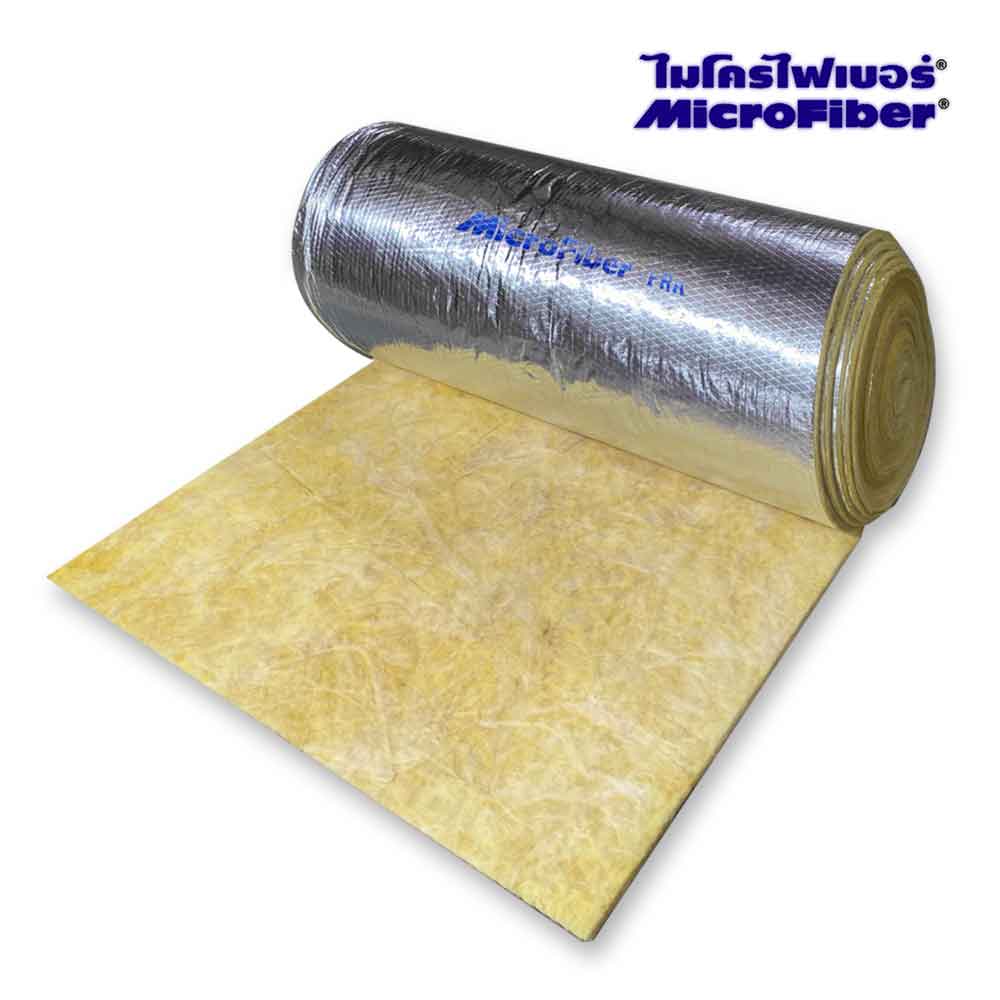
Duct and HVAC insulation · Glass wool
Check the message below, then press “Open LINE”. On a phone LINE opens with this message; on a computer LINE shows a QR code to scan with your phone. If LINE does not open, copy the message into the chat, or call us.
Add us on LINE: @x2525 · Call 062-195-1909