Pipe insulation · Elastomeric foam
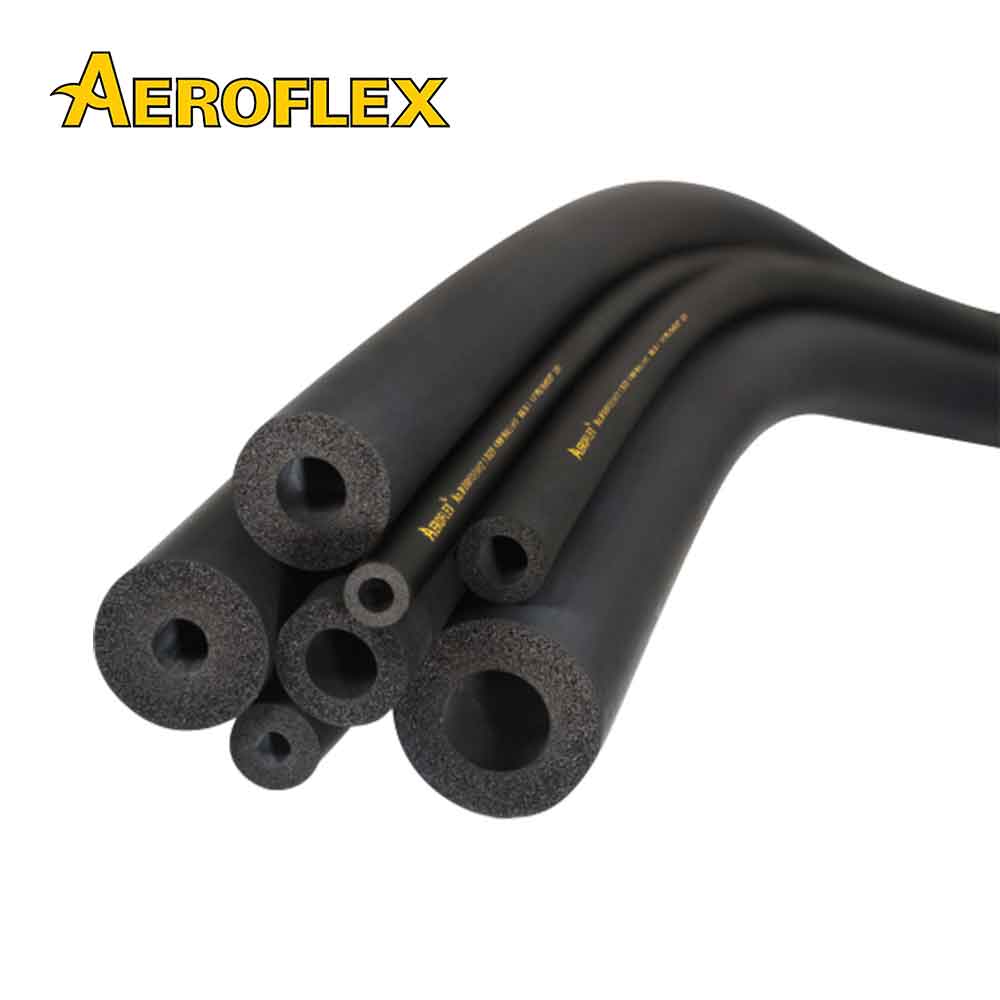
AEROFLEX Tube Insulation
- Tube bore
- 6–165 mm
- Wall thickness
- 6–50 mm
- Service temp.
- -57 – 125 °C
Sound coming in or going out (sound insulation)
Echoey rooms (sound absorption)
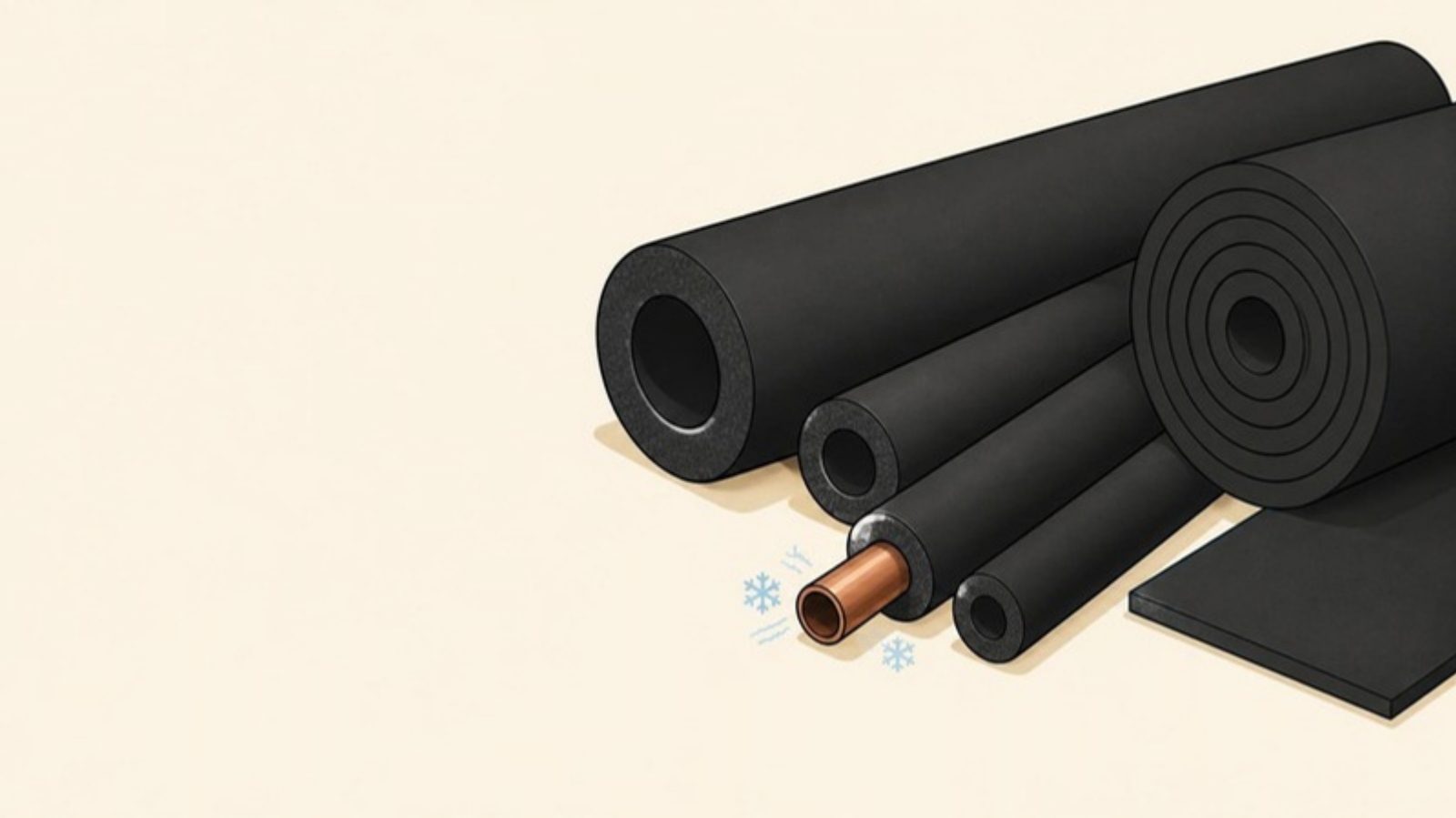
Elastomeric foam (elastomeric insulation) is a flexible synthetic-rubber foam with a closed-cell structure, made as pre-formed tubes, sheets and rolls. Its main job is insulating chilled-water and refrigerant pipes to reduce cooling loss and prevent condensation. Some products also suit hot-water pipes within the temperature range in their datasheet. When installed outdoors it should be protected from sunlight as the manufacturer advises.
Elastomeric insulation is made from natural or synthetic rubber mixed with various additives and expanded into a foam. ASTM C534 is the specification for this insulation in sheet and tubular form and divides it into grades by operating temperature range.
Two main formulation families are common on the market:
Each brand and product has its own formulation, service temperature, fire test results and thermal conductivity. Read them from that product's datasheet rather than judging from the rubber family alone.
It only prevents condensation when the thickness is sufficient for the conditions and the joints are fully glued (why AC pipes drip, sealing insulation joints).
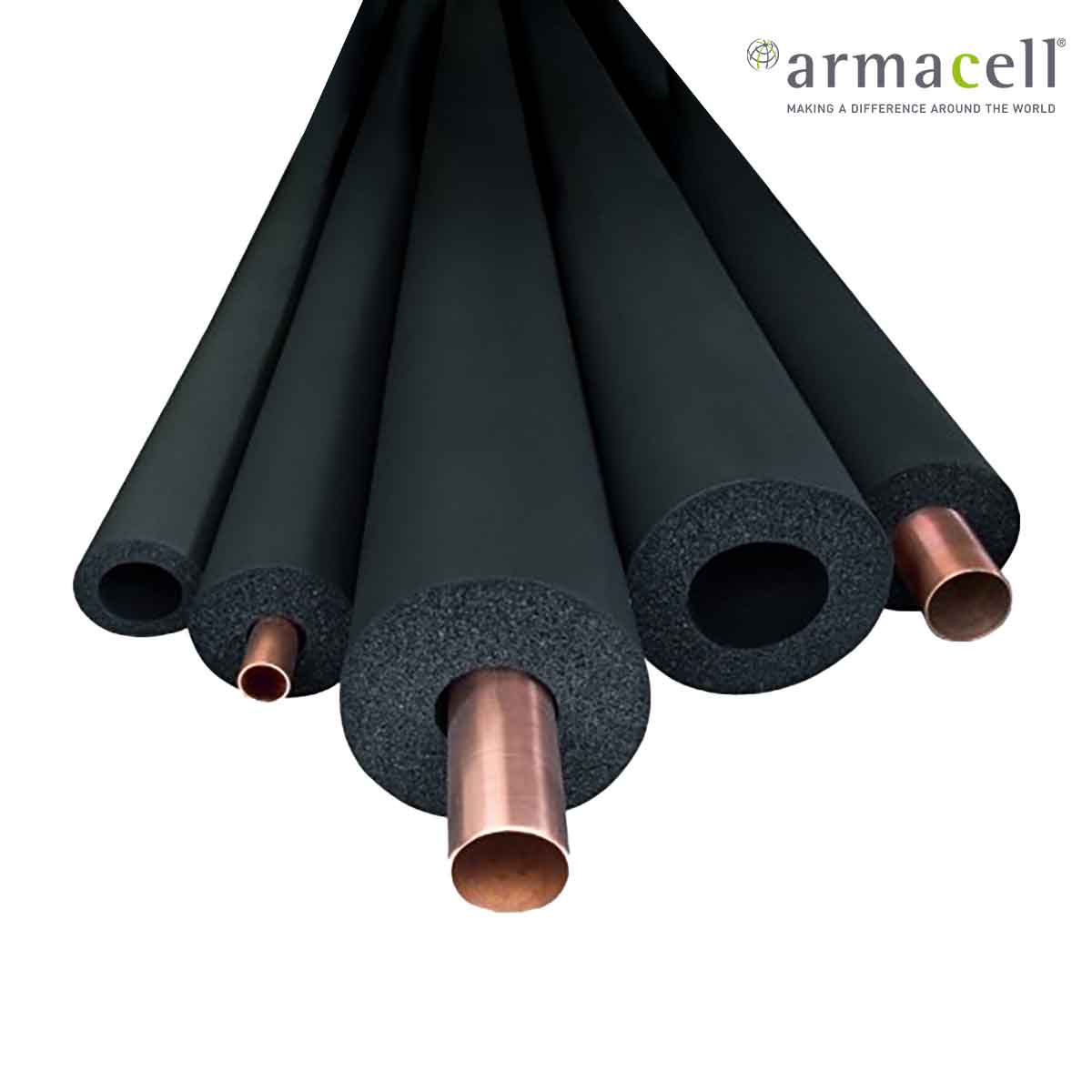
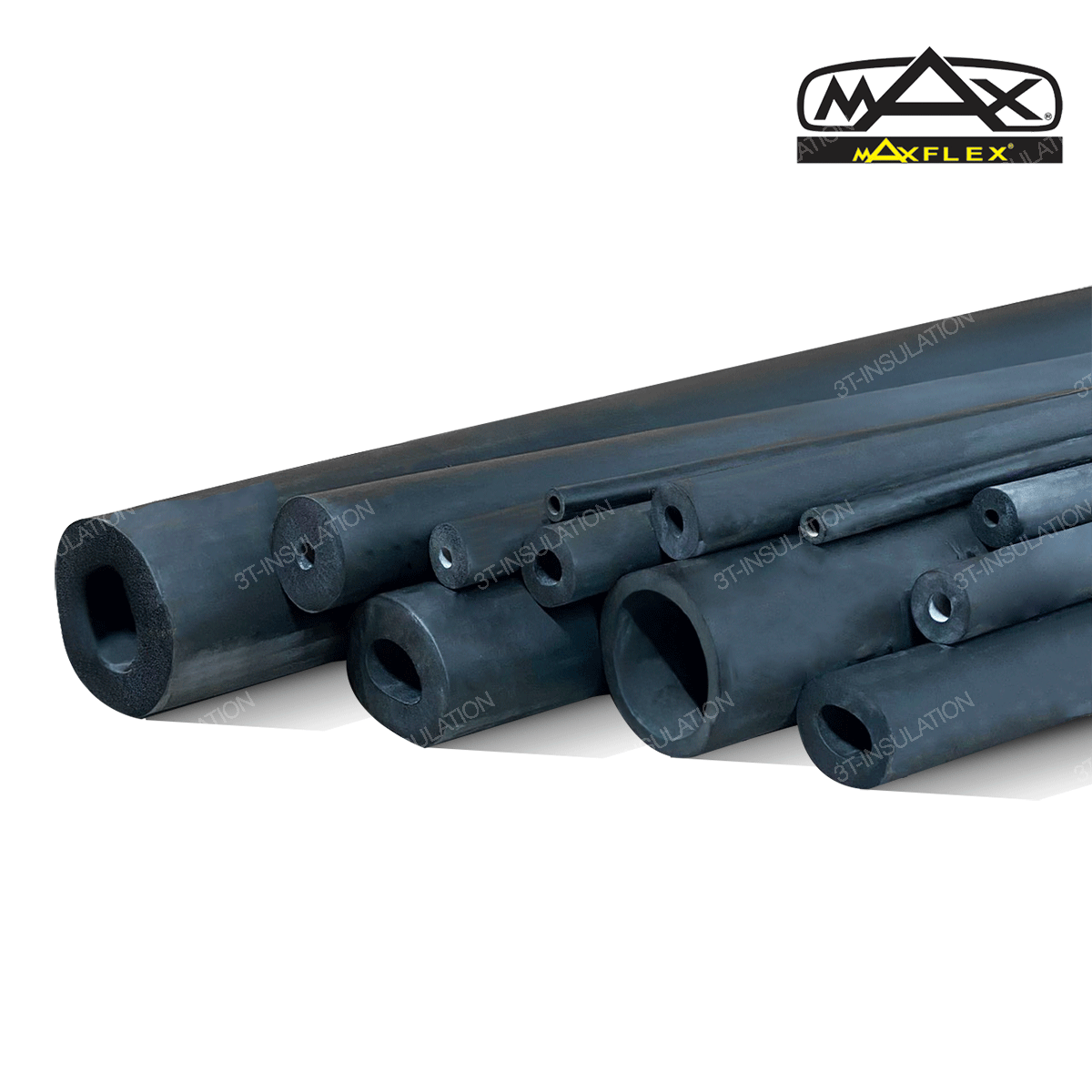
Examples from the manufacturers' datasheets of products we sell: AEROFLEX tube -57 to 125 °C and ArmaFlex Class 1 -50 to +105 °C, while for MAXFLEX FR STANDARD the manufacturer recommends operating temperatures up to 100 °C. These figures apply to those products only.
UV light and weather can degrade the rubber surface. Many manufacturers require an outdoor installation to be covered with their UV-protective paint or coating, or clad with metal or PVC jacketing. Even though EPDM degrades more slowly, manufacturers still recommend protection. Follow the instructions of the brand you use.
Read more: elastomeric foam vs glass wool for HVAC
Categories and example products for this topic
Pipe insulation · Elastomeric foam
Pipe insulation · Elastomeric foam
Pipe insulation · Elastomeric foam
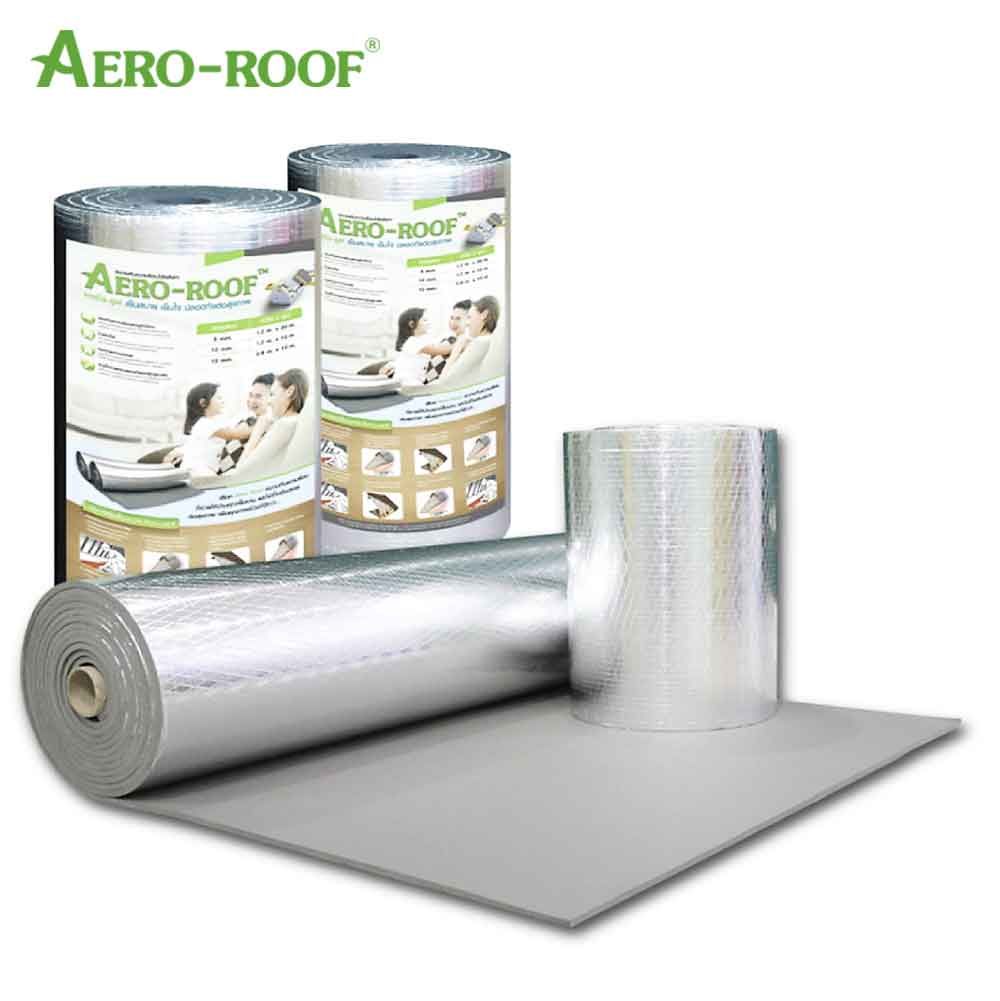
Building thermal insulation · Elastomeric foam
Check the message below, then press “Open LINE”. On a phone LINE opens with this message; on a computer LINE shows a QR code to scan with your phone. If LINE does not open, copy the message into the chat, or call us.
Add us on LINE: @x2525 · Call 062-195-1909