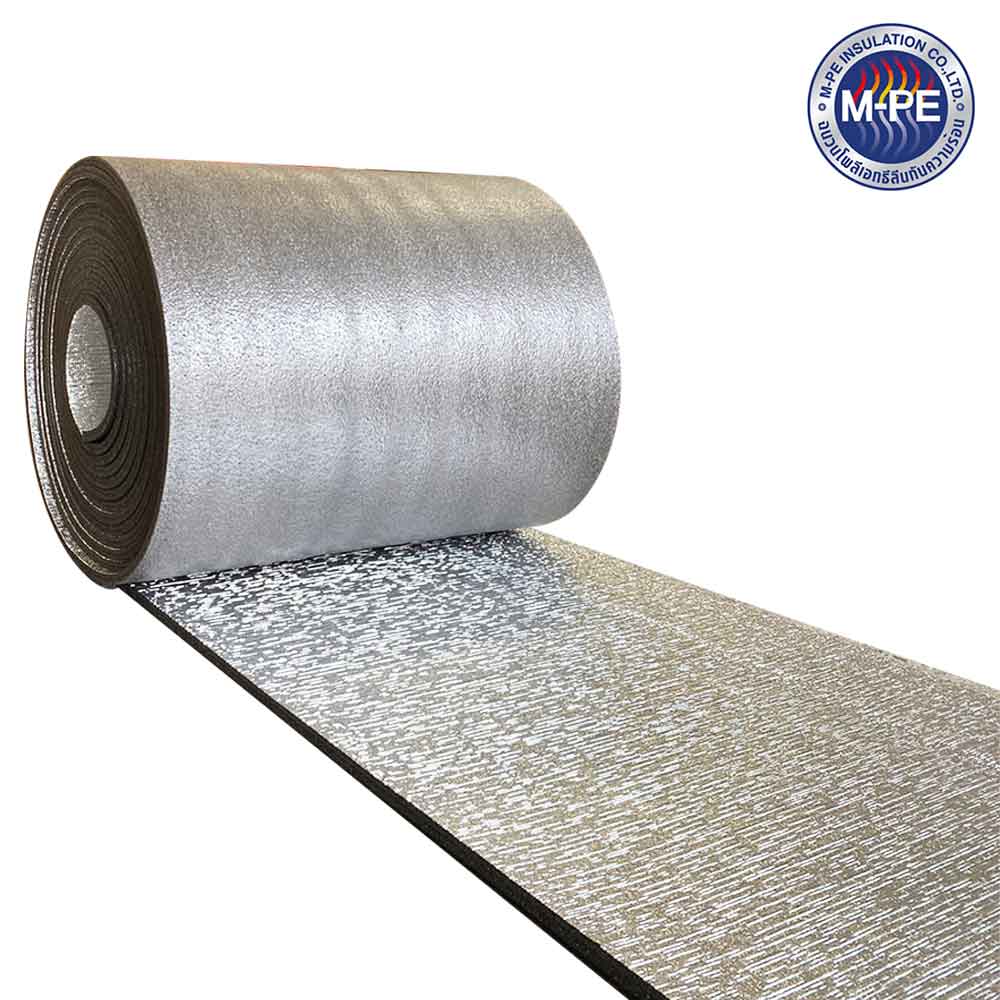
Building thermal insulation · PE foam
M-PE M-PE (Standard)
- Thickness
- 3–20 mm
- Density
- 35–45 kg/m³
- Thermal conductivity (λ)
- 0.029 W/m·K
Sound coming in or going out (sound insulation)
Echoey rooms (sound absorption)
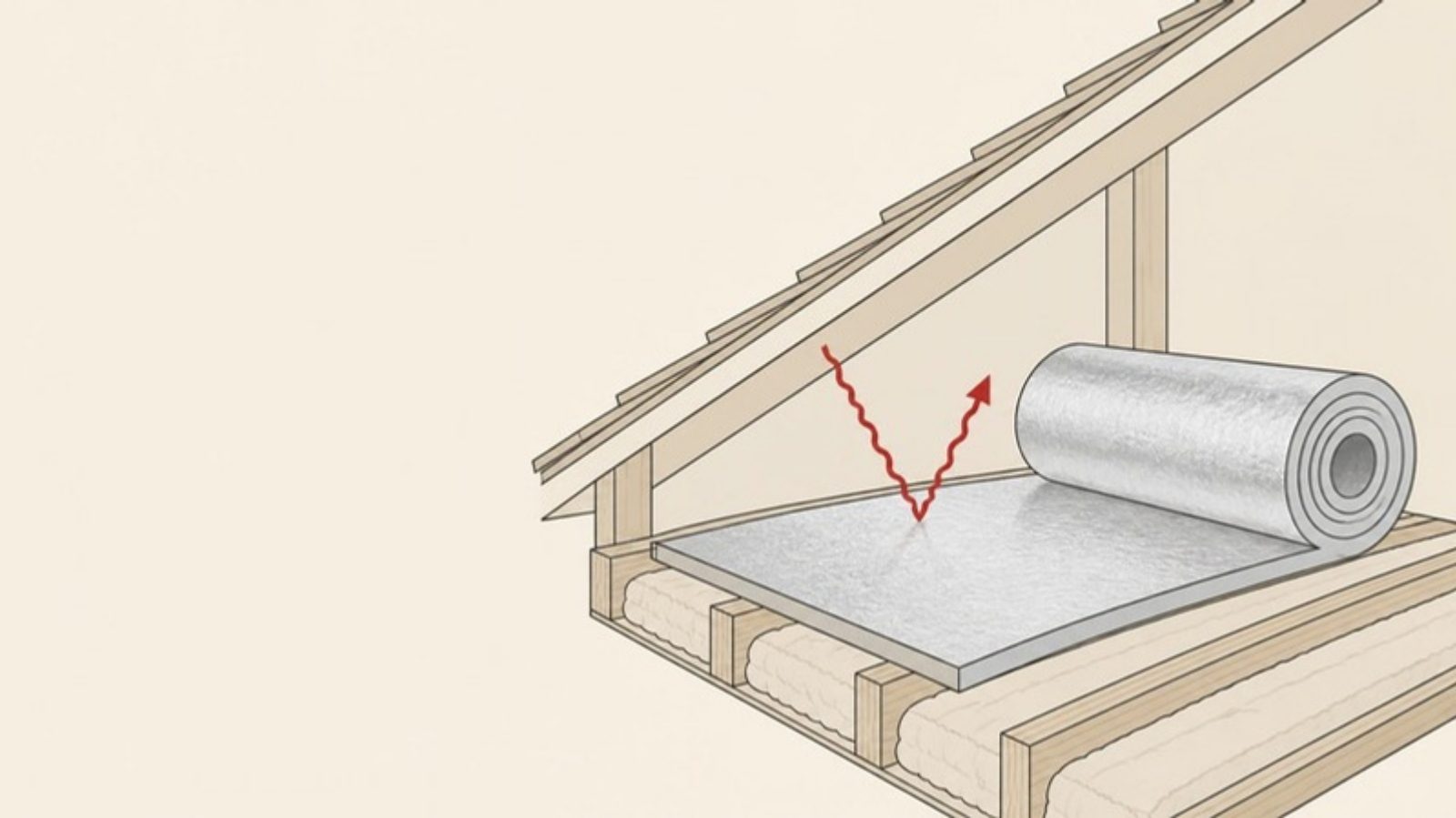
PE foam (polyethylene foam, PEF) is a light, flexible polyethylene plastic foam with a closed-cell structure. For buildings it is usually made as rolls or boards faced with metalized film or foil and used under roofs, on ceilings and in walls to reduce heat gain. PE foam is a thermoplastic, so its behaviour at high temperature and in fire differs by formulation and product: check the test results in the manufacturer's datasheet.
PE foam is polyethylene expanded into small bubbles, mostly closed cells, so it absorbs little water and holds air still (closed-cell vs fibrous insulation). In Europe, EN 14313 is the standard for PE foam products used on building equipment and industrial installations.
PE foam is a thermoplastic: it softens and melts once it gets hot enough, unlike elastomeric insulation, which is a cured rubber. Its service temperature range must therefore be read from each product's datasheet.
PE insulation for roofs and ceilings usually has a facing such as:
A metallic surface facing an air space helps reflect radiant heat; the actual effect depends on installation and needs an air space in front of the surface (what is reflective foil insulation).
Example from our range: the manufacturer states that M-PE Standard is used on roofs, ceilings and walls, in rolls of several thicknesses and in panels for T-bar ceilings.
Polyethylene is a combustible plastic that tends to melt before it ignites, and the molten material may drip. Manufacturers add flame retardants to some formulations to change this behaviour, and results vary widely between products.
Both are closed-cell foams, but they differ in polymer (PE plastic vs synthetic rubber), flexibility, temperature range and fire test results. Indoor chilled-water pipes usually use elastomeric foam, while roofs and ceilings can use either; compare the values in the datasheets of the products you are considering (what is elastomeric foam).
Categories and example products for this topic
Building thermal insulation · PE foam
Check the message below, then press “Open LINE”. On a phone LINE opens with this message; on a computer LINE shows a QR code to scan with your phone. If LINE does not open, copy the message into the chat, or call us.
Add us on LINE: @x2525 · Call 062-195-1909