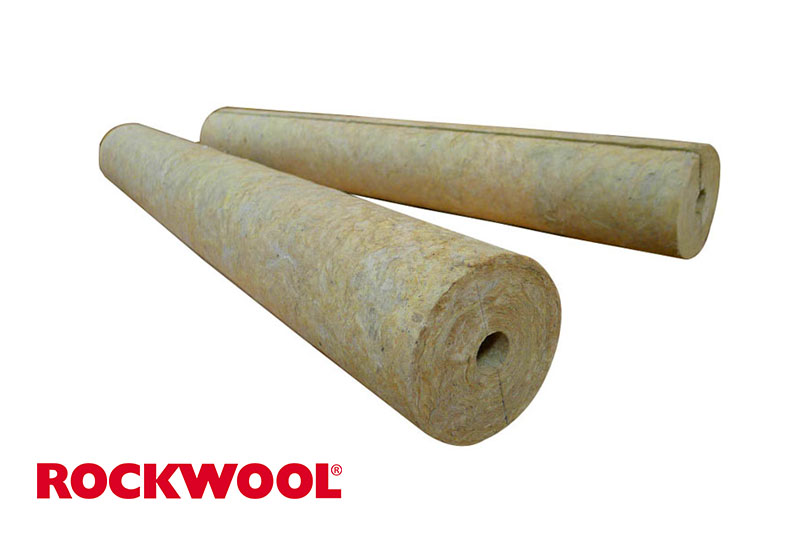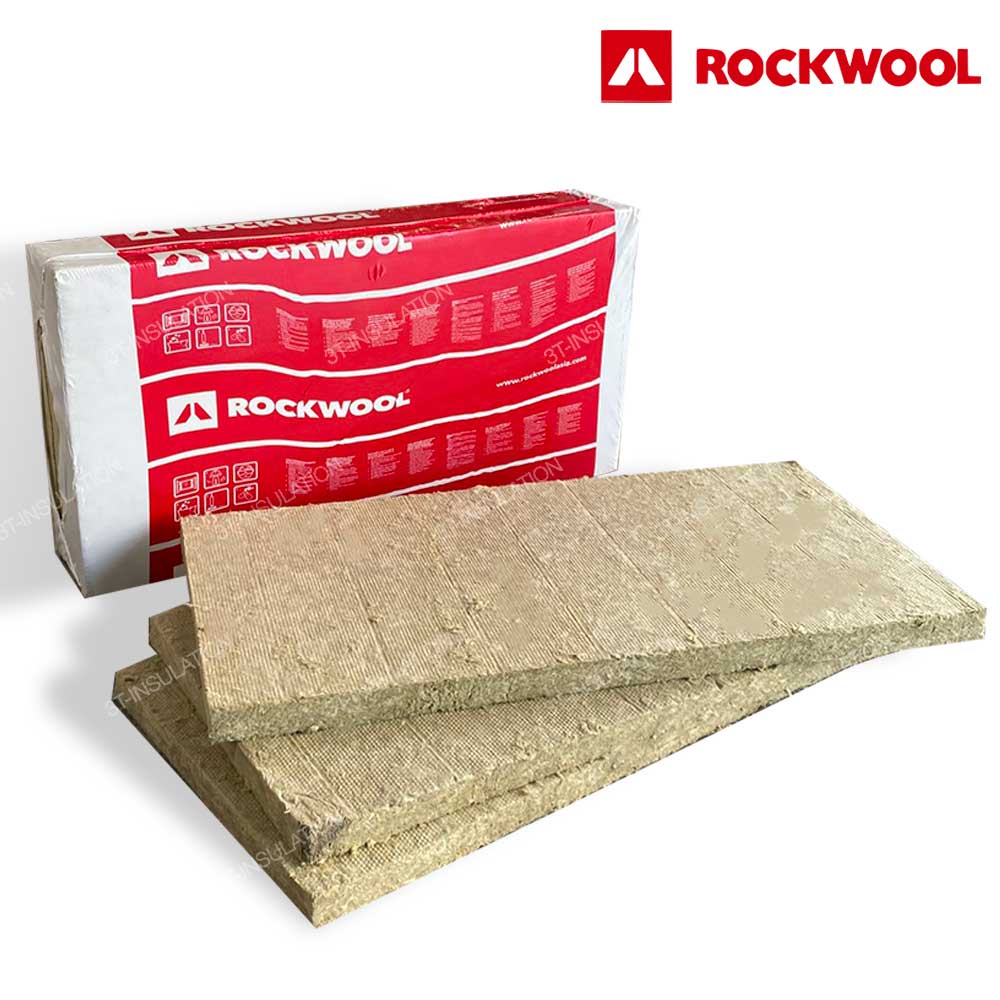
Building thermal insulation · Stone wool
ROCKWOOL Thermalrock S
- Thermal conductivity (λ)
- 0.034–0.036 W/m·K
- Sound absorption (NRC)
- 0.90–1.05
Sound coming in or going out (sound insulation)
Echoey rooms (sound absorption)
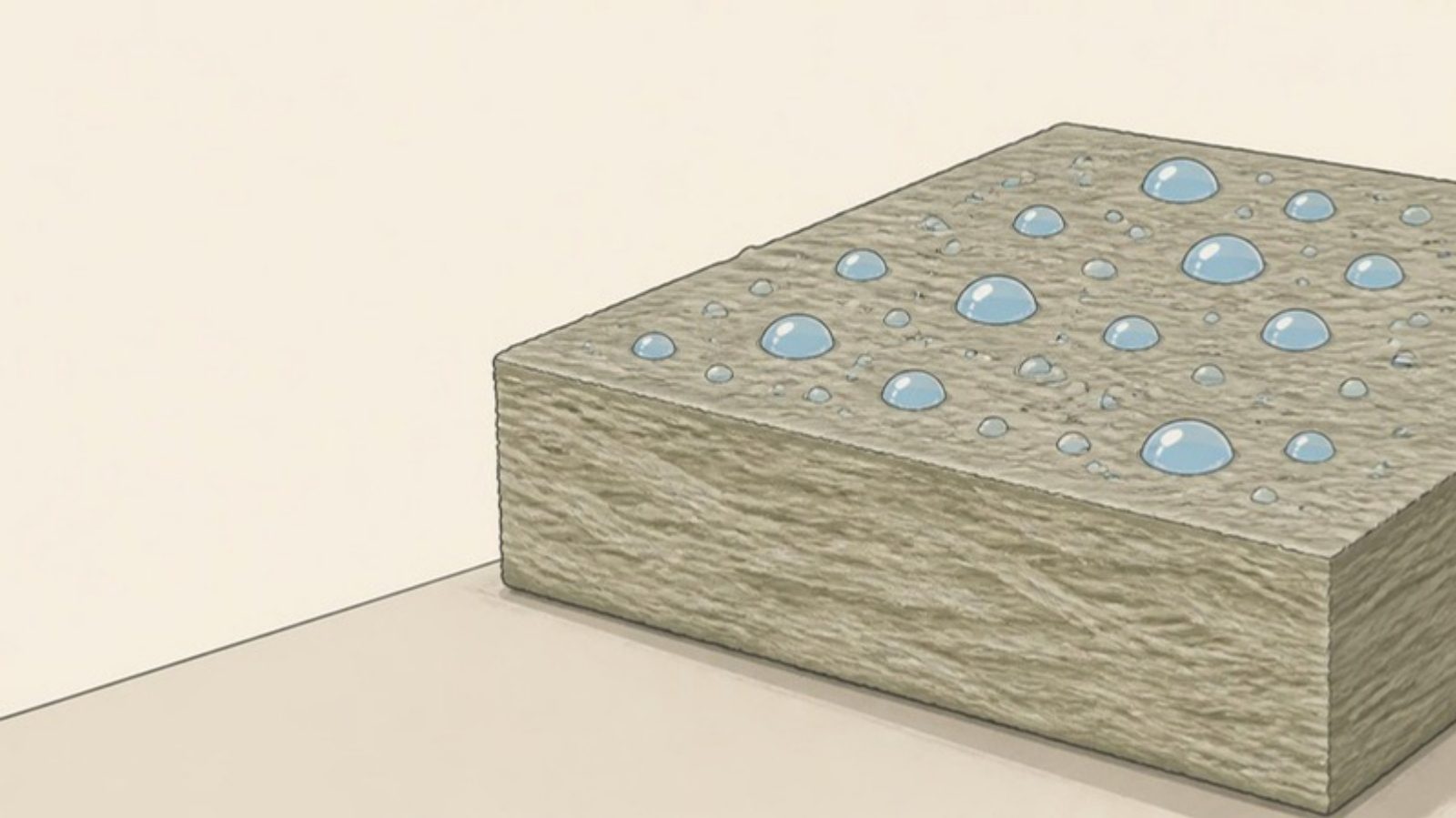
The three terms deal with water in different forms. Water absorption is how much *liquid water* insulation takes up when immersed or wetted. Water vapour sorption is how much *moisture from the air* it takes up. Water repellency (hydrophobic treatment) means the fibres are treated so that water beads and runs off instead of soaking in. Wet insulation insulates less because water replaces the still air. The common misunderstanding: water-repellent insulation still lets water vapour through, so cold work still needs a vapour barrier.
| Term | Form of water | How it is tested, in principle | Example standards |
|---|---|---|---|
| --- | --- | --- | --- |
| Water absorption | Liquid: rain, leaks | The specimen is placed or partly immersed in water for a set time and the weight gain is measured | EN 1609, EN 13472, ASTM C1763 |
| Water vapour sorption | Vapour in humid air | The specimen is kept in a high-humidity atmosphere and the weight gain is measured | ASTM C1104 |
| Water repellency | Liquid touching the fibre surface | A property given by an agent mixed into the fibres; its effect shows in the water-absorption value | — |
| Vapour permeability | Vapour moving through the material | The rate at which vapour passes through a material or facing | ASTM E96 |
Notes:
Insulation works through still air trapped in small spaces. When water replaces the air, heat travels through water, which conducts heat much better than still air. A study of glass-fibre pipe insulation submerged in water found the wet thermal conductivity to be tens of times higher than the dry value, returning close to the original once fully dry.
Beyond heat, insulation that stays wet brings other problems:
| Fibrous (stone wool, glass wool, polyester fibre) | Closed-cell (rubber foam, PE foam) | |
|---|---|---|
| --- | --- | --- |
| Structure | Connected voids; air and vapour pass through | Separate closed cells; vapour passes with difficulty |
| Liquid water | Water-repellent grades shed water, but immersion or pressure still gets water in | Low water absorption as long as the skin and joints are intact |
| Water vapour | Vapour passes through, so cold work needs a separate vapour barrier | The material resists vapour itself, but joints must be fully sealed |
| Drying | Can dry out if air can move | Moisture that has got in leaves slowly |
Neither is better for every job. Hot work and work that needs to dry out generally suit fibrous insulation; cold work that must keep vapour out generally suits closed-cell insulation, or fibrous insulation with a complete vapour-barrier facing. See closed-cell vs fibrous insulation.
Stone-wool manufacturers explain that a water-repellent agent is mixed with the fibres during production and that stone wool does not draw in and hold moisture from the air (it is non-hygroscopic), while remaining permeable to vapour. This helps when insulation is caught by rain during installation or by occasional drips, but it has limits:
In hot-humid air, vapour always moves from the warm humid side towards a cold surface. The following work therefore needs a continuous vapour barrier on the outside of the insulation, even when the insulation is water-repellent:
The principles are in what is a vapour barrier? and dew point and condensation.
The values below come from each product's manufacturer document and from different tests, so use them to see what data a product has, not to rank products.
Categories and example products for this topic
Building thermal insulation · Stone wool
Industrial and high-temperature insulation · Stone wool
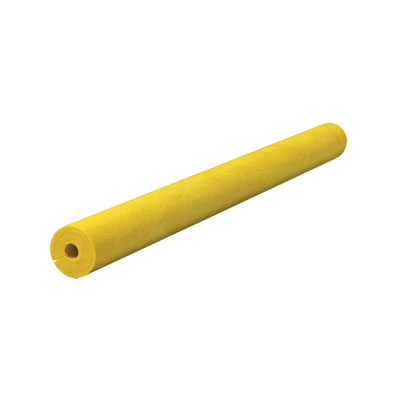
Pipe insulation · Glass wool
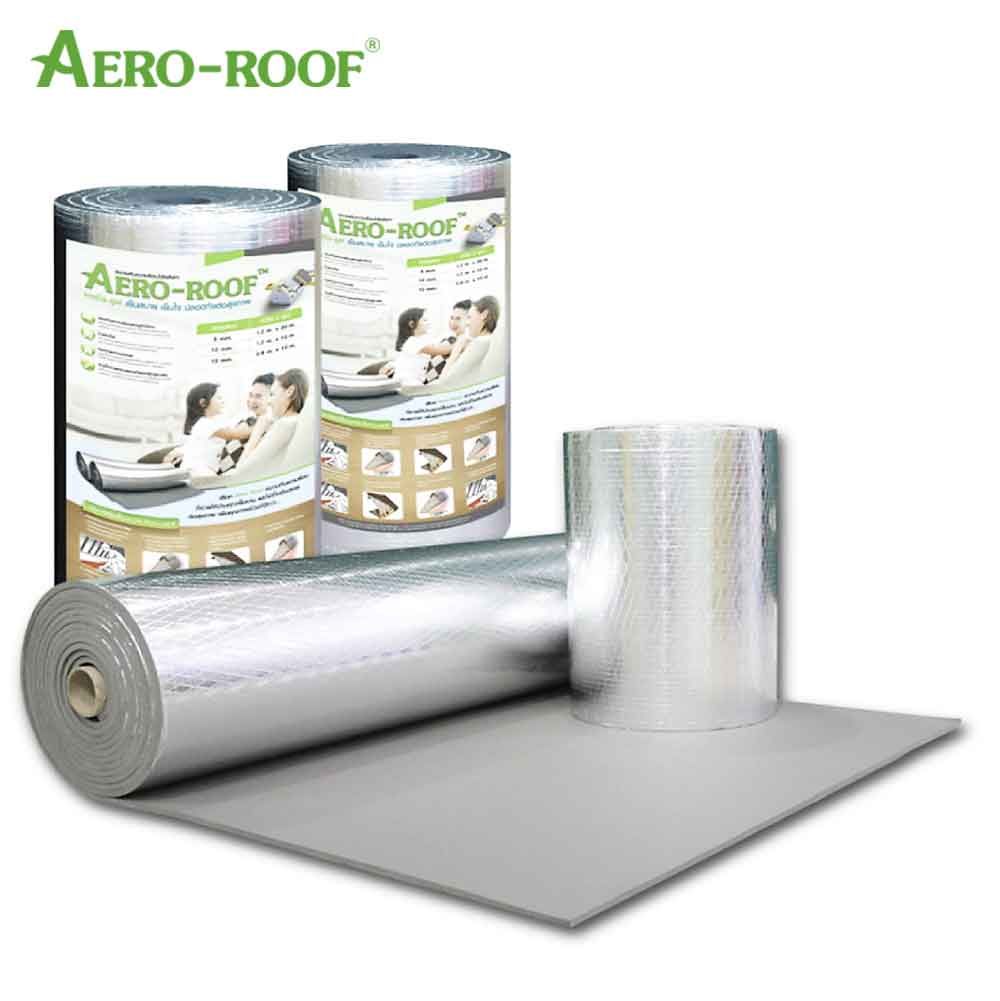
Building thermal insulation · Elastomeric foam
Check the message below, then press “Open LINE”. On a phone LINE opens with this message; on a computer LINE shows a QR code to scan with your phone. If LINE does not open, copy the message into the chat, or call us.
Add us on LINE: @x2525 · Call 062-195-1909