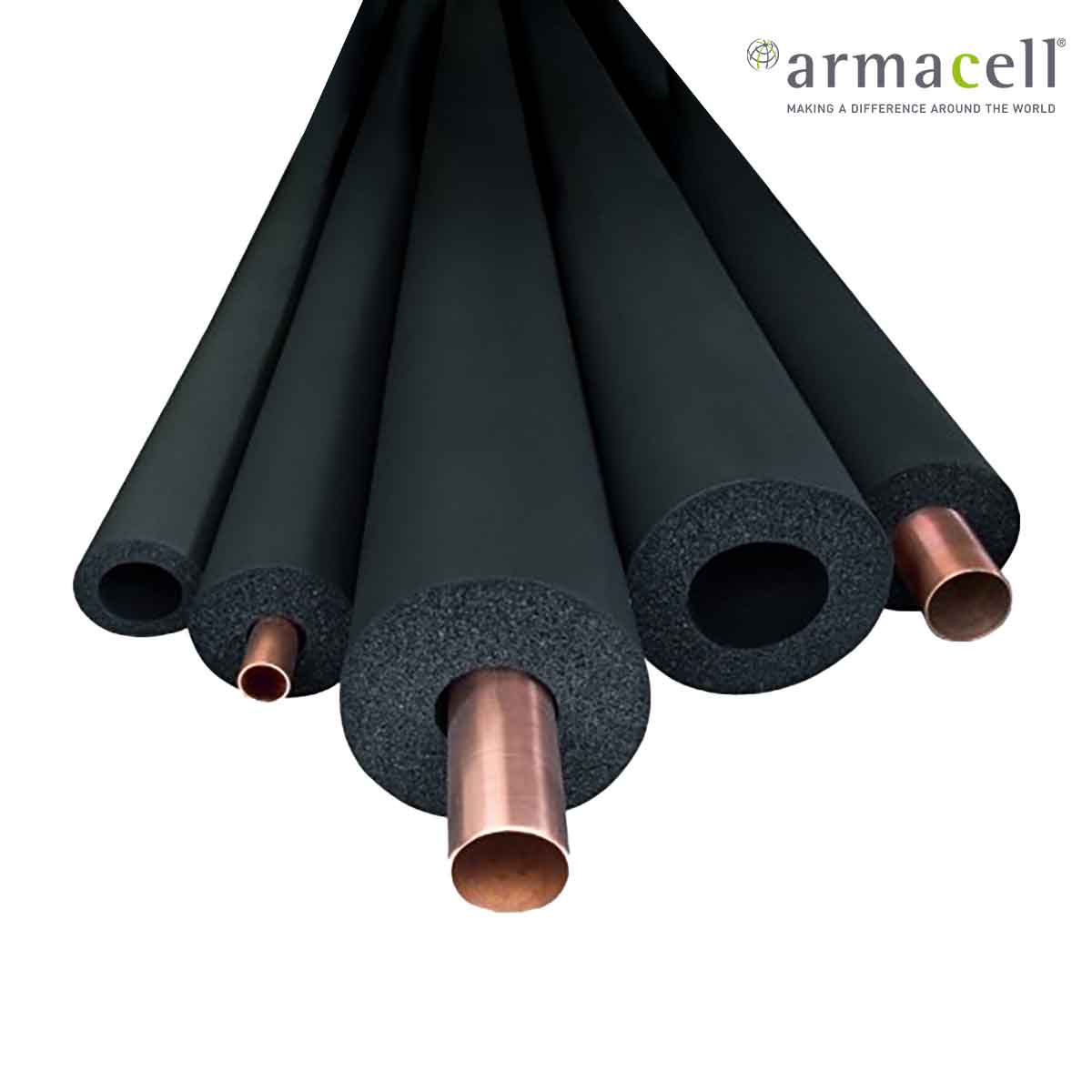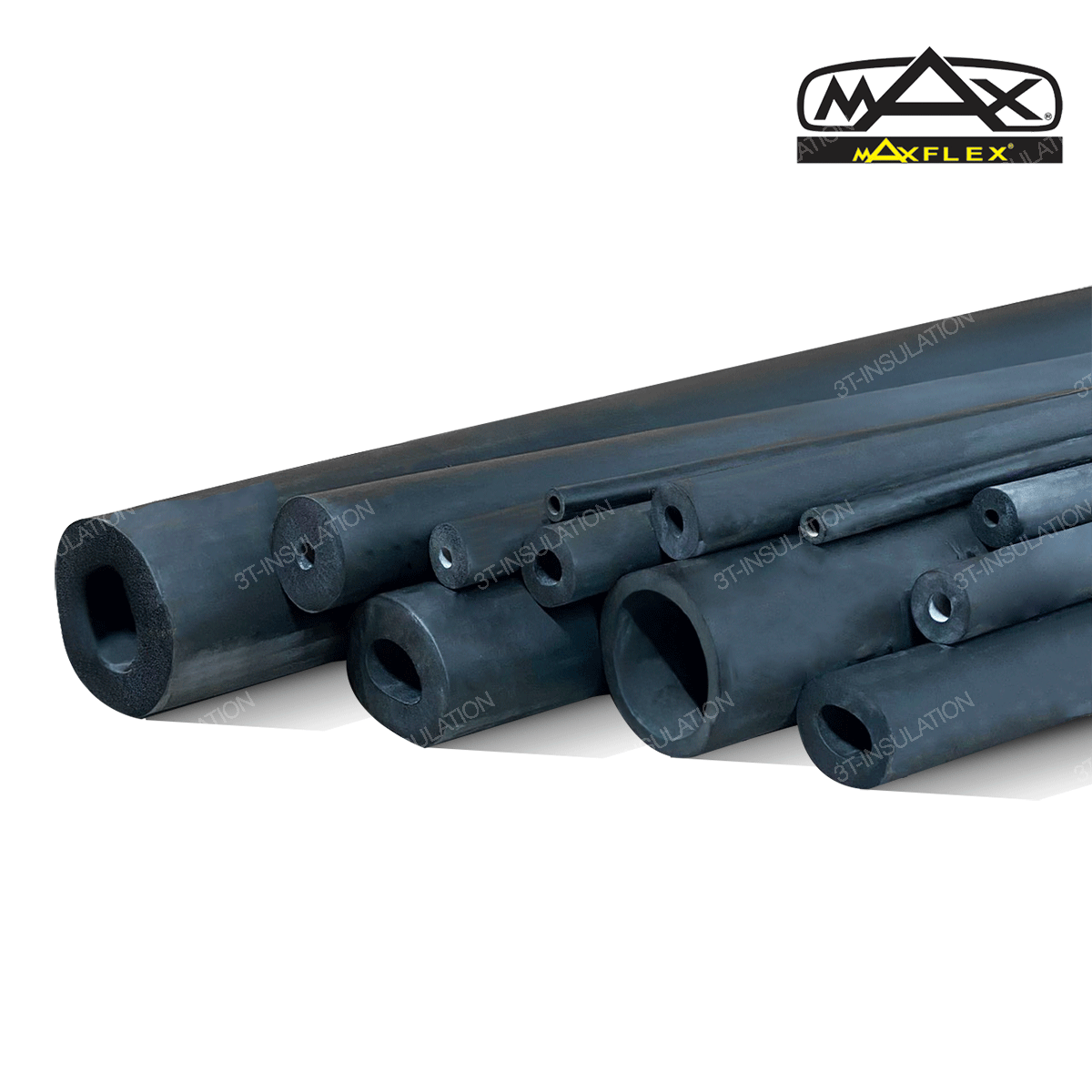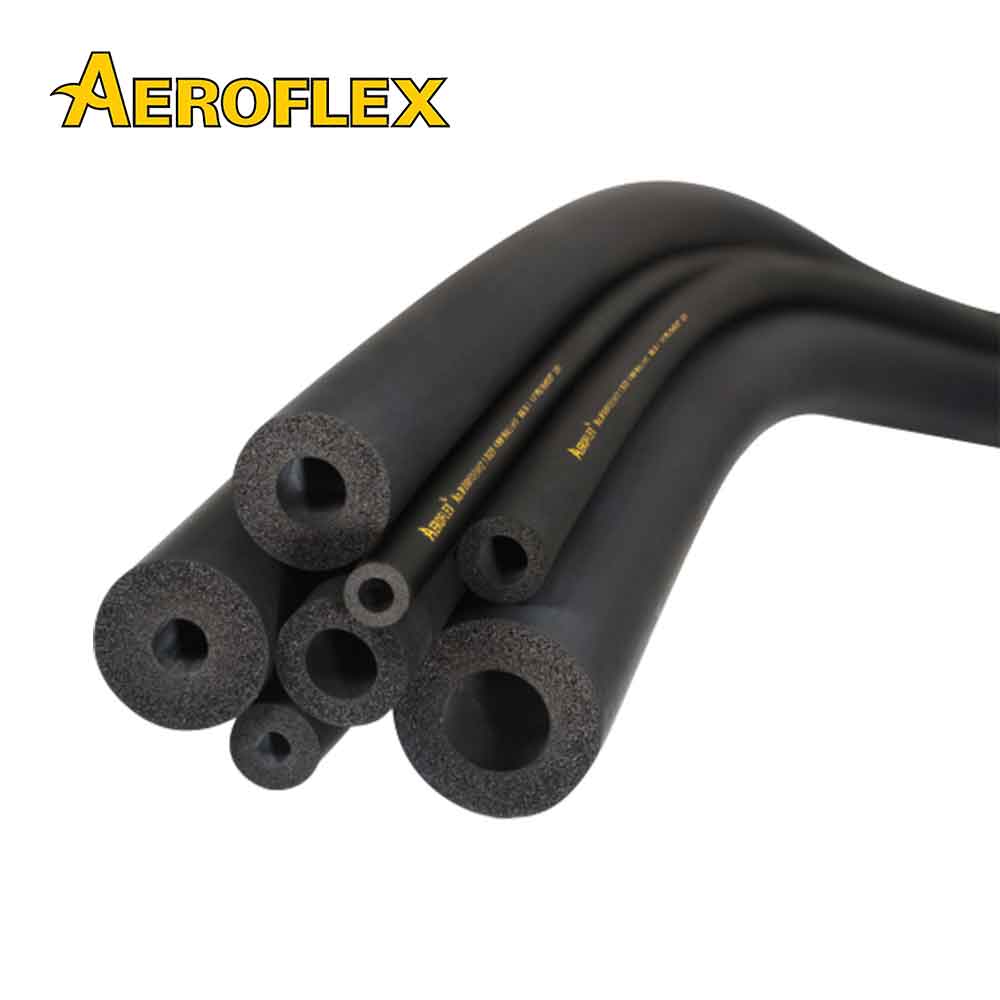
Pipe insulation · Elastomeric foam
AEROFLEX Tube Insulation
- Tube bore
- 6–165 mm
- Wall thickness
- 6–50 mm
- Service temp.
- -57 – 125 °C
Sound coming in or going out (sound insulation)
Echoey rooms (sound absorption)
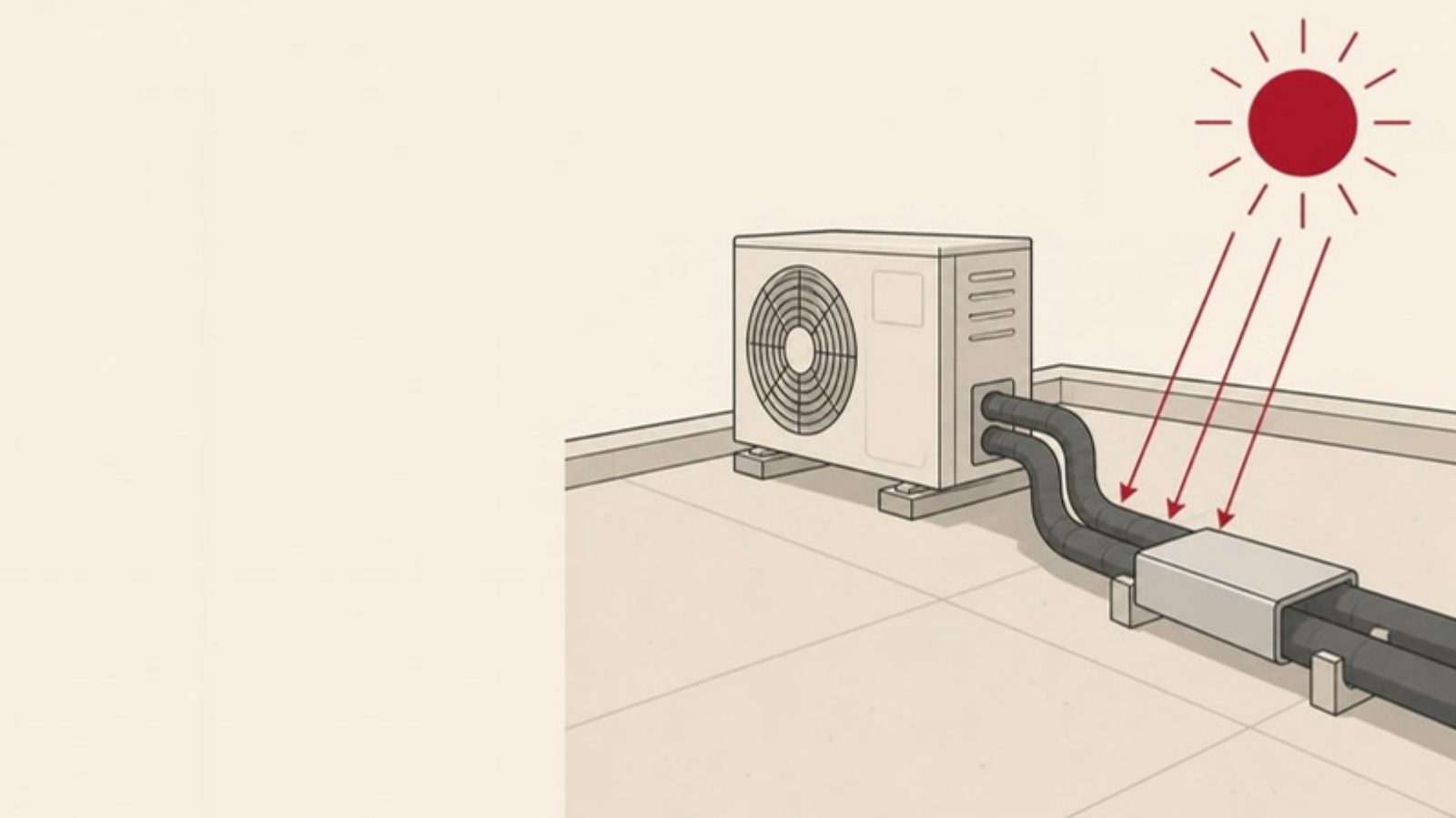
Elastomeric (rubber) insulation outdoors is exposed to UV, ozone, rain and built-up heat, so it should have a protective finish such as the manufacturer's coating or metal cladding, as that product's manufacturer specifies. The requirement differs from brand to brand. Whatever finish is used, every seam must be glued shut first: the finish deals with sun and rain, but it does not replace seam sealing.
Refrigerant lines on a roof, chilled-water pipes on an outside wall or solar hot-water pipes work in much harsher conditions than pipes in a ceiling void.
On a cold pipe, the result is water vapour and water reaching the pipe surface, causing condensation and wet insulation, which lowers performance and may rust the pipe. See the principle in Why do AC pipes drip?
The statements below summarise the documents of the manufacturers whose products we sell. Follow the guidance for the brand actually installed; do not apply one brand's guidance to another.
| Product | What the manufacturer's document says about outdoor use |
|---|---|
| --- | --- |
| ArmaFlex Class 1 | UV protection with ArmaFinish paint or the Arma-Chek covering system is required, and for outside use it should be protected within three days of installation |
| MAXFLEX FR Tube | Outdoor applications should be clad with metal sheet (aluminium or stainless steel) or painted with 2–3 layers of Maxcoat |
| AEROFLEX Tube | EPDM rubber for indoor and outdoor use; painting with Aerocoat (an exterior acrylic paint) is recommended for an extra layer of UV protection or for appearance |
The MAXFLEX and AEROFLEX documents also report ozone and UV resistance tests, but a material test result does not mean the surface needs no care for the whole service life. Jobs that need a long life, or that are hard to reach for repair, are therefore usually given a protective finish from the start.
| Insulation manufacturer's coating | Metal cladding | |
|---|---|---|
| --- | --- | --- |
| Protects against | UV and weather | UV, weather and impact |
| Suits | Small pipes, fittings and complex shapes, areas without foot traffic | Long straight runs, places where people walk or impact is likely |
| What to look after | Number of coats and recoating interval in that coating's data sheet | Sheet joints must not let water run in and collect inside |
The paint must be one the insulation manufacturer states is compatible with that insulation, because it has to flex with the rubber and must not react with it. Do not substitute a general-purpose paint without checking.
More on sealing in Sealing insulation joints.
Aluminium foil tape is made for sealing joints in foil-faced insulation, such as glass wool or stone wool on ducts. None of the three elastomeric manufacturers' documents above lists foil tape as the UV protection for rubber insulation, so use the coating or covering system the manufacturer specifies. See what each accessory is for in Insulation fixing and sealing accessories.
Outdoor air is hotter and more humid than an air-conditioned room. A thickness that prevents dripping indoors may not be enough outdoors. Have the designer calculate from the real climate, or send us the site details to check. See How thick should insulation be?
Categories and example products for this topic
Pipe insulation · Elastomeric foam
Pipe insulation · Elastomeric foam
Pipe insulation · Elastomeric foam
Check the message below, then press “Open LINE”. On a phone LINE opens with this message; on a computer LINE shows a QR code to scan with your phone. If LINE does not open, copy the message into the chat, or call us.
Add us on LINE: @x2525 · Call 062-195-1909