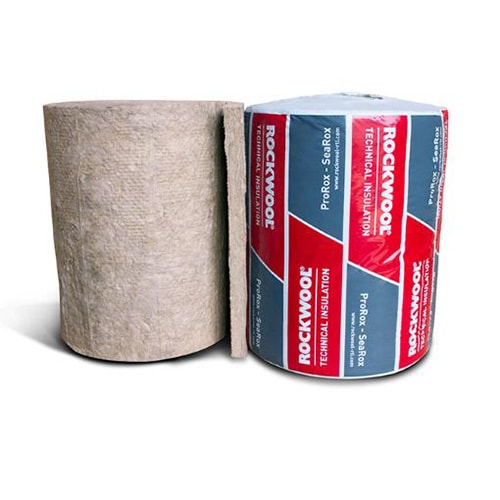
Duct and HVAC insulation · Stone wool
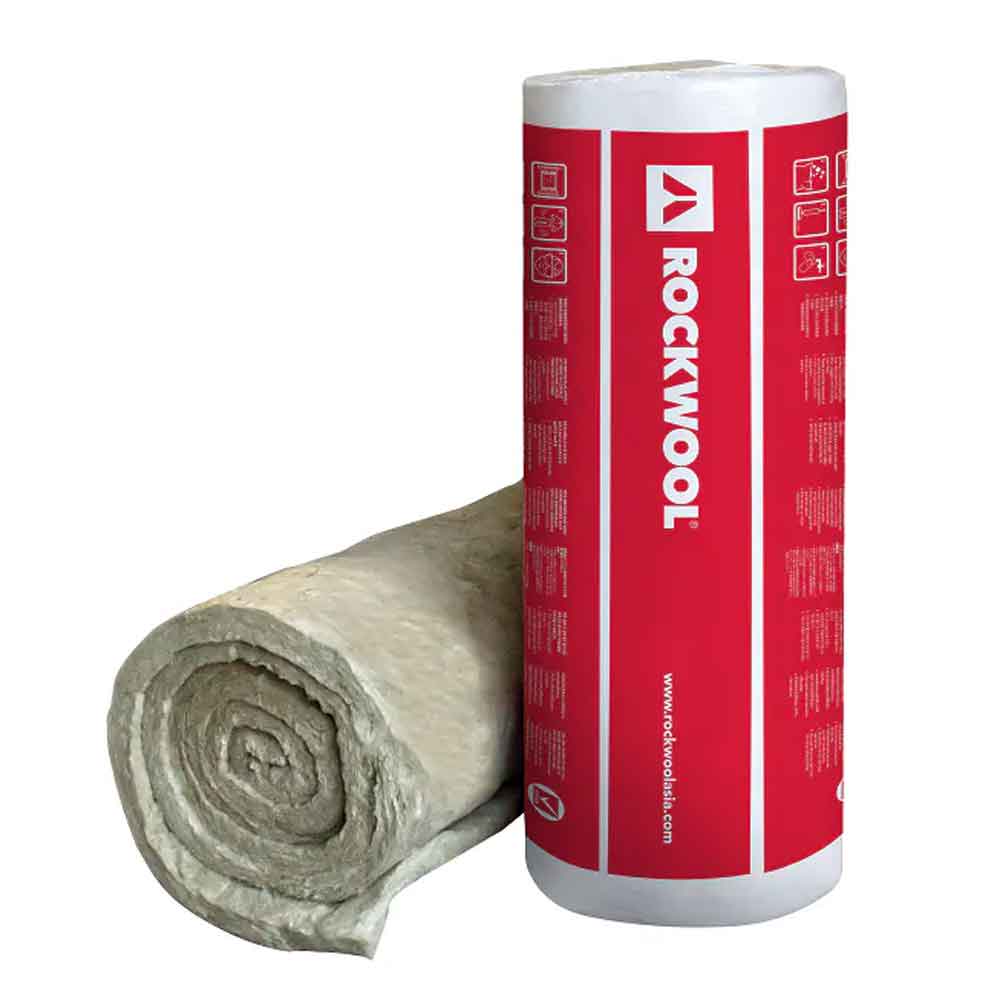
ROCKWOOL ROCKDUCT
- Max. temp.
- 350–540 °C
- Density
- 40–80 kg/m³
- Thickness
- 25–50 mm
Sound coming in or going out (sound insulation)
Echoey rooms (sound absorption)
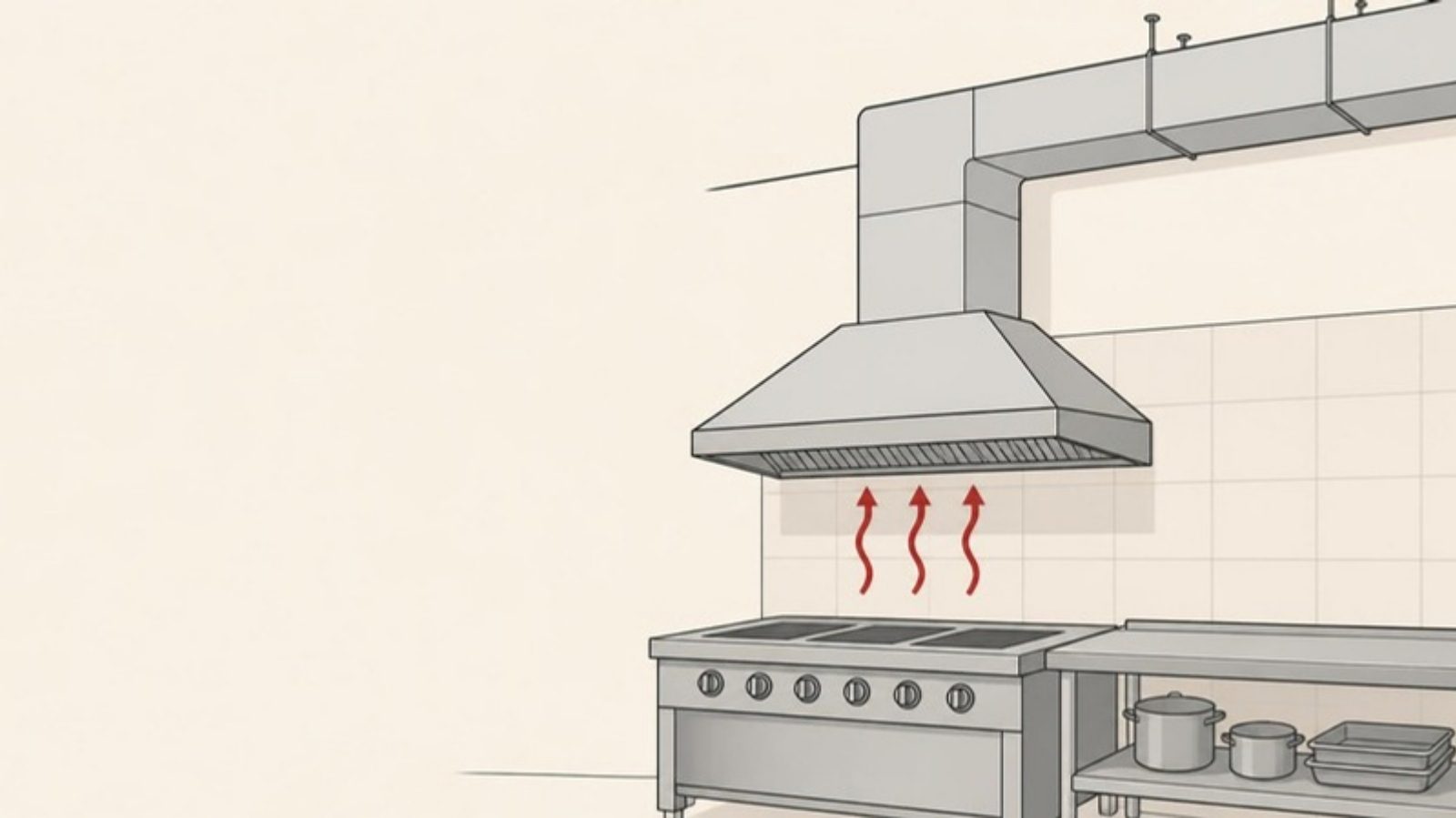
Kitchen exhaust and hot exhaust ducts are insulated to reduce the heat given off to the space around the duct and to stop people touching a hot duct surface, and it helps limit water vapour and grease condensing inside the duct. Stone wool is commonly used for this work because it is non-combustible and withstands high temperatures; it is fixed with pins and covered with metal jacketing. But insulating a duct does not automatically make it a "fire-rated duct". A duct system that must have a fire-resistance rating is a complete tested system and must be designed by specialists.
For AC ducts the main issues are lost cooling and dripping. A kitchen exhaust duct carries hot air laden with grease vapour and smoke, so there is more to consider.
| Issue | How duct insulation helps | Limitation |
|---|---|---|
| --- | --- | --- |
| Heat given off around the duct | Reduces heat transfer from the duct surface | Thickness must be designed for the air temperature in the duct |
| Contact with a hot surface | Lowers the temperature of the outer surface people can touch | The acceptable surface temperature is a project requirement |
| Water vapour and grease condensing in the duct | The duct wall cools more slowly where it passes through cooler spaces | Does not replace cleaning the duct at regular intervals |
| Fire spreading from the duct into the building | Stone wool is non-combustible, so it adds no fuel | A fire-resistance rating belongs to the complete tested system, not to the insulation alone |
Insulation for ordinary AC ducts is designed for air-conditioning temperatures. Kitchen and hot exhaust ducts need a material with a high service temperature that does not burn, which is the strength of stone wool. Examples from ROCKWOOL Thailand data sheets:
| Product | Grade | Max. service temperature per data sheet | Reaction to fire |
|---|---|---|---|
| --- | --- | --- | --- |
| ROCKWOOL ROCKDUCT | ProRox BL 938(40) ALU SA (aluminium-foil faced) | 540 °C | Euroclass A1 |
| ROCKWOOL ProRox BL | BL 938 SA / BL 958 SA / BL 960 SA | 350 / 450 / 650 °C | Euroclass A1 |
These figures are material limits. The grade and thickness must be chosen for the real air temperature in the duct and the project requirements. The ROCKWOOL Thailand handout lists its exhaust-duct insulation set as 50 mm stone wool, which is the manufacturer's example and not a thickness that suits every job.
Blanket insulation on rectangular ducts needs fasteners to carry its weight, especially on the underside; otherwise it sags and gaps open.
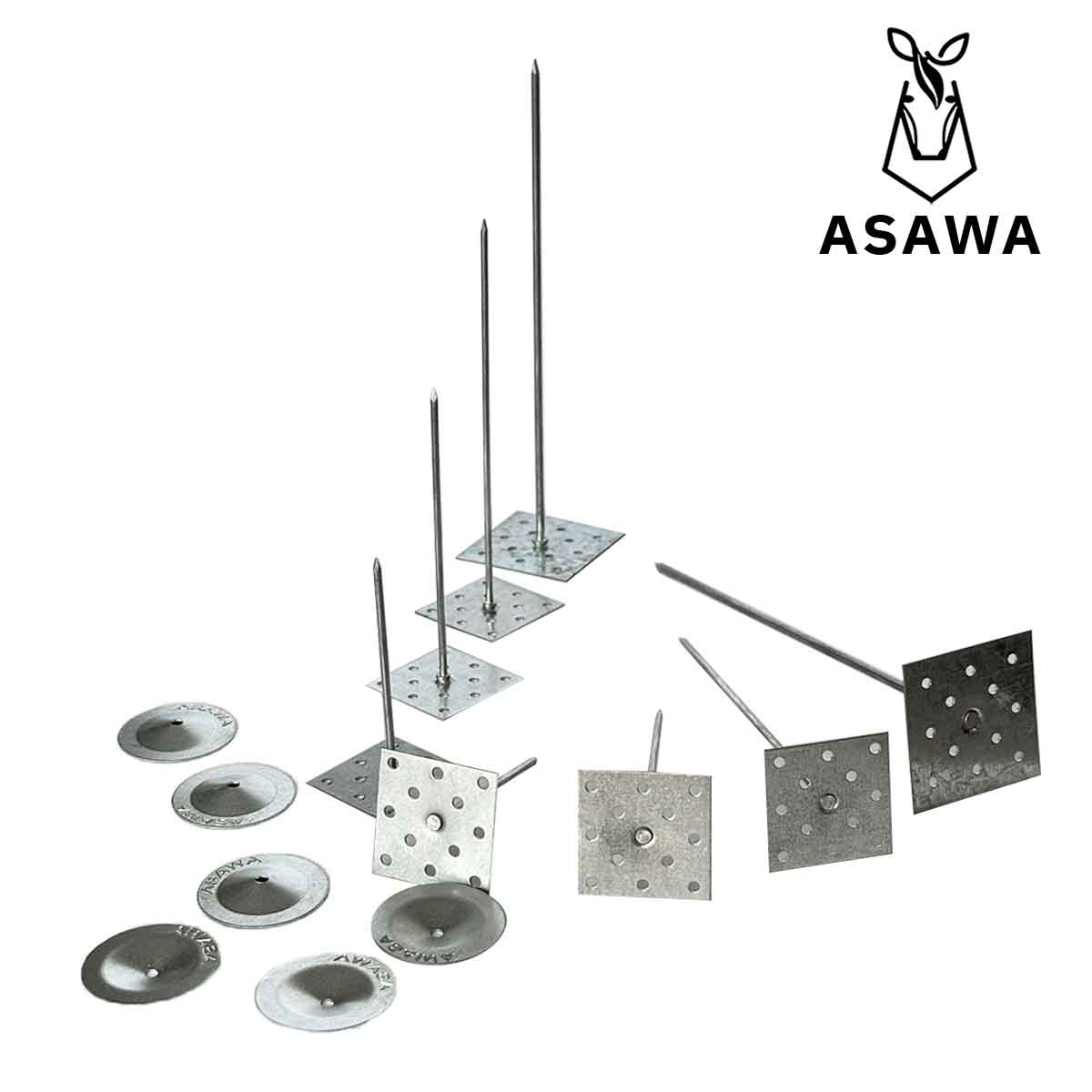
Adhesive-bonded pins such as ASAWA PIN, with an aluminium shank and galvanised-steel base, suit fixing insulation to walls, roofs and surfaces that are not hot. A ROCKWOOL installation guide sets out the principle that the duct surface temperature must not exceed the service temperature of adhesive stick pins. For a hot duct, check the limits of the adhesive and the pin first, or use welded pins as drawn. Ask us with the duct's operating temperature.
A kitchen exhaust duct enclosure that claims a fire-resistance rating or zero clearance to combustibles must be tested as a complete system to a dedicated standard such as ASTM E2336, which covers the non-combustibility of the materials, resistance to external fire and a fire inside the duct. The result belongs only to the system installed as tested, including material type, number of layers, fixing method and cleaning access openings. Wrapping a duct with general stone wool insulation does not give that rating. Work with fire requirements must be designed and certified by qualified engineers and installers.
Read what the fire terms mean in Fire performance terms for insulation and the role of stone wool in fire protection systems in Stone wool in passive fire protection.
For ordinary duct insulation, see How to choose duct insulation.
Categories and example products for this topic
Duct and HVAC insulation · Stone wool
Industrial and high-temperature insulation · Stone wool
Check the message below, then press “Open LINE”. On a phone LINE opens with this message; on a computer LINE shows a QR code to scan with your phone. If LINE does not open, copy the message into the chat, or call us.
Add us on LINE: @x2525 · Call 062-195-1909