Fire protection · Stone wool
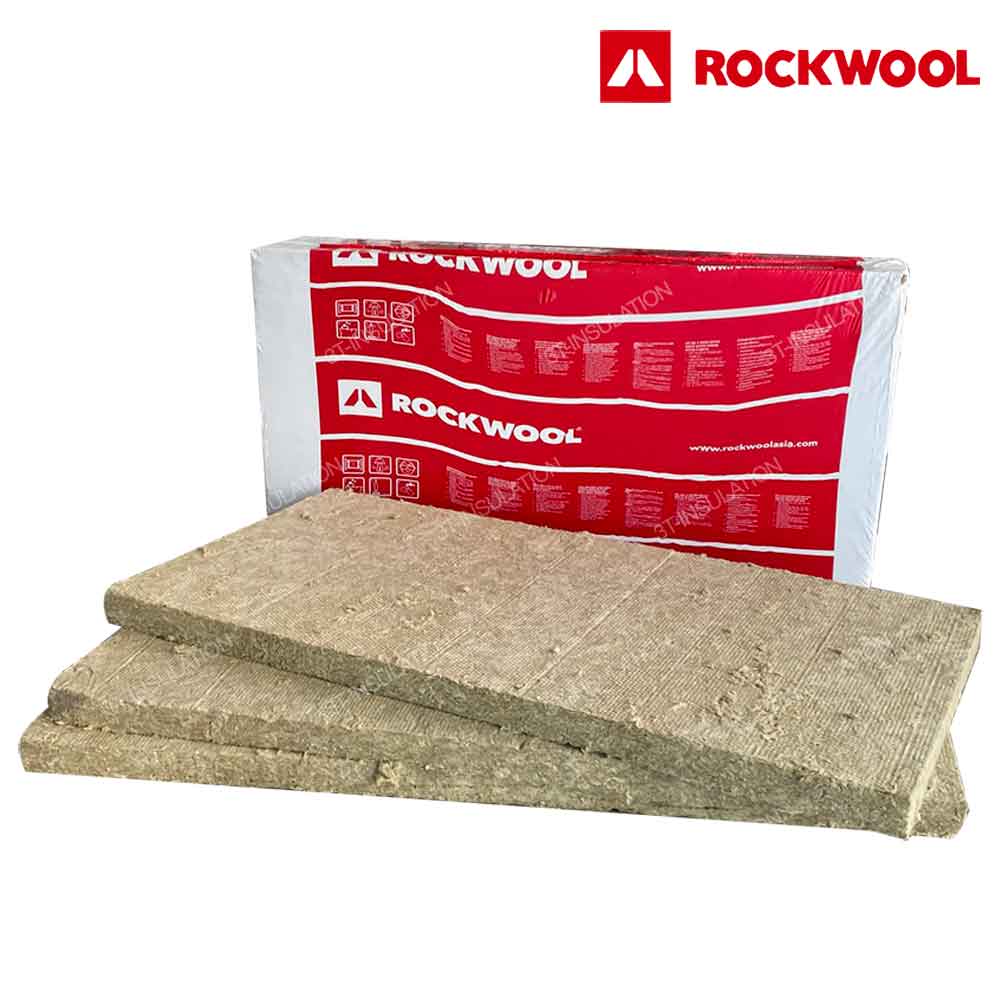
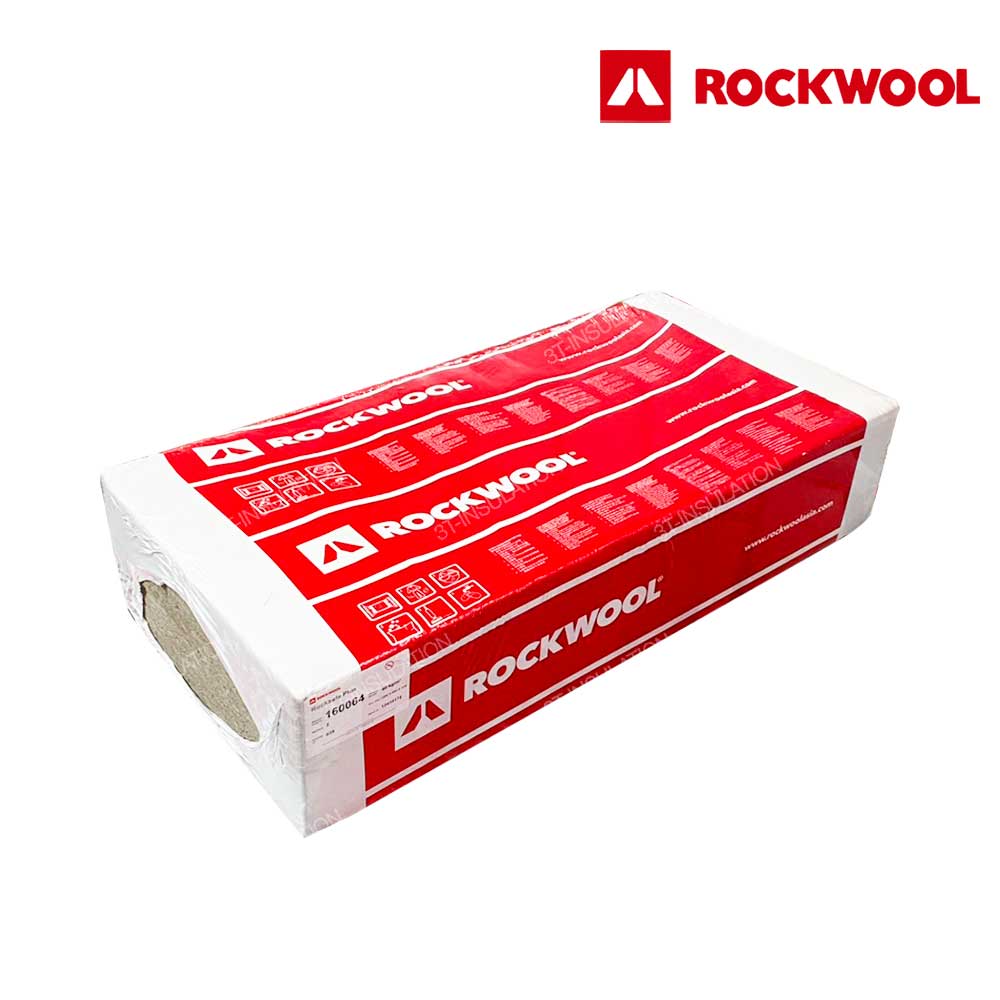
ROCKWOOL Rocksafe Plus
- Thickness
- 135 mm
- Density
- 80 kg/m³
- Thermal conductivity (λ)
- 0.035 W/m·K
Sound coming in or going out (sound insulation)
Echoey rooms (sound absorption)
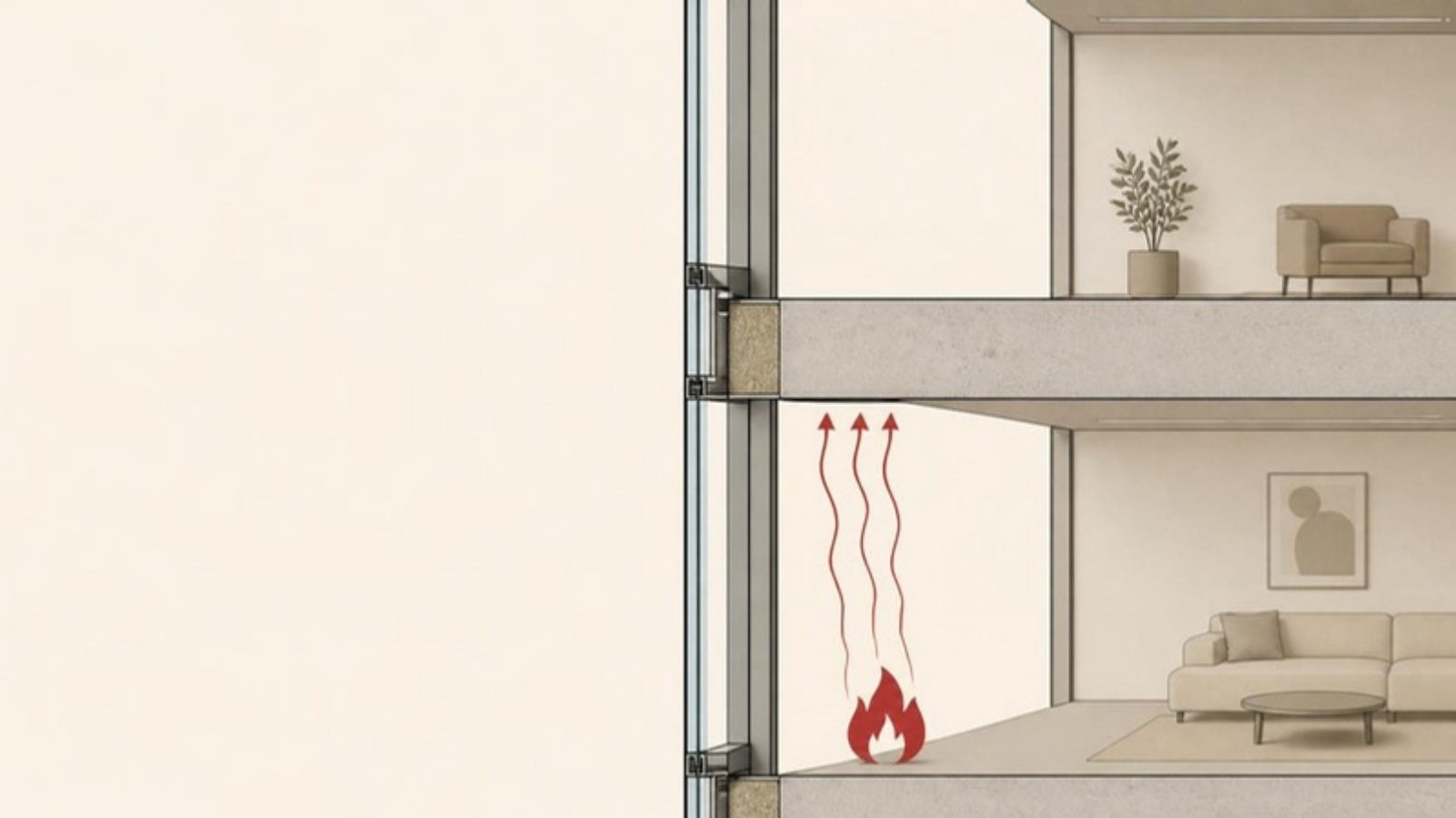
Passive fire protection divides a building into fire compartments and seals the weak points — joints, service penetrations and the gap between a curtain wall and the floor edge — so fire and smoke cannot pass. Non-combustible stone wool is used as part of the systems that seal these gaps, but the fire-resistance rating belongs to the tested system and depends on thickness, density, compression, fixing and the surrounding construction. It must be installed to the tested details by qualified installers and approved under local requirements.
Walls and floors designated as fire-separating help confine fire, heat and smoke to the room of origin, giving occupants time to escape and fire services time to respond. But a fire wall or floor only works if it has no gaps. Typical problem spots are:
"Non-combustible" is a property of the slab; "how many minutes" is a result of the system. See reaction to fire, non-combustible and fire resistance.
Curtain walls are generally not designed as fire walls, so the gap between the concrete floor edge and the curtain wall must be sealed with a tested system.
ROCKWOOL reports a fire-resistance result to BS 476 Part 20 for Rocksafe Plus in a tested installation: 135 mm slabs compressed by at least 15% of their width, fitted into openings in a concrete floor slab. This is not a property of the slab on its own. If site conditions differ from the test — a wider gap, less compression or different construction — the manufacturer or an engineer must assess it.
Elsewhere, perimeter fire containment systems have their own test standards, such as ASTM E2307 in North America. For projects in Thailand, check which test standards the designer and local authority accept.
| Factor | Why it matters |
|---|---|
| --- | --- |
| Stone-wool thickness and density | Must match what was tested |
| Compression | Too little can open gaps when the structure moves or heats up |
| Fixing and support | The stone wool must stay in place throughout a fire |
| Gap size and building movement | Systems are tested for set gap widths and movement ranges |
| Sealants, coatings and surrounding materials | Part of the system; substitutes may not be covered by the test |
| Position and orientation | Horizontal and vertical are tested separately |
Categories and example products for this topic
Fire protection · Stone wool
Fire protection · Stone wool
Check the message below, then press “Open LINE”. On a phone LINE opens with this message; on a computer LINE shows a QR code to scan with your phone. If LINE does not open, copy the message into the chat, or call us.
Add us on LINE: @x2525 · Call 062-195-1909