What is polyester fibre insulation, and which jobs does it suit?
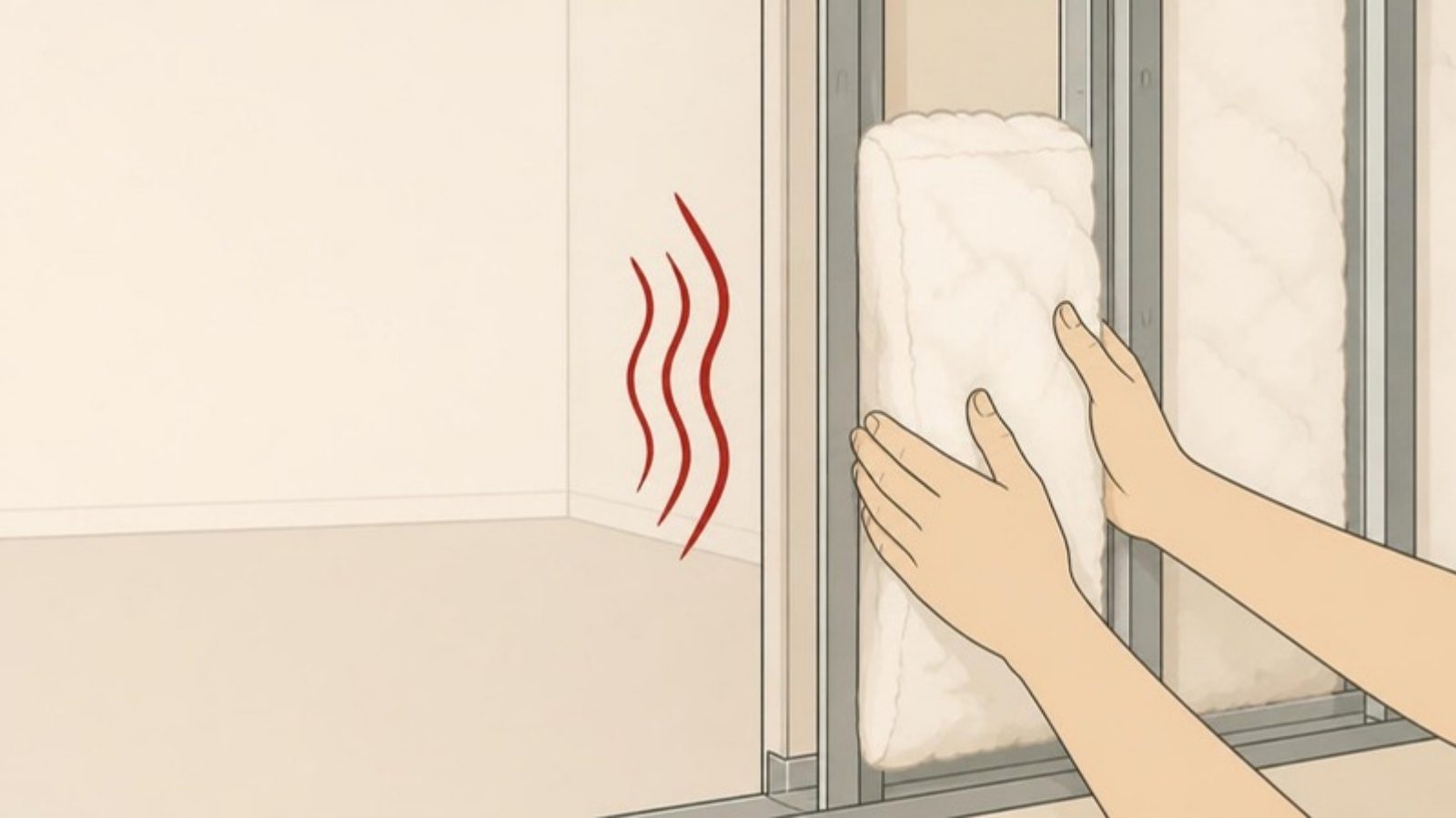
Polyester fibre insulation (PET fibre insulation) is a batt, roll or board made of polyester (PET) plastic fibres — the same polymer used for textile fibres — entangled and heat-bonded into a lofty mat. Its main attraction is that the fibres are soft, with no loose glass fibres to make you itch, so it is popular in drywall cavities, above ceilings and as sound-absorbing panels in rooms. The questions to ask before choosing it are the maximum service temperature and the fire test result of that product: polyester is a plastic that softens and melts when hot, not a non-combustible material like stone wool or glass wool.
What is it made of?
The raw material is polyester (polyethylene terephthalate, PET), the same polymer family as drinks bottles and clothing fibres. Many manufacturers include recycled PET; the share depends on the product.
The fibres are held together differently from glass wool and stone wool. Instead of a sprayed resin binder, the mat contains bicomponent fibres whose outer skin melts at a lower temperature than the core. In the oven the skin melts and welds neighbouring fibres together while the core keeps its shape. This is called thermal bonding.
As with other fibrous insulation, the work is done by the still air and the gaps between fibres, which slow heat transfer and absorb sound.
Why doesn't it itch?
The itch from glass wool or stone wool comes from stiff fibre ends that break and prick the skin — a temporary mechanical irritation. Polyester fibres are softer and tougher and do not snap into sharp fragments, so manufacturers usually describe them as low-dust and non-irritating during installation.
This is a matter of working comfort; it does not mean mineral wool is unsafe. See is stone wool safe?. Whatever the material, follow the manufacturer's installation guidance.
How does it behave with moisture?
- The fibre itself absorbs very little water, because it is plastic
- But the mat is an open structure. Water that drips or leaks onto it can still sit between the fibres, and water vapour passes through it, so it does not act as a vapour barrier
- Manufacturers generally require dry, covered storage and installation. If it gets wet, let it dry before closing the wall
For the difference between fibrous and closed-cell materials see moisture in insulation.
Temperature and fire limitations
Ask these two questions first
- Maximum service temperature — polyester is a thermoplastic. It softens and melts at a temperature far below that of mineral wool, so it is not suitable for hot pipes, flues, ovens or high-temperature machinery, and it should be kept clear of recessed light fittings and hot equipment as the manufacturer specifies
- Fire test result for that product — polyester is a combustible organic material. Exposed to flame it tends to shrink and melt away from it. Results differ by formulation, thickness and test method, so ask for a report that states the standard, the thickness and the result. See insulation in fire: foams vs mineral wool
Where a specification calls for non-combustible material, or the insulation is part of a tested fire-rated system, only the material tested in that system may be used.
Where is it used?
| Job | Role of polyester fibre | What to understand |
|---|---|---|
| --- | --- | --- |
| Drywall cavities and above ceilings | Absorbs sound in the cavity so the wall system insulates better | The sound-insulation rating (STC/Rw) belongs to the whole wall, not to the batt |
| Sound-absorbing panels in rooms | Reduces echo and reflections | NRC depends on thickness and mounting |
| Behind perforated panels or fabric | Absorbent core of decorative panels | The face must let sound through |
Our 100% polyester-fibre products:
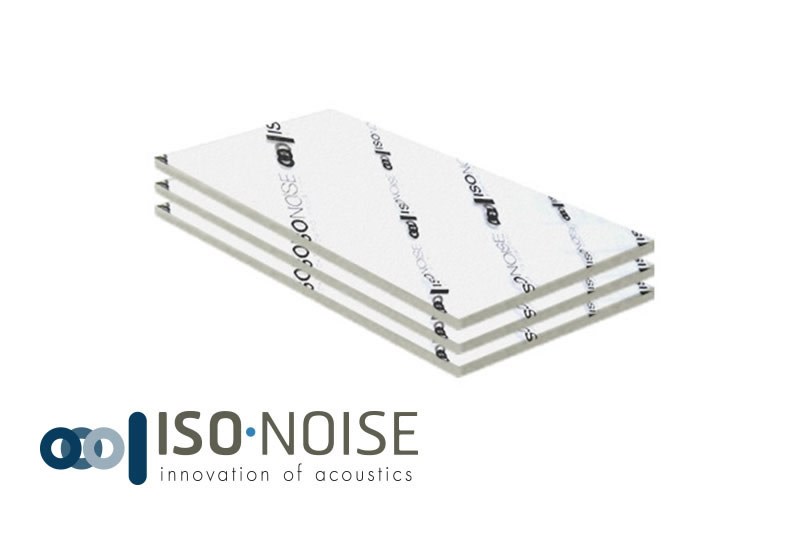
- Cavity insulation for walls and ceilings: ISO NOISE Premium, a 0.60 × 1.20 m, 65 mm batt supplied in a PE bag and installed in the bag. Fill the cavity completely and close it with solid boards. It suits projects that prefer not to use glass wool. See how cavity insulation helps sound insulation
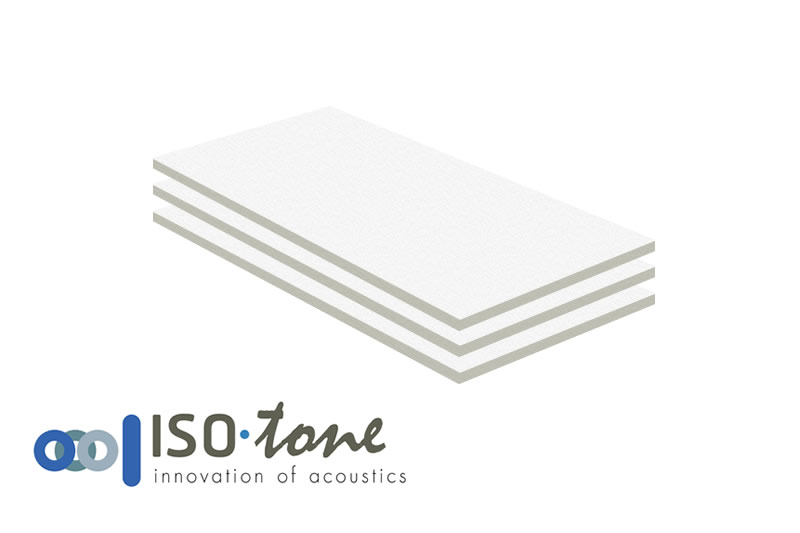
- Sound-absorbing board: ISO TONE, 25 and 50 mm thick. Its data sheet gives NRC 0.69 and 0.86 respectively to ASTM C423 (test mounting not stated). It is glued to walls, placed behind perforated panels or wrapped in decorative fabric
Fire and service-temperature data for these two products are still being checked against documents. If your project has requirements, please ask us before ordering.
Compared with glass wool and stone wool
| Aspect | Polyester fibre | Glass wool / stone wool |
|---|---|---|
| --- | --- | --- |
| Material | Plastic (organic) fibres | Mineral (inorganic) fibres |
| Handling | Soft, no itch | May irritate skin temporarily; wear protection |
| Service temperature | More limited; check the product document | Higher, but varies widely by product |
| Reaction to fire | Combustible; check the product's test result | Many products are classed non-combustible; check the product and its facing |
| Typical jobs | Wall cavities, ceilings, absorbers inside buildings | Buildings, ducts, pipes and industrial work |
No material suits every job; choose from the real conditions of the work. See what is glass wool? and how to choose a sound-absorbing material.
Sources
- Archiweb — Thermal and acoustic insulation from PET bottles (bicomponent fibres, thermal bonding, dust and moisture properties)
- Premier Insulation (via EBOSS) — 100% Polyester Masonry Wall and Service Cavity Blanket (thermal bonding, recycled content, dry storage)
- GetBestInsulations — verified product data for ISO TONE and ISO NOISE Premium (based on the product documents listed on each product page)
Related products
Categories and example products for this topic
- ISO NOISE Premium — 100% polyester batt, 65 mm, in a PE bag, for drywall and ceiling cavities
- ISO TONE — Polyester absorber board, 25/50 mm, NRC 0.69/0.86 to ASTM C423
Sound absorption · Polyester fibre
ISO NOISE ISO TONE
- Thickness
- 25–50 mm
- Sound absorption (NRC)
- 0.69–0.86