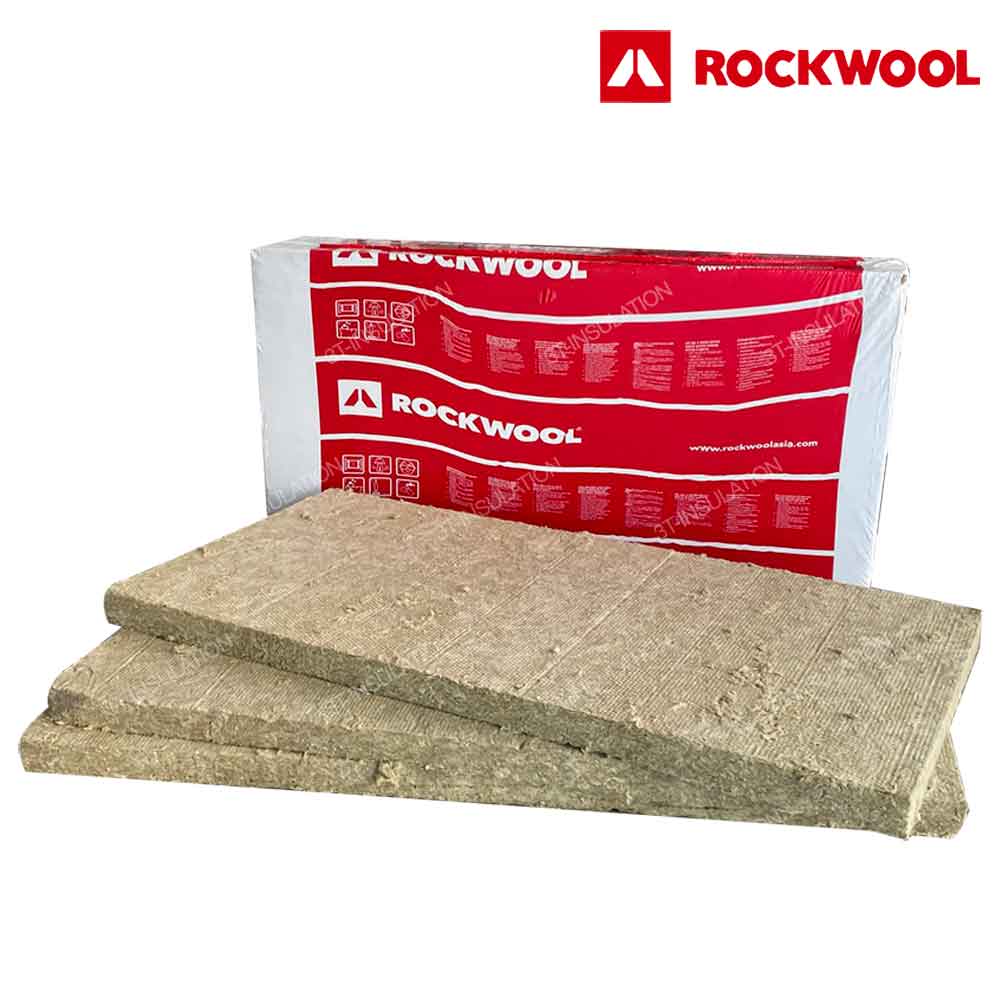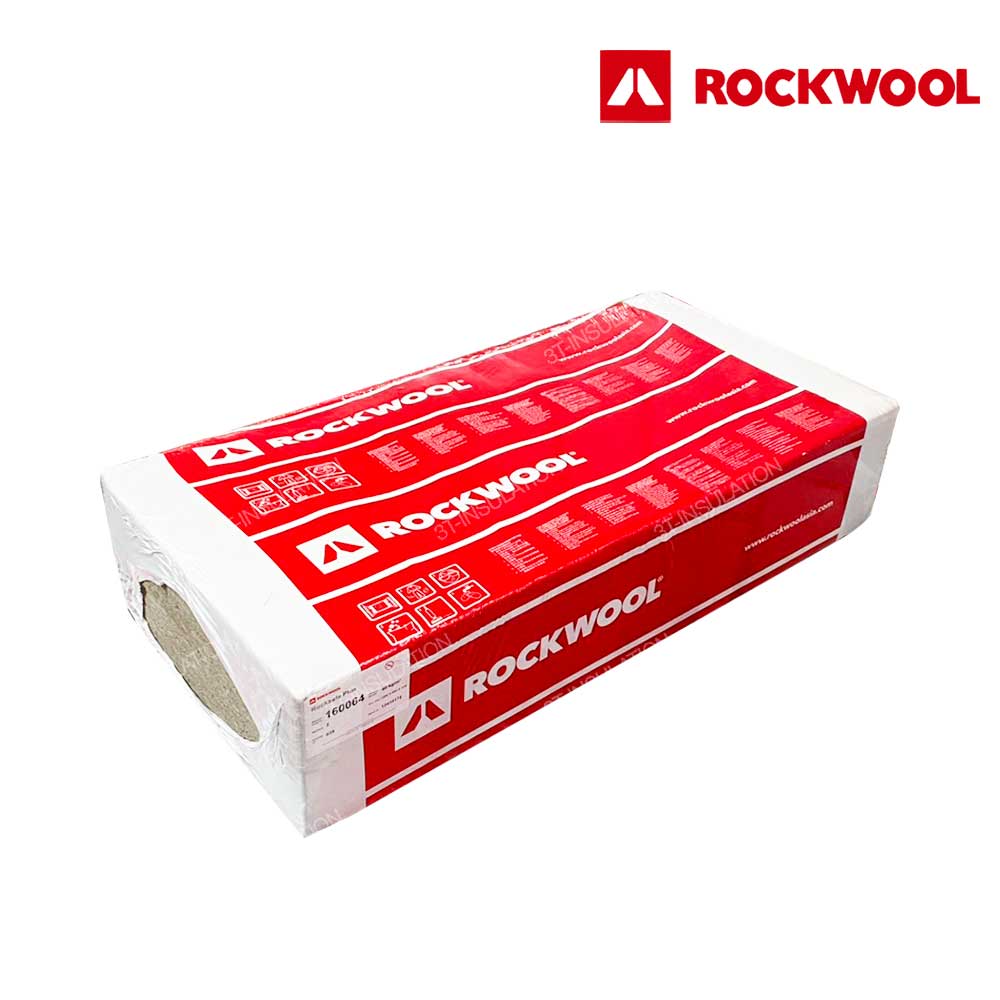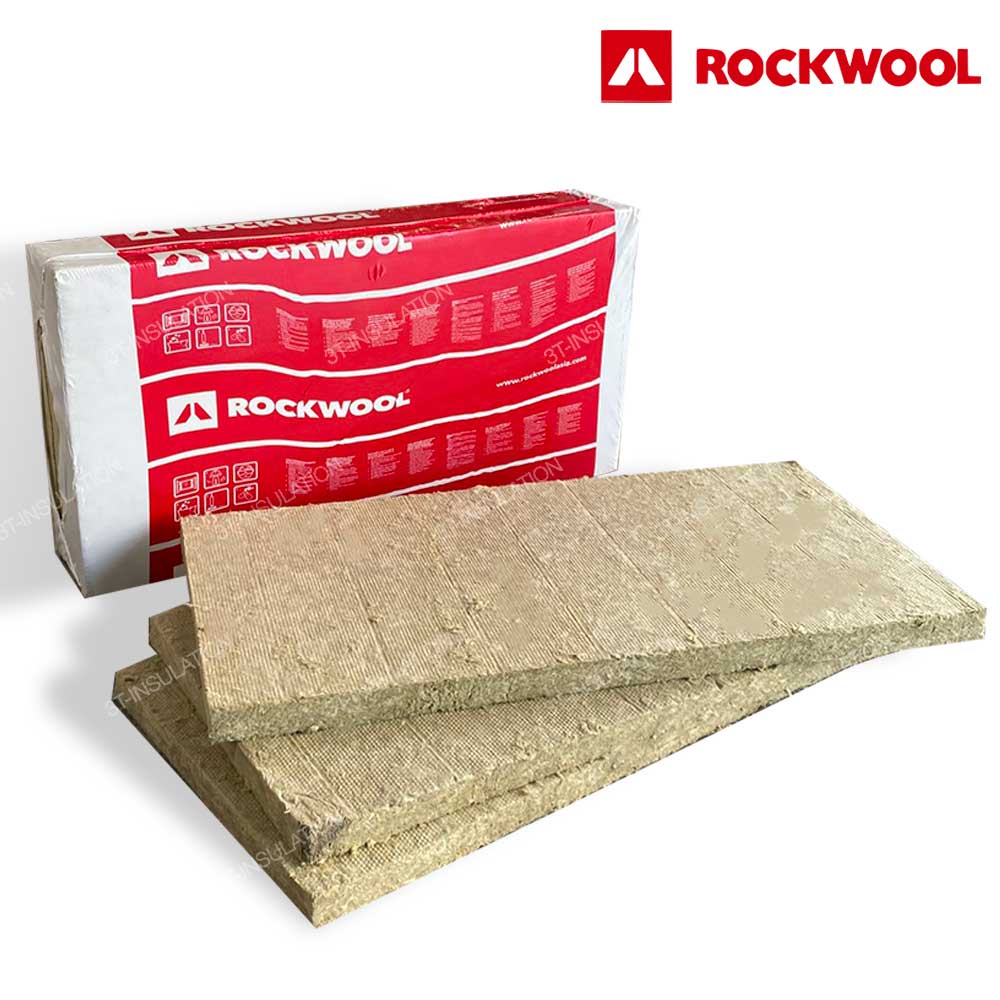
Building thermal insulation · Stone wool
ROCKWOOL Thermalrock S
- Thermal conductivity (λ)
- 0.034–0.036 W/m·K
- Sound absorption (NRC)
- 0.90–1.05
Sound coming in or going out (sound insulation)
Echoey rooms (sound absorption)
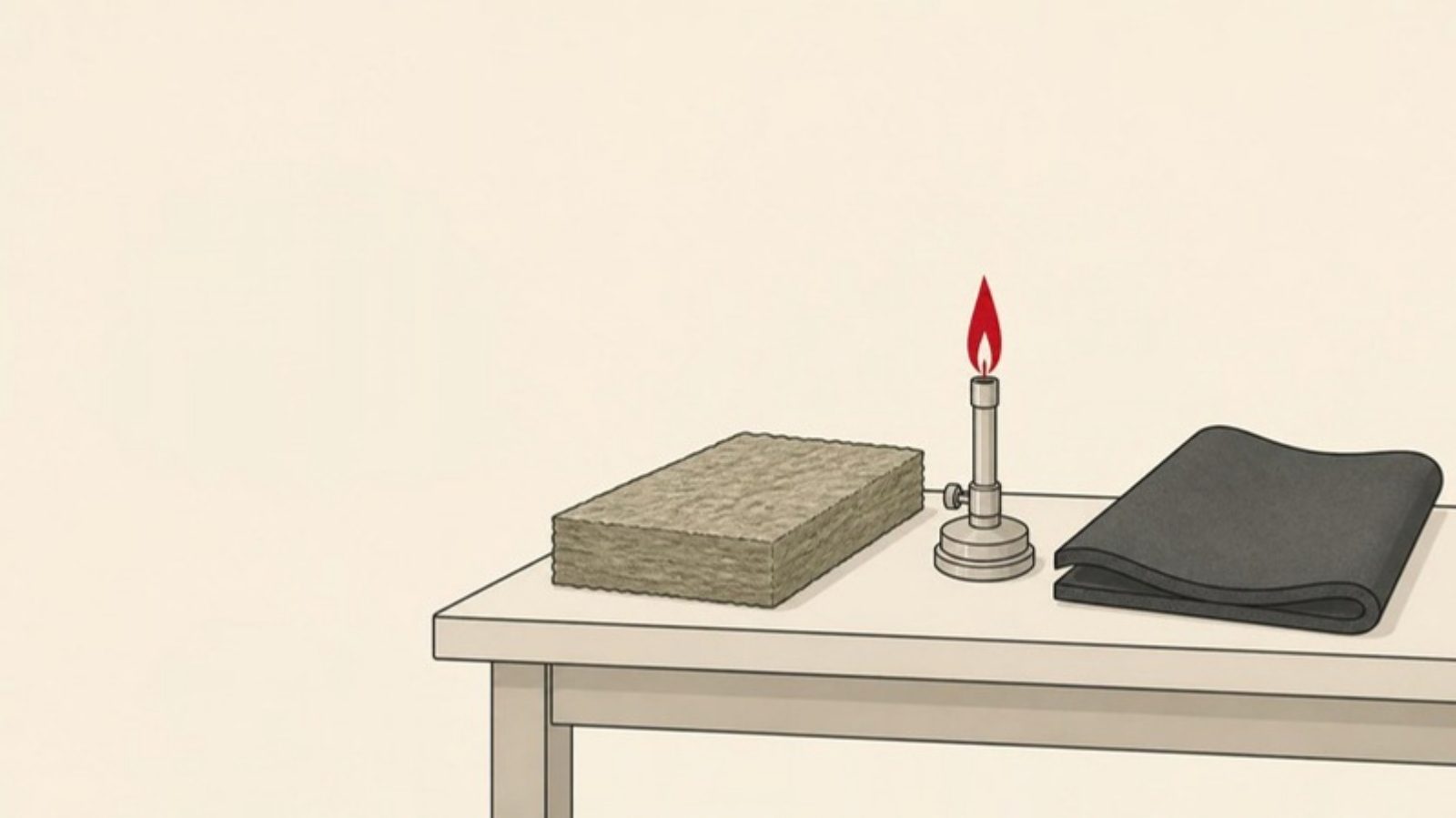
Seen from a fire point of view, insulation falls into two families. Mineral wools (stone wool, glass wool) are inorganic fibres that are hardly fuel at all, so many products reach a "non-combustible" level. Foams and plastic fibres (rubber foam, PE foam, acoustic foam, polyester fibre) are organic materials that can burn. Flame retardants make them harder to ignite or slower to spread flame in a stated test, but do not turn them into non-combustible materials. The key point is that each test standard measures something different: a pass in one is not a pass in another. Always ask which standard, at what thickness, and on the product with which facing.
| Mineral wool (stone wool, glass wool) | Foams and plastic fibres | |
|---|---|---|
| --- | --- | --- |
| Material | Inorganic fibres from molten rock or glass, with a small amount of organic binder | Organic polymers (synthetic rubber, PE, polyurethane, polyester) |
| Is it fuel? | The fibres are not fuel; many products reach a non-combustible level | Can be fuel; the level depends on formulation and flame retardants |
| At very high temperature | Stone wool keeps its shape to very high temperatures; glass wool softens at a lower temperature than stone wool | Softens, melts, shrinks or chars; some types drip burning material and give off a lot of smoke |
| What can change the result | Facings such as foil, paper, fabric, and adhesives | Thickness, density, facings and covering materials |
The table describes the tendency of each family, not the result of any particular product, and it does not mean foams cannot be used. Many combustible materials are used correctly in buildings when they pass the tests the specification calls for, are installed in suitable locations and are covered as designed.
A flame retardant makes a material harder to ignite from a small heat source, slower to spread flame, or self-extinguishing once the flame is removed — under the conditions of that test. In a large fire, organic materials can still burn and release heat and smoke. "Does not spread flame" or "fire retardant" on a label should therefore always be followed by the name of the standard and the result.
| Standard | Designed for | What is measured | Result reported |
|---|---|---|---|
| --- | --- | --- | --- |
| EN 13501-1 | Construction products (Europe) | A classification built from several tests: non-combustibility, heat of combustion, a room-corner burning item (SBI) and small-flame ignitability | Class A1 to F, with smoke (s) and flaming-droplet (d) sub-classes |
| BS 476 Part 6 | Wall and ceiling linings (UK) | Rate of heat release in a small combustion chamber | Fire propagation index (I and sub-indices) |
| BS 476 Part 7 | Wall and ceiling linings (UK) | How far flame spreads across the surface | Class 1 to Class 4 |
| ASTM E84 | Wall and ceiling surface materials (USA) | Surface flame spread and smoke density in a 10-minute tunnel test, compared with reference materials | Flame Spread Index and Smoke Developed Index |
| UL 94 | Plastic parts in devices and appliances | Small specimens exposed to a small burner flame; afterflame time and flaming drips | HB, V-2, V-1, V-0, 5V, and foam classes (HF) |
| California TB 117-2013 | Materials in upholstered furniture | Resistance to smouldering from a lit cigarette, not an open flame | Pass / fail for cover fabric, barrier and filling materials |
Class 0 is a level defined in building regulations from two test results together: Class 1 to BS 476 Part 7 plus a Part 6 index below set limits (or a material that is non-combustible throughout). A combustible material with a low-spread surface can therefore be Class 0. It describes the surface of the material; it does not say the core is not fuel.
ASTM E84 itself states that it compares surface burning behaviour, that a flame spread index alone does not classify a material as noncombustible, and that materials which melt, drip or fall out of position during the test may give low indices that are not directly comparable with materials that stay in place.
Everything above concerns the reaction to fire of a material, not the fire resistance of a wall, floor or opening, which is the result of a complete tested system. See reaction to fire, non-combustible and fire resistance.
See also stone wool in passive fire protection.
If a product's documents do not state a fire test result, treat it as no data yet. Do not infer one from the material type or from a similar-looking product.
Linings, ceilings and insulation in escape routes, plant rooms, kitchens, tall buildings and public buildings must follow building-control law and the project specification, and should be decided by the designer or a fire-safety engineer. This article explains principles; it is not an assurance that any material may be used for any job.
Categories and example products for this topic
Building thermal insulation · Stone wool
Fire protection · Stone wool
Fire protection · Stone wool
Check the message below, then press “Open LINE”. On a phone LINE opens with this message; on a computer LINE shows a QR code to scan with your phone. If LINE does not open, copy the message into the chat, or call us.
Add us on LINE: @x2525 · Call 062-195-1909