Why does a metal roof drip when it has not rained, and how do you fix it?
7 min read · Written by our team · Updated 10 Oct 2026
In short
If water drips at night or early in the morning when there has been no rain, it is usually not a leak but condensation. The metal sheet has cooled below the dew point of the humid air touching its underside, so water vapour turns into droplets. The fix is to keep humid air away from the cold steel: insulation under the roof with a continuous vapour-control layer, fewer moisture sources, and ventilation of the roof space.
Why a metal sheet "sweats"
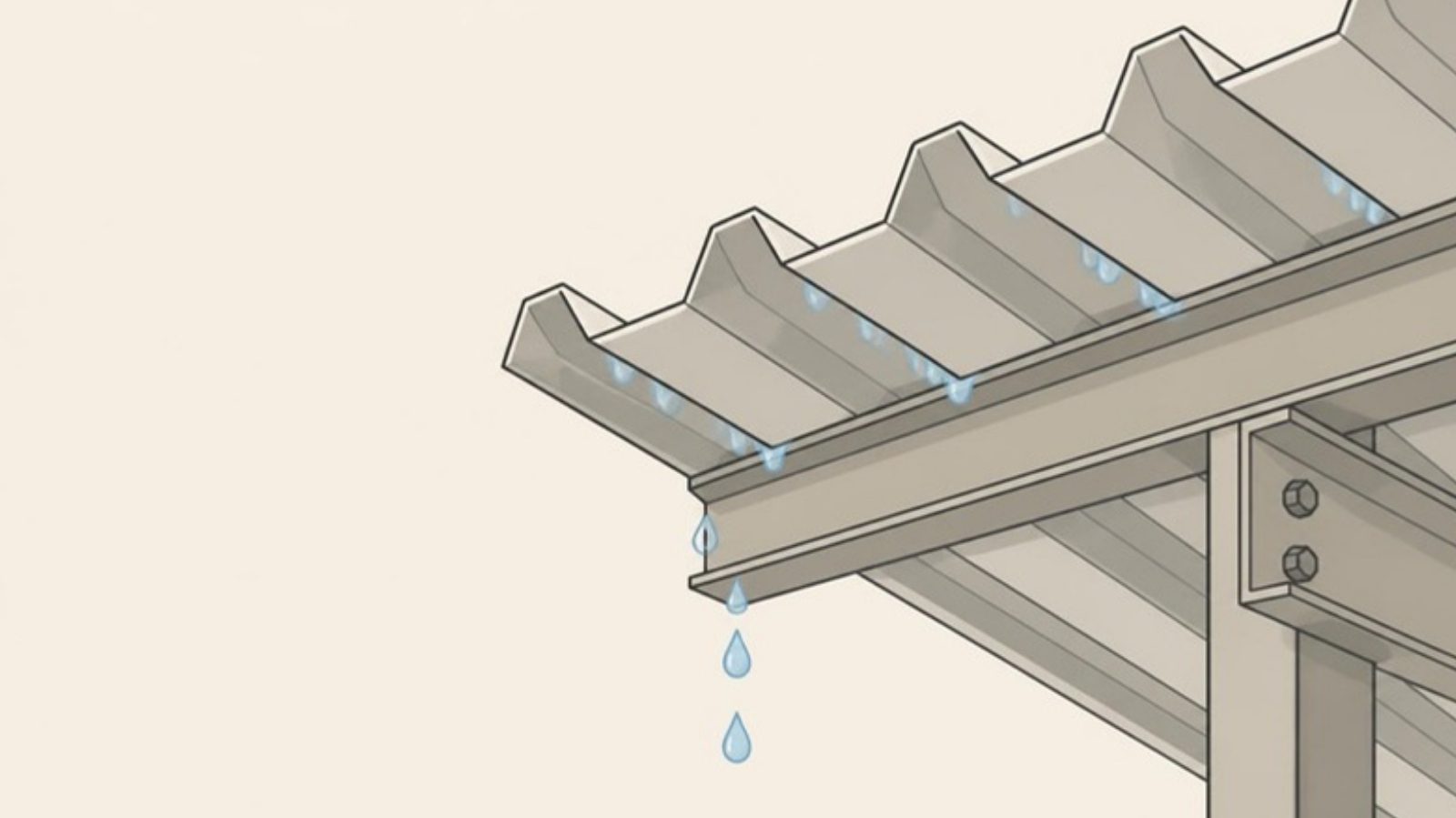
Metal does not produce water. The water comes from vapour in the air. When humid air touches a surface colder than its dew point, the vapour condenses — like the droplets on a glass of iced water. See the principle in dew point and condensation.
Metal sheet is prone to this for three reasons:
It cools quickly and can become colder than the air — on clear, still nights the roof radiates heat to the sky until its surface is below the surrounding air temperature, and it can fall below the dew point.
It is thin and conducts heat well — the underside is almost the same temperature as the top.
It does not absorb water — the condensed water gathers into drops that run or drip, unlike timber and other materials that can take up some moisture.
Hot, humid air such as Thailand's holds a lot of vapour, so the dew point is high. The steel does not need to cool much to reach it.
Where the moisture comes from
Outside air that can reach the underside of the roof — in open structures such as carports, sheds, covered walkways and open-sided warehouses, humid night air circulates freely under the sheet, so condensation on the underside is to be expected.
Moisture from inside the building — cooking, bathrooms, washing, processes that use water or steam, large numbers of people or animals, and moisture left over from construction.
Leaks and standing water — these make the air under the roof even more humid.
Telling a leak from condensation
What you see
Likely cause
---
---
Drips only during or after rain, always in the same place
A leak at a lap, screw, ridge cap or gutter
Drips spread across the sheet late at night to morning with no rain, drying when the sun comes out
Condensation on the underside of the roof sheet
Drips along purlin lines or at screw heads
Metal passing through or across the insulation is colder than the rest — see thermal bridges
Drips along insulation joints
Foil joints not taped; humid air reaches the steel
Fibrous insulation sagging, heavy or water-stained
Vapour condensing inside the insulation, or a leak onto it
What insulation and vapour control do
Two principles work together:
Keep the surface that humid air touches above the dew point — with insulation in between, indoor air touches the underside of the insulation instead of the steel. That surface is much closer to indoor air temperature, so it does not easily reach the dew point. The thickness needed to prevent condensation depends on the temperature and humidity of the space and may differ from the thickness chosen for energy saving.
Stop vapour from reaching the steel — there must be a continuous vapour-control layer, sealed at joints, tears and around penetrating pipes or structure. If there are holes, vapour bypasses the layer and condenses behind the insulation.
The type of insulation affects how vapour is controlled:
Closed-cell insulation, such as elastomeric foam and PE foam, absorbs little water and already has a film or foil surface; the joints are what need attention.
Fibrous insulation, such as glass wool and stone wool, lets vapour pass through the material, so it relies on the foil facing as the vapour-control layer, and the joints must be sealed tightly with foil tape.
Wet insulation resists heat less, and trapped moisture can corrode metal. If fibrous insulation is soaked by a leak or flooding, manufacturers recommend removing and replacing it rather than waiting for it to dry.
Ventilation
Insulation and vapour control reduce the vapour that reaches the roof sheet; ventilation carries away what remains.
A roof space above a ceiling should have a path for air to enter at the eaves and leave at the ridge, and insulation must not block it.
Exhaust fans from bathrooms, kitchens and clothes dryers must be ducted to the outside, not discharged into the roof space.
Where a process releases a lot of steam, extract it at the source.
Which insulation to use
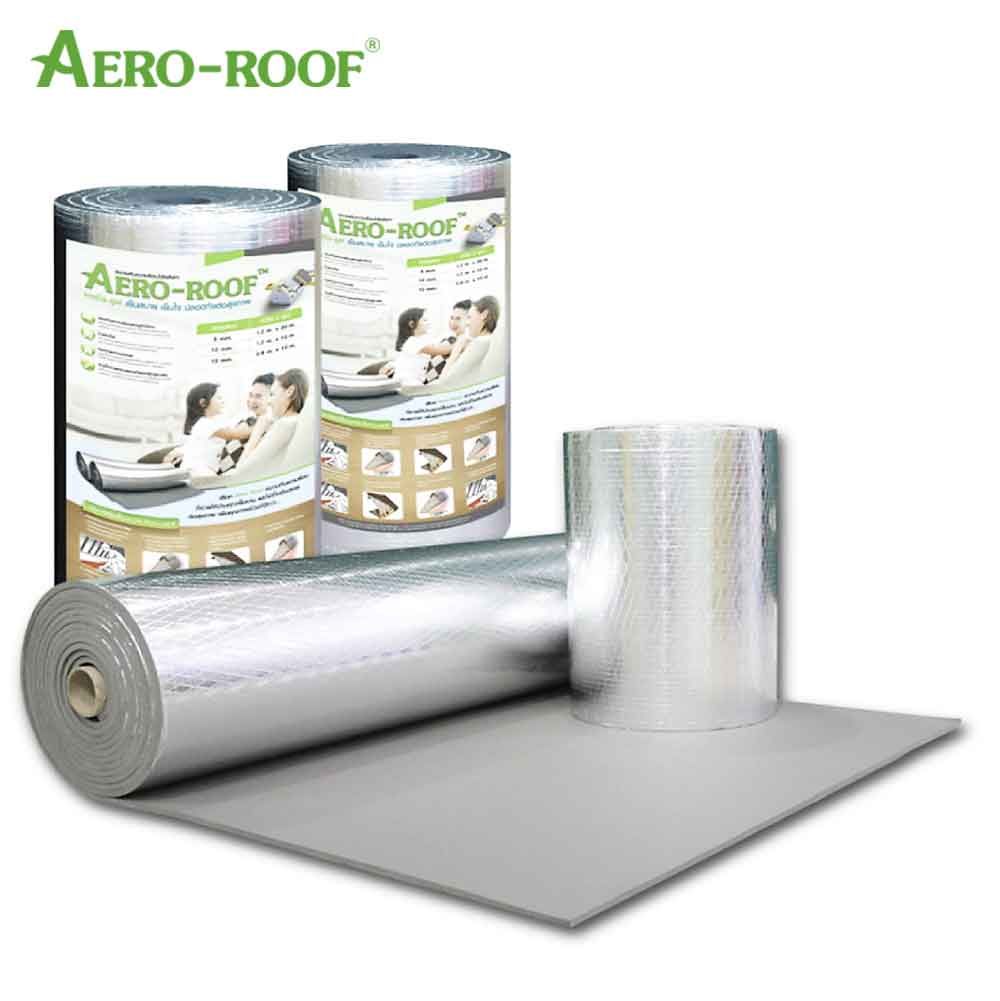
Closed-cell elastomeric foam with foil — AERO-ROOF is closed-cell synthetic rubber with scrim-reinforced aluminium foil on one side. The manufacturer states water absorption of no more than 5% by mass (ASTM C1763). Foil-side joints are sealed with aluminium tape.
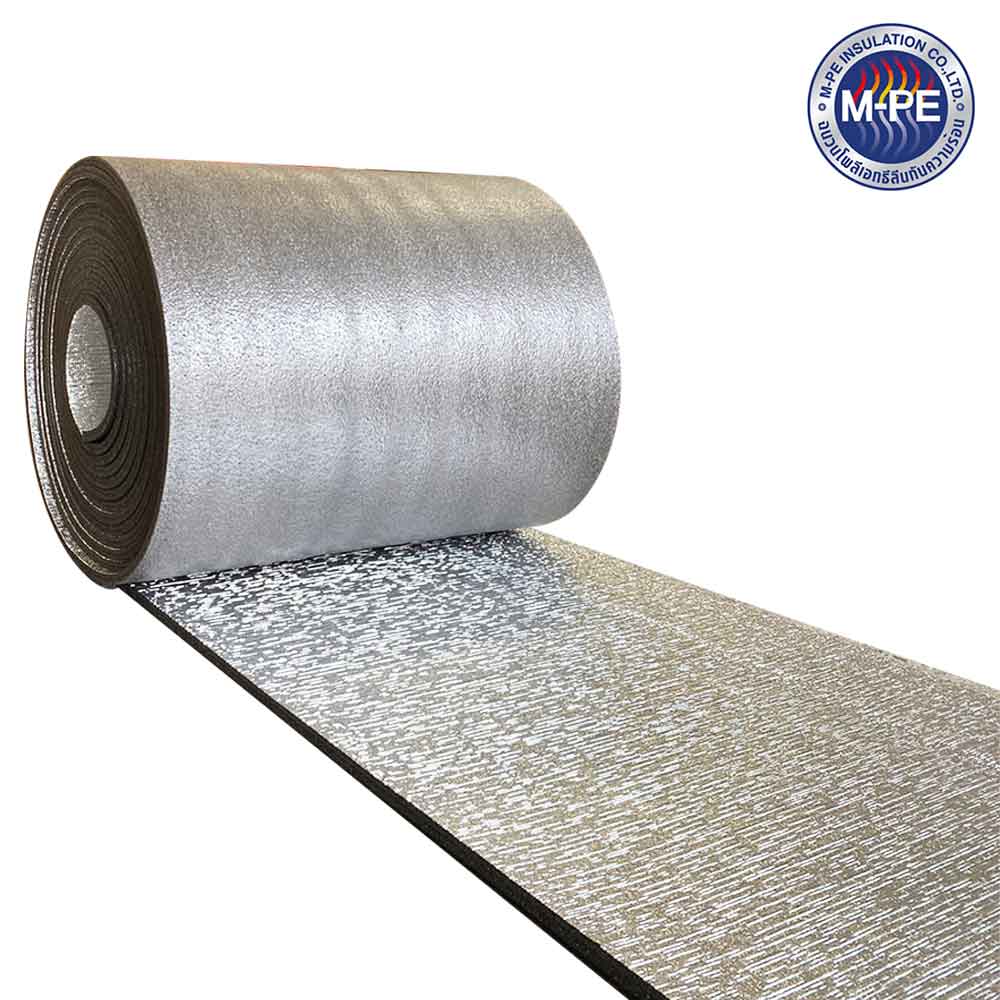
Closed-cell PE foam with metalized film — M-PE (Standard), lightweight, used on roofs, ceilings and walls.
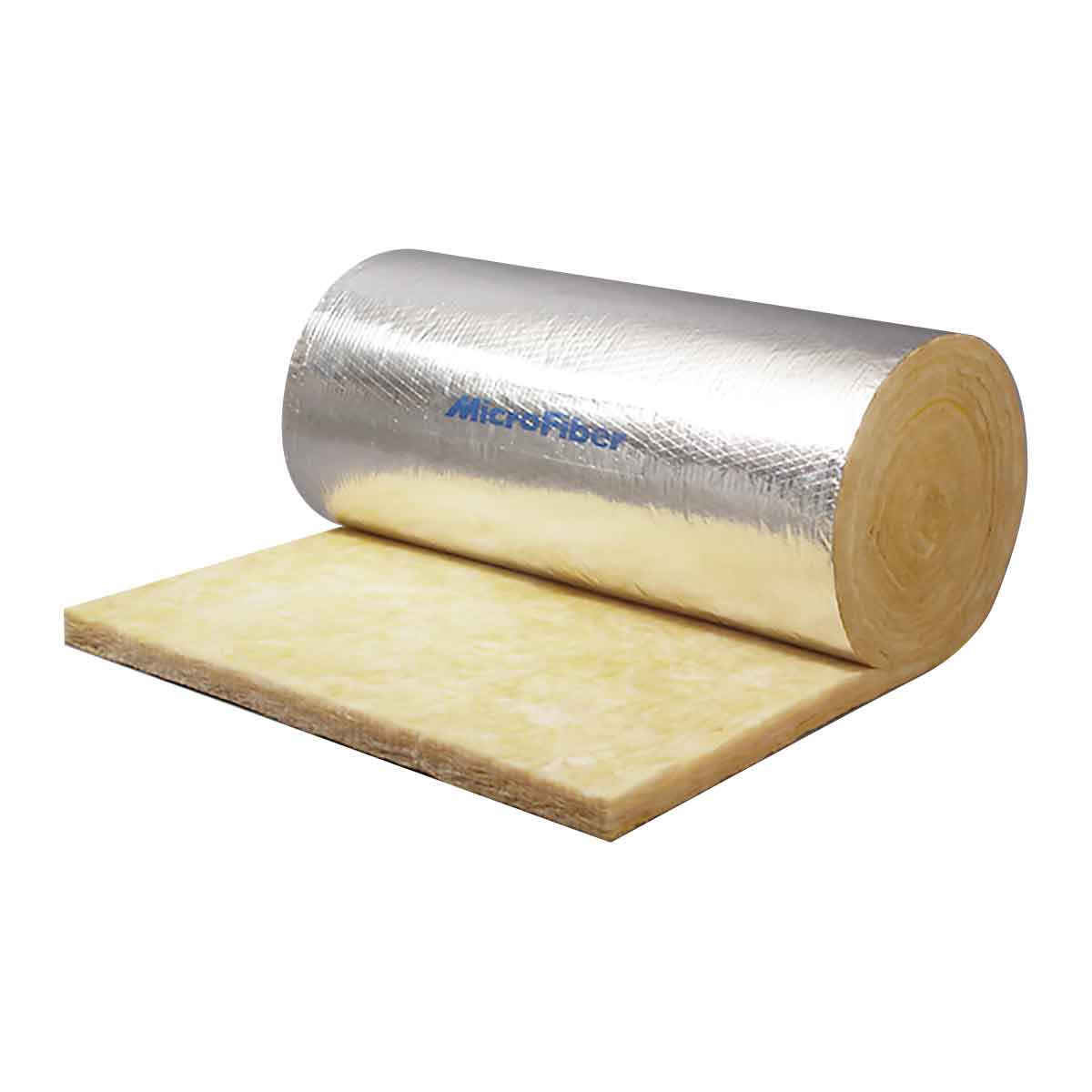
Glass wool with foil on one side — Microfiber MicroRoof FLS comes in more thicknesses, so it suits jobs that also need a higher R-value; the foil joints must be sealed continuously.
The thickness needed depends on each building's temperature and humidity. No single thickness works for every roof. Tell us the building type, its use and the symptoms, and we can help compare options.
Limits you should know
In open buildings where humid air flows through all the time, bare steel that is not covered by insulation — eaves or flashings, for example — can still drip.
In air-conditioned buildings or cold rooms in a hot-humid climate, the cold side is the inside and vapour moves in from outdoors. The position of the vapour-control layer must be set by the designer, and there should not be a vapour-tight layer on both sides of the insulation.
Roof work is work at height and should be done by experienced contractors.
Sources
Australian Steel Institute / Metal Roofing and Cladding Association of Australia — Factsheet #1: Metal Roofing and Condensation (2020)
Australian Steel Institute / MRCAA — Factsheet #2: Vapour Barriers in Metal Roofing (2020)
Fabral — Technical Bulletin 404: Condensation and Ice Damming on Residential Roofing
North American Insulation Manufacturers Association (NAIMA) — MB306: Condensation Control for Metal Buildings
Building Science Corporation — BSD-106: Understanding Vapor Barriers
Check the message below, then press “Open LINE”. On a phone LINE opens with this message; on a computer LINE shows a QR code to scan with your phone. If LINE does not open, copy the message into the chat, or call us.