Duct and HVAC insulation · Glass wool
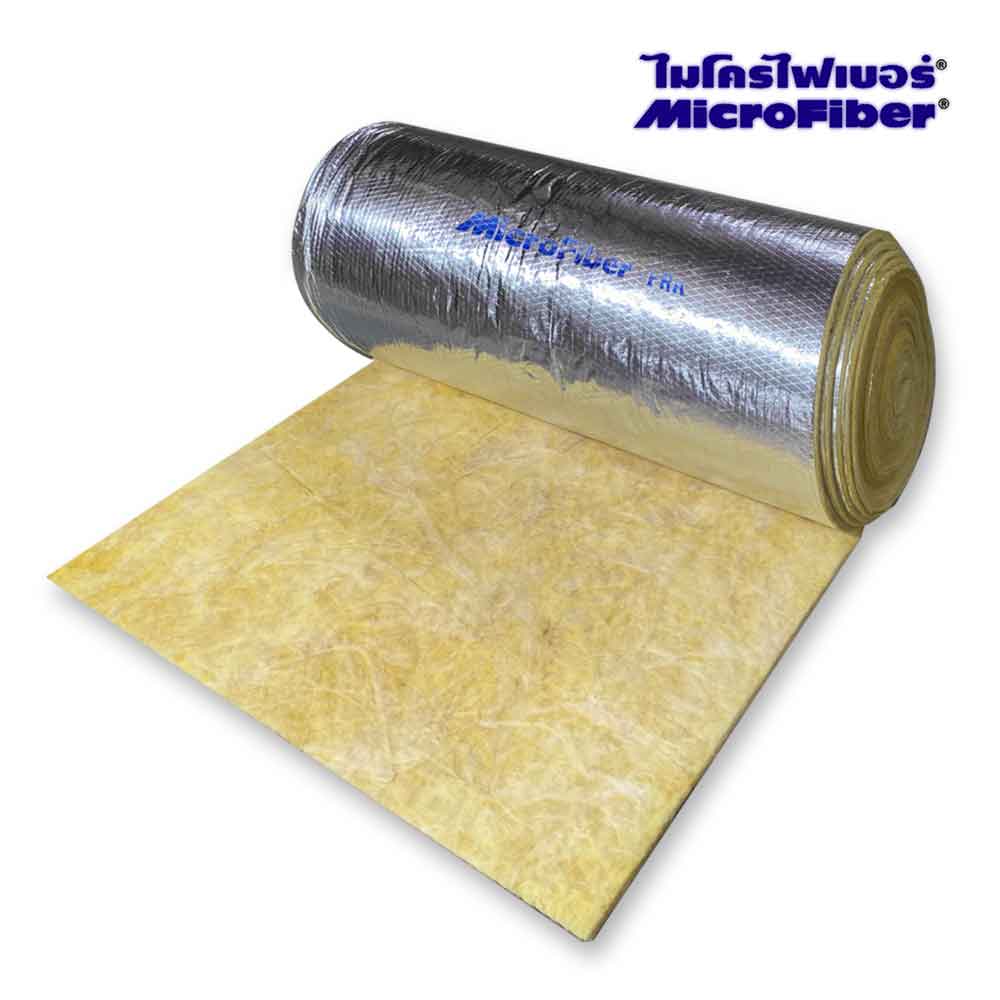
Microfiber Micro Duct Wrap FRK
- Thickness
- 25–50 mm
- Density
- 16–32 kg/m³
- Thermal conductivity (λ)
- 0.033–0.038 W/m·K
Sound coming in or going out (sound insulation)
Echoey rooms (sound absorption)
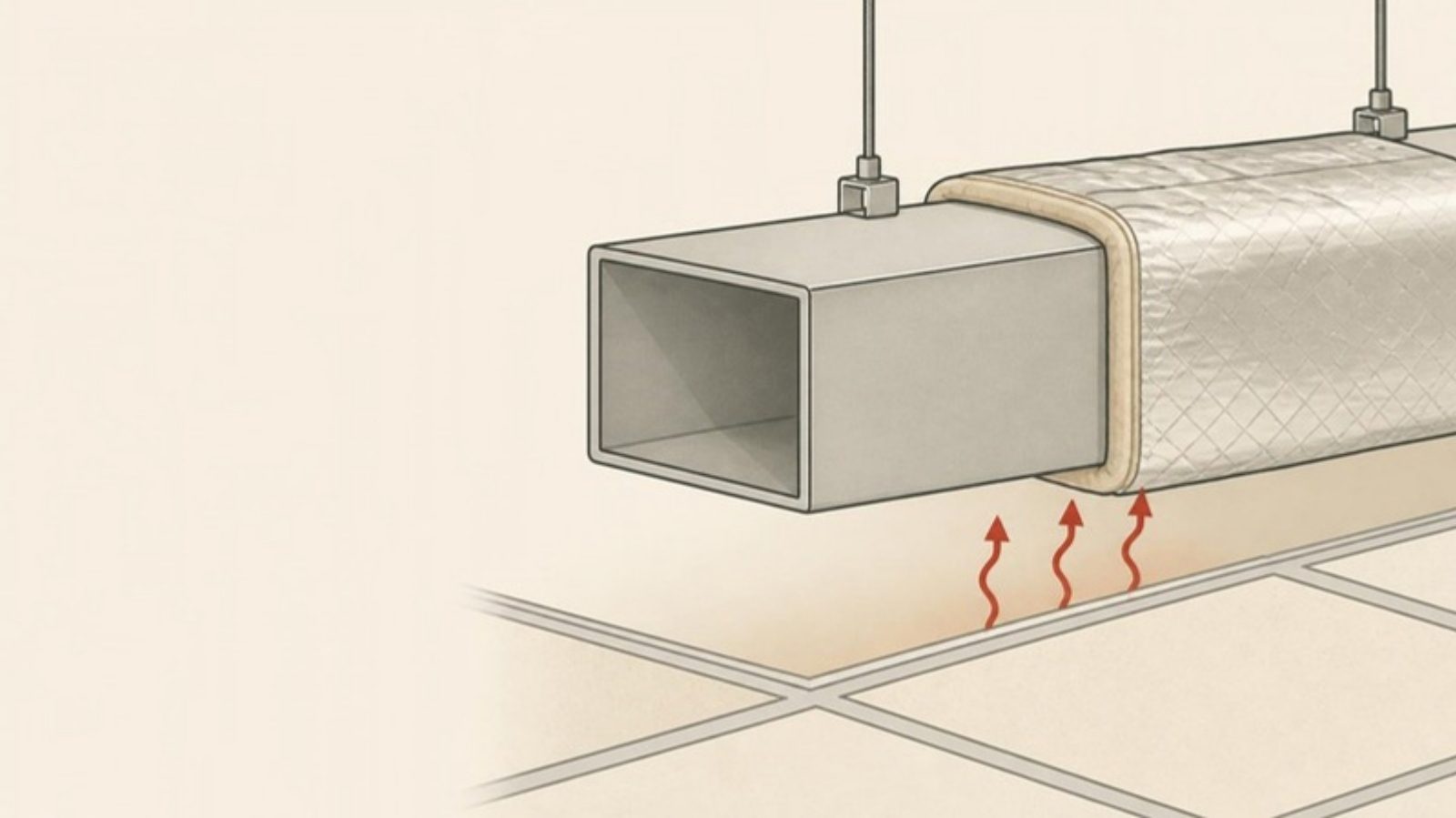
AC ducts are insulated for three main reasons: to reduce the cooling lost before the air reaches the room, to prevent condensation that makes cold duct surfaces drip onto the ceiling, and to save energy because the unit no longer has to make up for lost cooling. If the insulation is lined inside the duct (duct liner), it can also absorb airflow and equipment noise travelling along the duct.
Supply ducts usually run through ceiling voids, under roofs or other unconditioned spaces, where the surrounding air is much hotter and more humid than the air inside. Without insulation:
The reverse applies to warm-air ducts (heating in some buildings): they lose heat outward on the same principle.
| Issue | How insulation helps |
|---|---|
| --- | --- |
| Heat gain/loss through the duct | Reduces heat transfer through the duct wall, so air arrives close to its design temperature |
| Condensation on cold ducts | Keeps the outer surface of the insulation system above the dew point, when the thickness suits the conditions and the vapour retarder is continuous |
| Energy | Reduces the load the unit has to make up |
| Noise in the duct | Only internal duct liner with a sound-absorbing surface — external wrap does very little for noise inside the duct |
Thailand is hot and humid for most of the year, so the dew point of the air is fairly high. A cold duct with no insulation — or with insulation but open joints — can easily sweat. The full principle is in What are dew point and condensation?
Glass-wool insulation on cold ducts needs a foil facing or vapour retarder with every joint sealed. Any opening lets water vapour in to condense inside the insulation and on the duct. See What is a vapour barrier and why must it be continuous?
There is no single thickness for every job. It depends on the air temperature in the duct, the temperature and humidity of the space the duct passes through, the insulation's thermal conductivity and the project's requirements. The HVAC designer sets it — or ask us with your site details.
Categories and example products for this topic
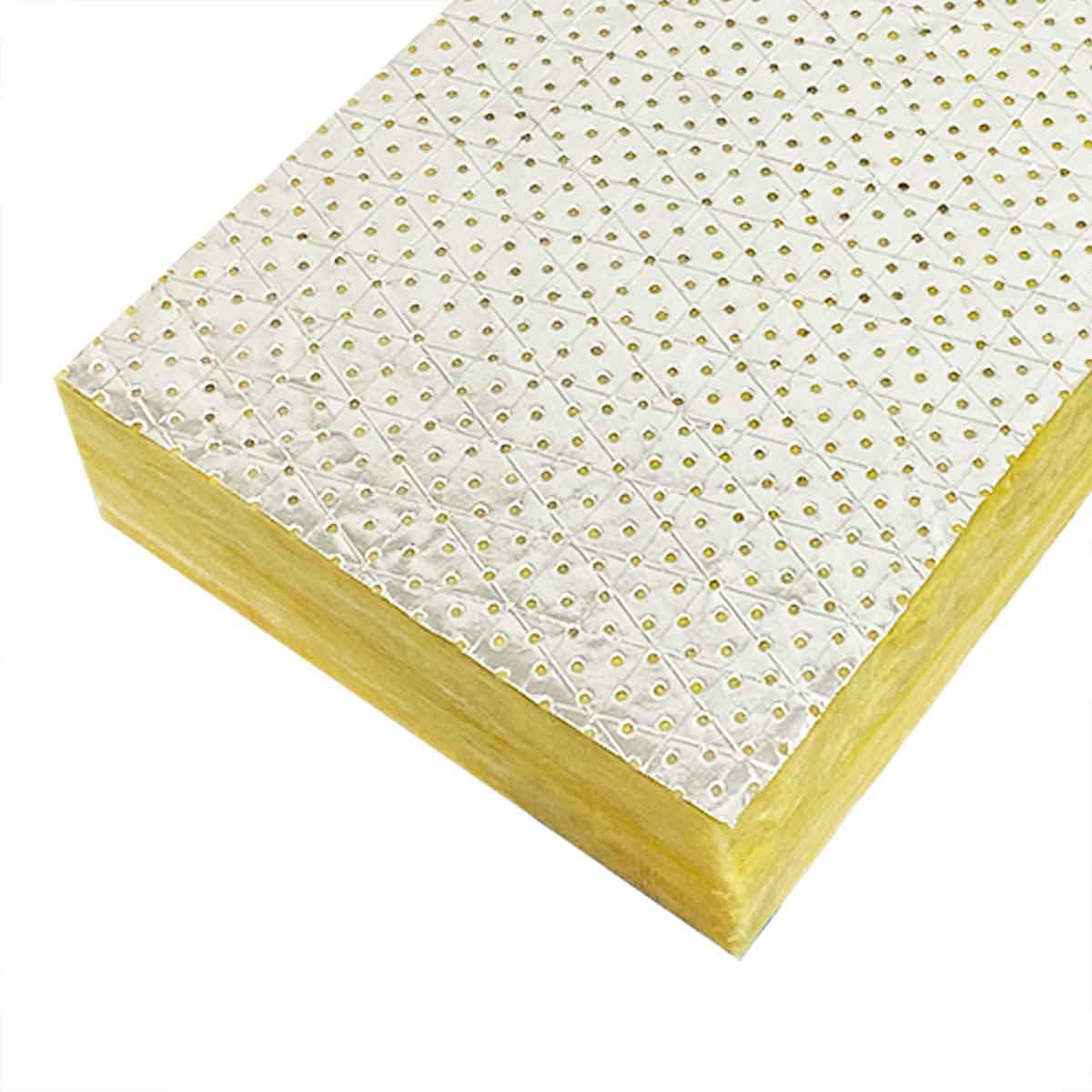
Duct and HVAC insulation · Glass wool
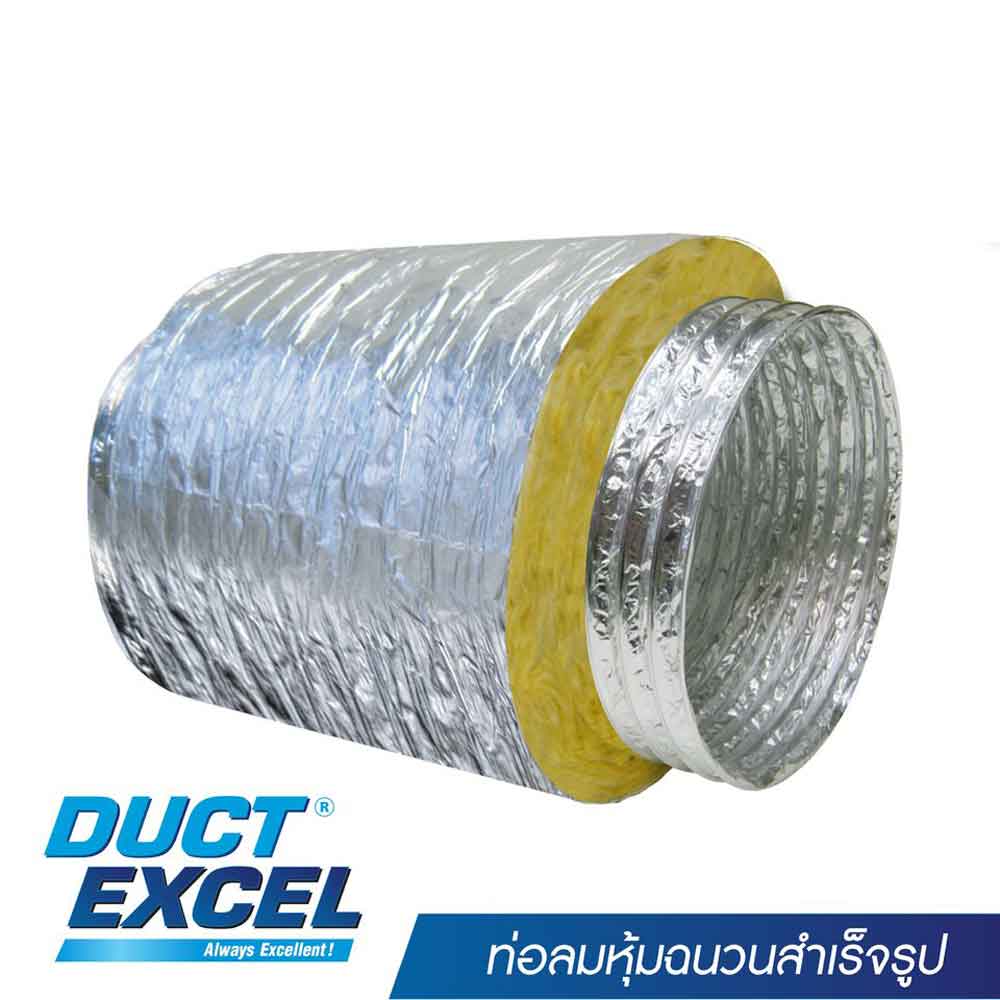
Duct and HVAC insulation · Glass wool
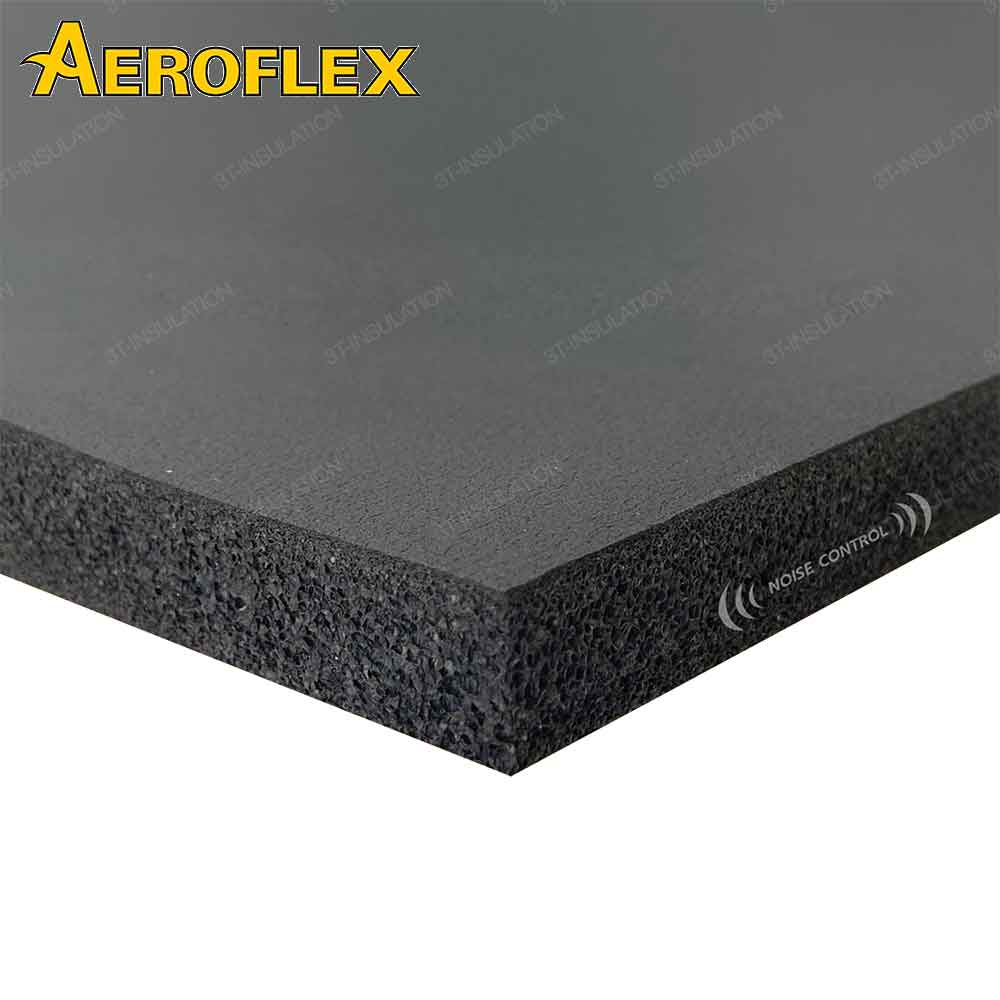
Duct and HVAC insulation · Acoustic foam
Duct and HVAC insulation · Glass wool
Check the message below, then press “Open LINE”. On a phone LINE opens with this message; on a computer LINE shows a QR code to scan with your phone. If LINE does not open, copy the message into the chat, or call us.
Add us on LINE: @x2525 · Call 062-195-1909