What types of insulation facing are there, and which job does each suit?
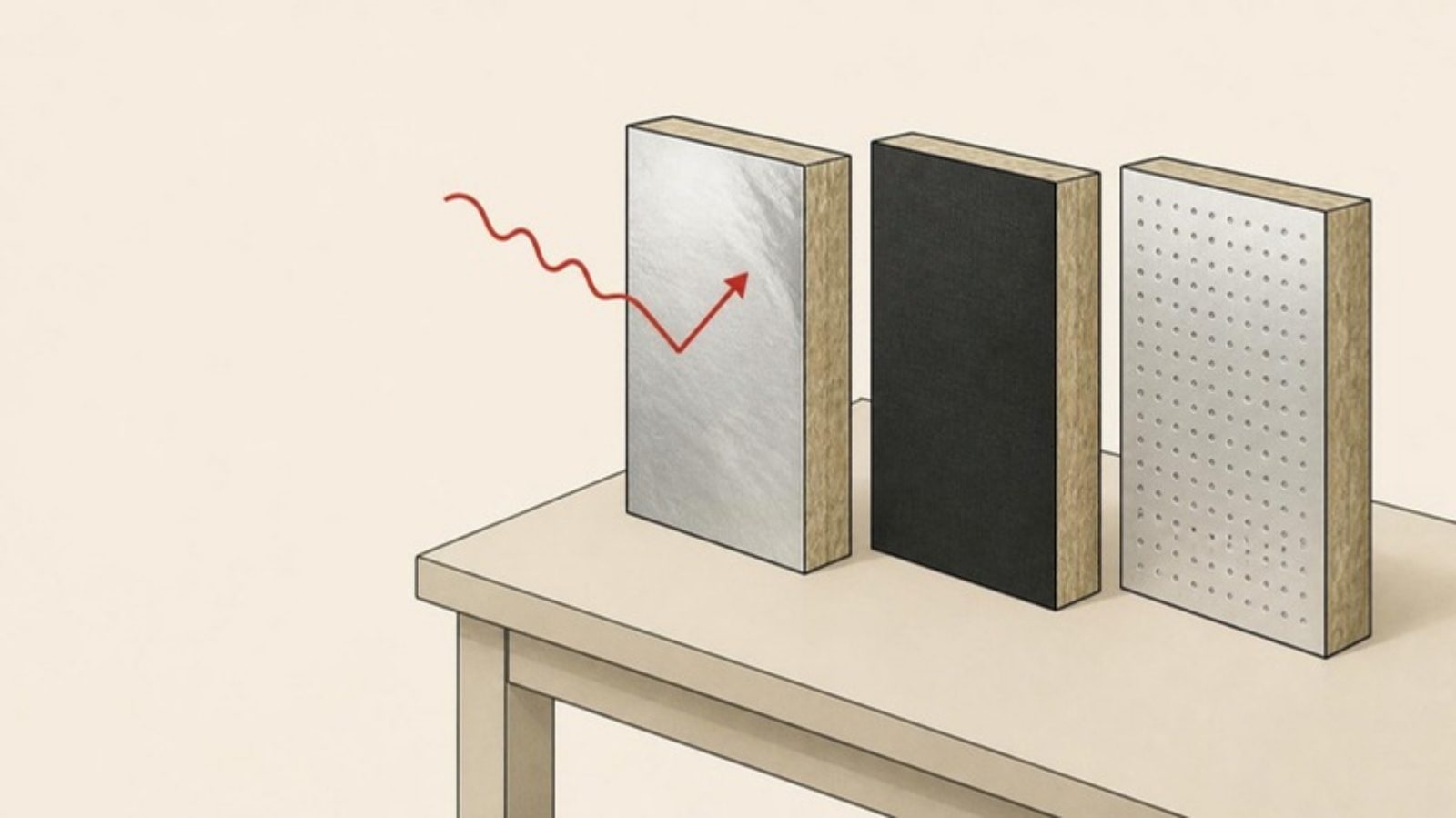
An insulation facing is the thin layer applied to insulation at the factory, and it decides where that product can be used. Aluminium foil and reinforced foil (FSK/FRK) control water vapour and reflect radiant heat. Glass tissue and glass cloth keep fibres in place while still letting sound in. Perforated foil is for jobs that need both a smooth surface and sound absorption. The same insulation core with a different facing is therefore not always interchangeable.
What does a facing do?
- Vapour control — a layer that vapour passes through with difficulty stops moisture entering and condensing inside insulation on cold work
- Reflecting radiant heat — a bright metal surface emits and absorbs little radiant heat when it faces an air space. See what is emissivity?
- Fibre containment — stops duct airflow or contact from pulling fibres loose
- Strength and appearance — resists handling and tearing, and looks tidy when exposed
- Acoustic transparency — an air-permeable face lets sound reach the insulation that does the absorbing
No facing does everything. A facing that is a good vapour barrier is usually too impervious for sound to pass, and one that passes sound well does not stop vapour.
Facings compared
| Facing | What it is | Main job | Limitation |
|---|---|---|---|
| --- | --- | --- | --- |
| Unfaced | Bare insulation | For closed cavities, or for the installer to cover with another material | No vapour control; fibres can shed when touched |
| Aluminium foil | Thin bright metal sheet | Vapour control, reflects radiant heat | Tears easily if not reinforced; sound cannot pass |
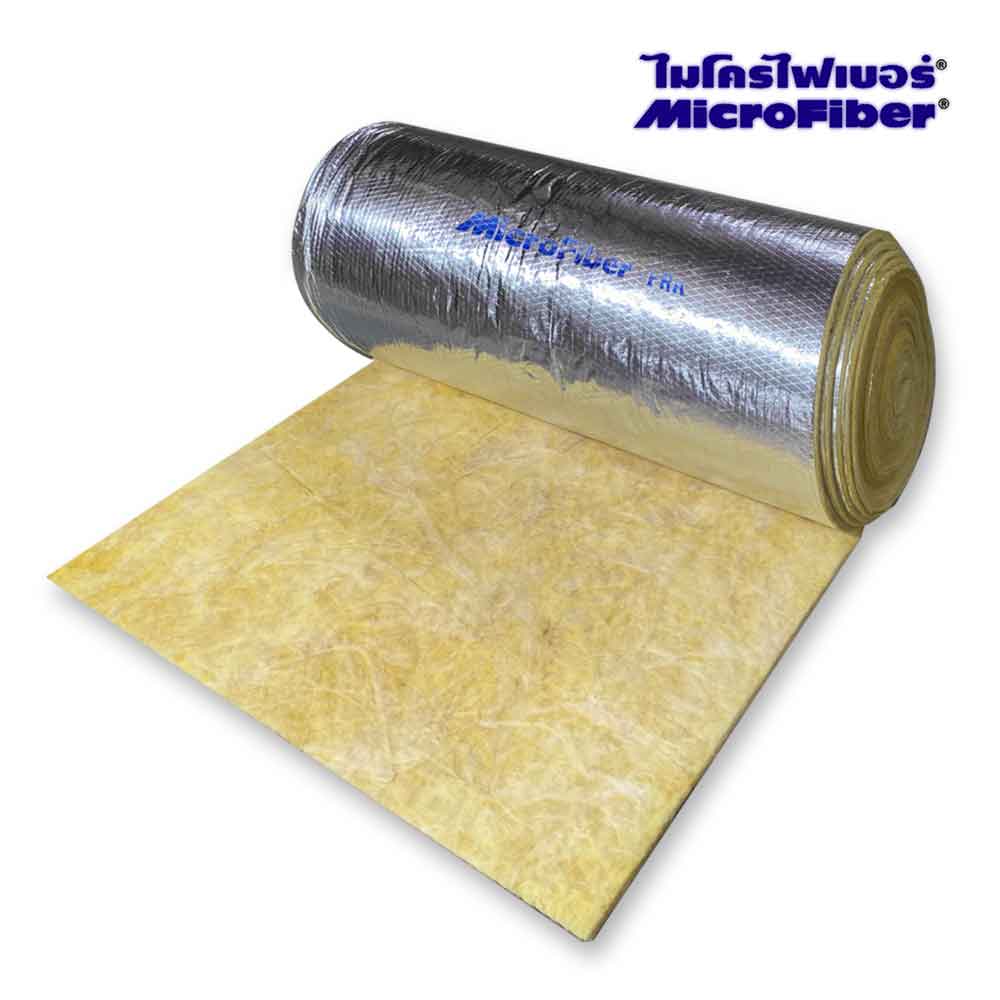
| Reinforced foil FSK / FRK | Foil + reinforcing scrim + kraft paper | Vapour control, tear resistance; common on duct wrap | Joints and punctures must be taped; outdoors it needs weatherproof jacketing |
| Glass tissue | Thin, light non-woven glass-fibre veil | Fibre containment, lets sound through; black hides it behind perforated panels | Not a vapour barrier; not impact resistant |
| Glass cloth | Woven glass-fibre fabric | Tougher; used as the face of absorbing panels | Not a vapour barrier |
| Perforated foil | Foil with small holes all over | Smooth fibre-containing surface that still lets sound in through the holes | Not a vapour barrier, because of the holes |
FSK stands for foil-scrim-kraft; FRK (foil-reinforced-kraft) is the name some manufacturers use for the same kind of facing. There are also vinyl and white film facings, and fully encapsulated products used for insulation laid on ceilings so that it is easy to handle.
Vapour-control facings: foil and FSK/FRK
Cold work such as air-conditioning ducts and chilled-water pipes needs the vapour barrier on the warmer, more humid side — the outside of the insulation. Otherwise vapour moves in and condenses inside it. See what is a vapour barrier?.
A facing's resistance to vapour is reported as permeance (perm); lower means better. For example, Micro Duct Wrap FRK is a glass-wool duct wrap faced with fire-retardant 3-way reinforced foil; the manufacturer's document gives a facing vapour permeability of 0.02 perm maximum to ASTM E96.
The best vapour facing loses to an unsealed joint
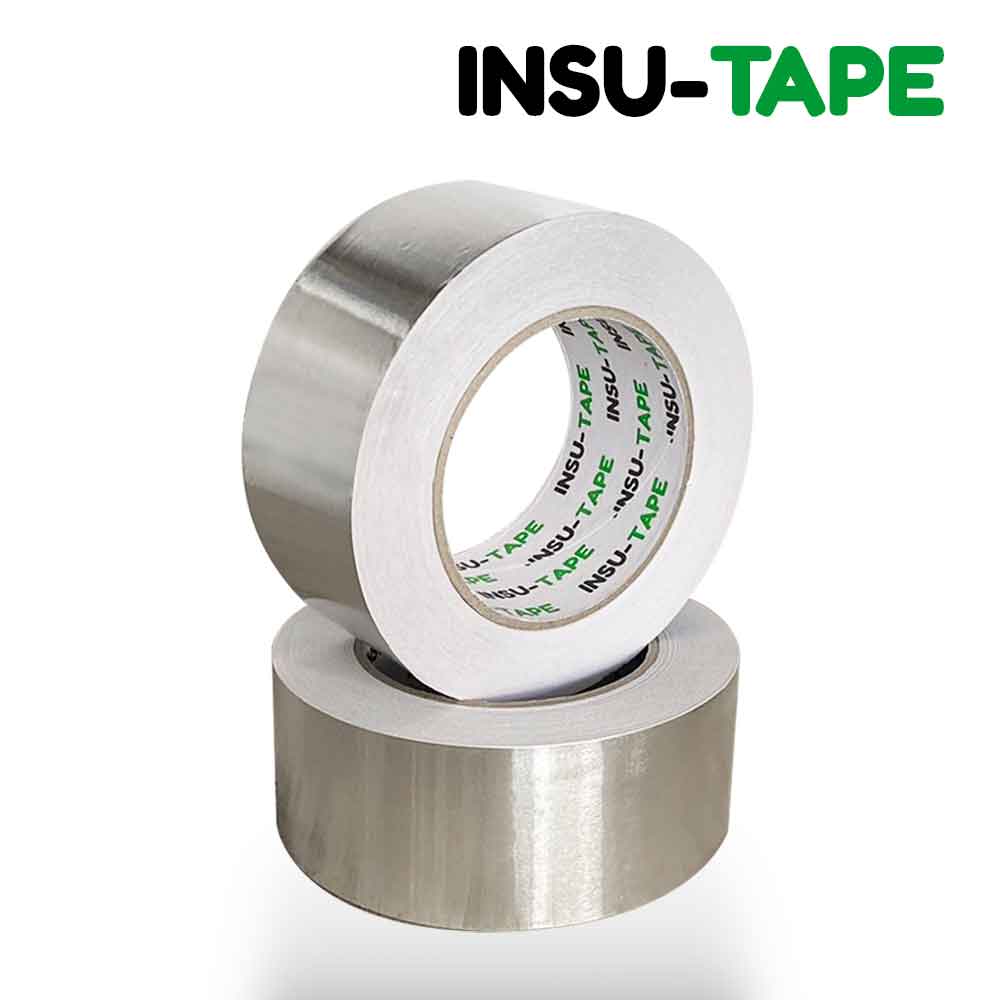
The perm value belongs to an intact sheet of facing. Unsealed joints, tears and pin holes let vapour straight in. Joints in foil-faced insulation must therefore be sealed with aluminium foil tape such as INSU-TAPE, on a clean, dry surface. See sealing insulation joints.
Where the vapour-control layer goes in the walls and roofs of air-conditioned buildings in a hot-humid climate is a design question. The general principle is not to have vapour barriers on both sides so that moisture which gets in cannot dry out; leave the decision to the designer.
Sound-transparent facings: glass tissue and glass cloth
Fibrous insulation absorbs sound because sound enters the gaps between fibres. Cover the face with solid foil and most of the sound is reflected, so acoustic work uses air-permeable facings.
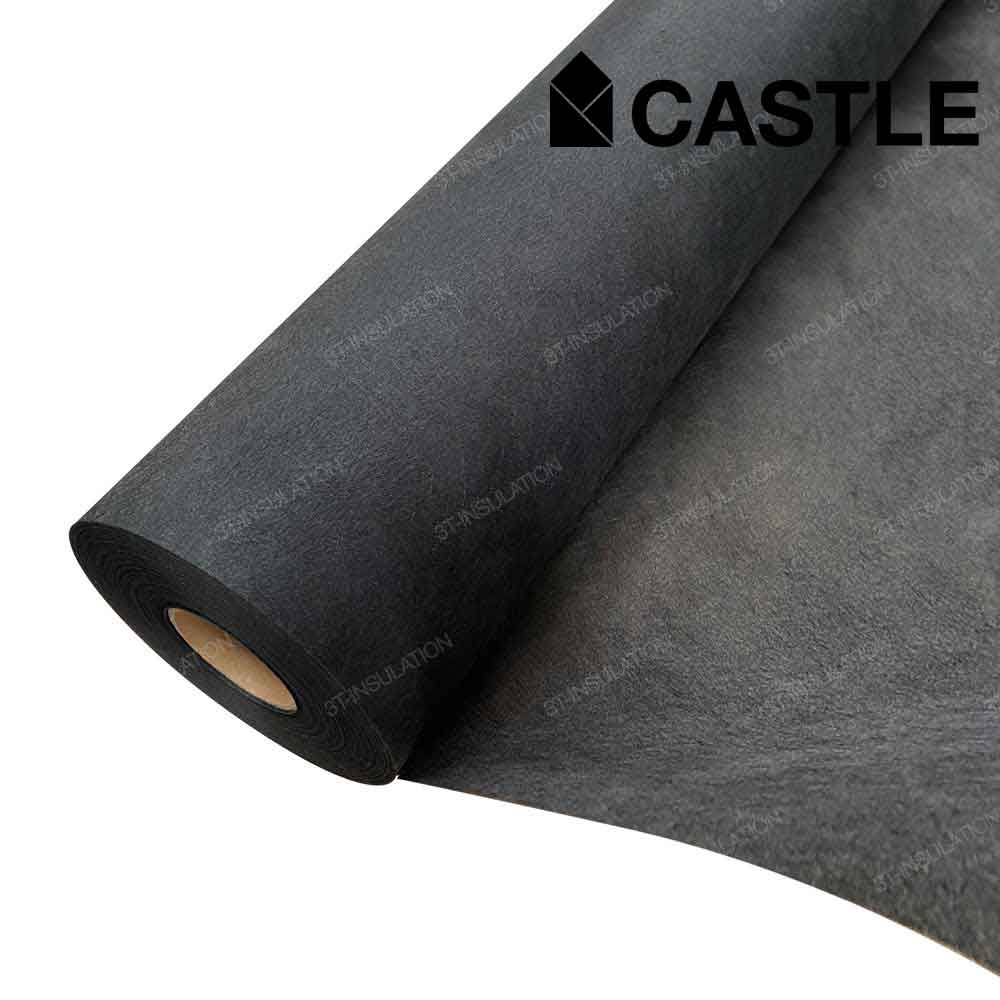
- Glass tissue, such as CASTLE Black Glass Tissue, a black glass-fibre veil of about 60 g/m², faces glass wool or stone wool in duct lining, under roofs and on absorptive walls. Black suits work behind perforated metal or in studios
- Glass cloth stands up to contact better and is used as the face of ready-made absorbing panels
Perforated foil: a smooth face that sound still passes
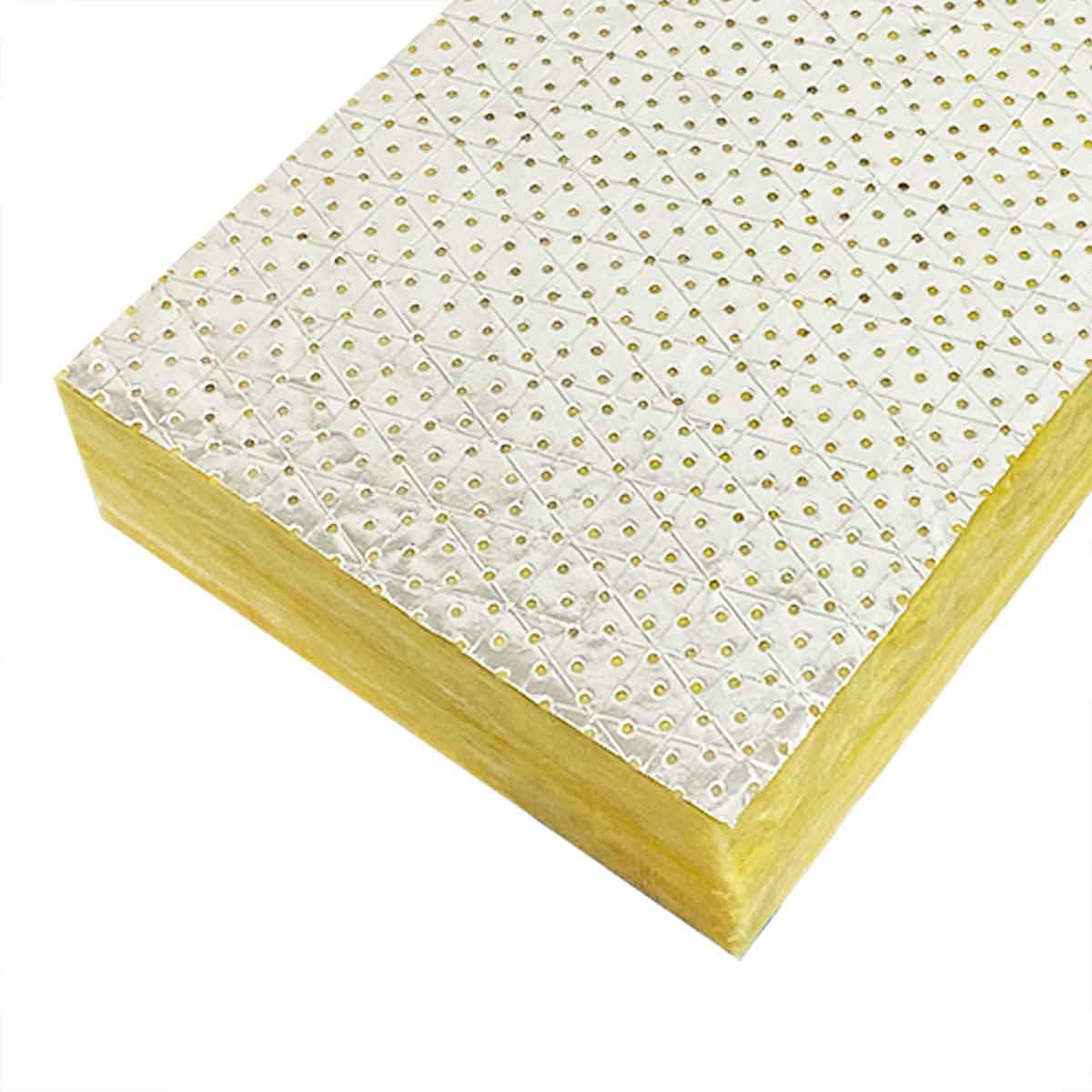
Perforated foil gives a smooth, fibre-containing surface while sound still reaches the insulation through the holes, so it is used on internal duct lining. An example is Micro Duct Liner PFL, a perforated-foil glass-wool board for which the manufacturer publishes NRC values to ASTM C423 (Type A mounting) and a UL 181 erosion test result of no erosion at an air velocity of 25.4 m/s.
Because it has holes, perforated foil does not act as a vapour barrier. If a cold duct needs one, it must be provided by another layer of the system. See duct wrap vs duct liner.
How to choose a facing
- Does the job need vapour control? Cold work needs a continuous vapour facing with every joint sealed
- Does it need to absorb sound? If so, the face that receives the sound must be air-permeable or perforated
- Will air blow over the surface, or people touch it? It needs a facing that contains fibres and withstands the air velocity stated by the manufacturer
- Will the insulation be exposed or covered? Exposed work needs the right colour and finish; outdoor work needs jacketing against sun and rain
- Fire requirements — facings and adhesives can change fire test results. Check the result for the product with that facing, not for the bare core. See fire performance terms
Common mistakes
- Using solid-foil-faced insulation as a sound absorber with the foil facing the room
- Assuming perforated foil stops vapour like solid foil
- Fitting a good vapour facing but leaving joints and pin holes unsealed
- Pressing the foil against another material and expecting a reflective benefit, which needs an air space in front of the foil
Sources
- Johns Manville — How to Select an Insulation Facing (FSK, PSK, ASJ, perm ratings, indoor and outdoor use, puncture resistance)
- Building Science Corporation — BSD-106: Understanding Vapor Barriers (vapour retarder classes and the principle of letting assemblies dry)
- Insulation Institute (NAIMA) — General FAQs (facings and moisture control)
- GetBestInsulations — verified product data for Micro Duct Wrap FRK, Micro Duct Liner PFL, CASTLE Black Glass Tissue and INSU-TAPE (based on the manufacturer documents listed on each product page)
Related products
Categories and example products for this topic
- CASTLE Black Glass Tissue — Black glass tissue, 60 g/m², faces glass or stone wool to keep fibres in place
- Micro Duct Wrap FRK — Glass-wool duct wrap with 3-way reinforced foil; facing permeance 0.02 perm max
- Micro Duct Liner PFL — Perforated-foil glass-wool board for lining ducts; NRC and UL 181 erosion result published
- INSU-TAPE Aluminium Tape — Acrylic aluminium foil tape for sealing joints in foil-faced insulation; 50 and 63 mm
Duct and HVAC insulation · Glass wool
Microfiber Micro Duct Wrap FRK
- Thickness
- 25–50 mm
- Density
- 16–32 kg/m³
- Thermal conductivity (λ)
- 0.033–0.038 W/m·K
Duct and HVAC insulation · Glass wool
Microfiber Micro Duct Liner PFL
- Thickness
- 25–50 mm
- Density
- 32–48 kg/m³
- Sound absorption (NRC)
- 0.70–0.85
Installation accessories · Tape
3T INSU-TAPE Aluminium Tape
- Width
- 50 / 63 mm
- Length
- 45 m
- Service temp.
- -20 – 120 °C