Duct and HVAC insulation · Glass wool
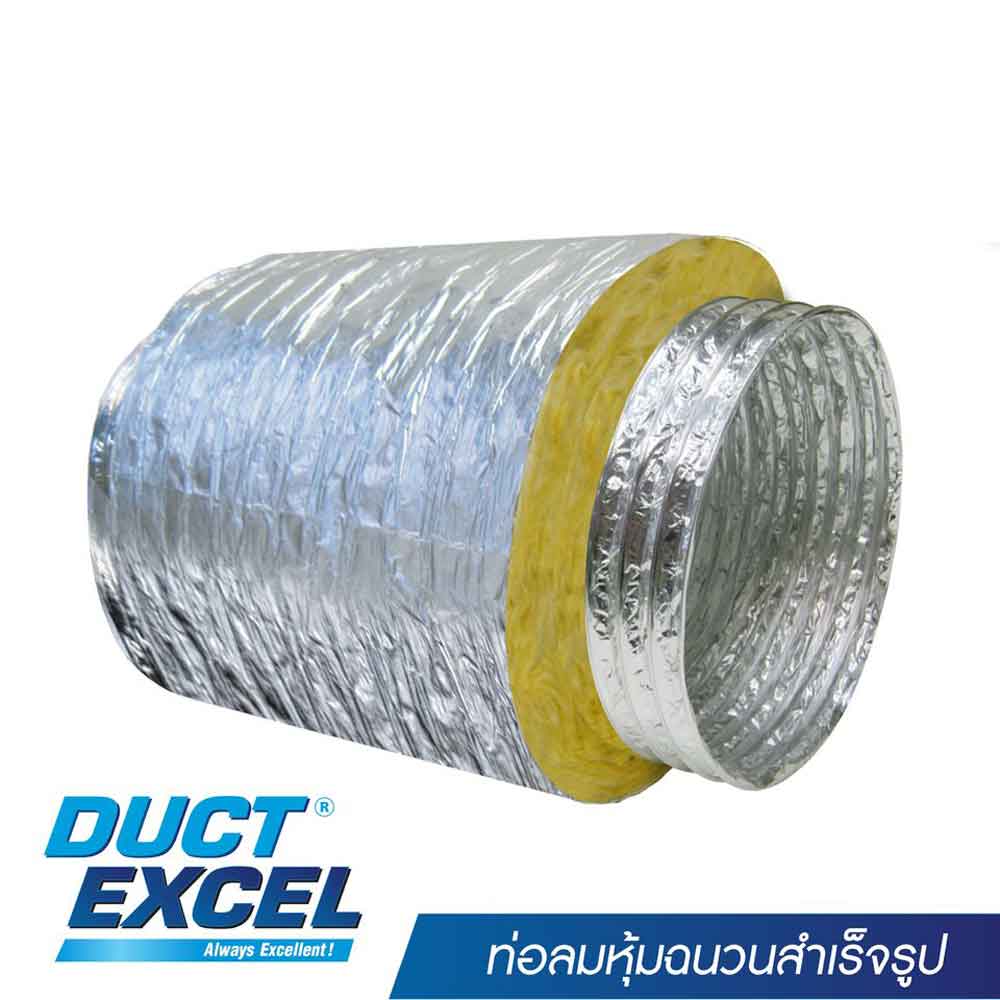
Duct Excel ISODEC
- Diameter
- 76–508 mm
- Density
- 16–48 kg/m³
- Service temp.
- -30 – 140 °C
Sound coming in or going out (sound insulation)
Echoey rooms (sound absorption)
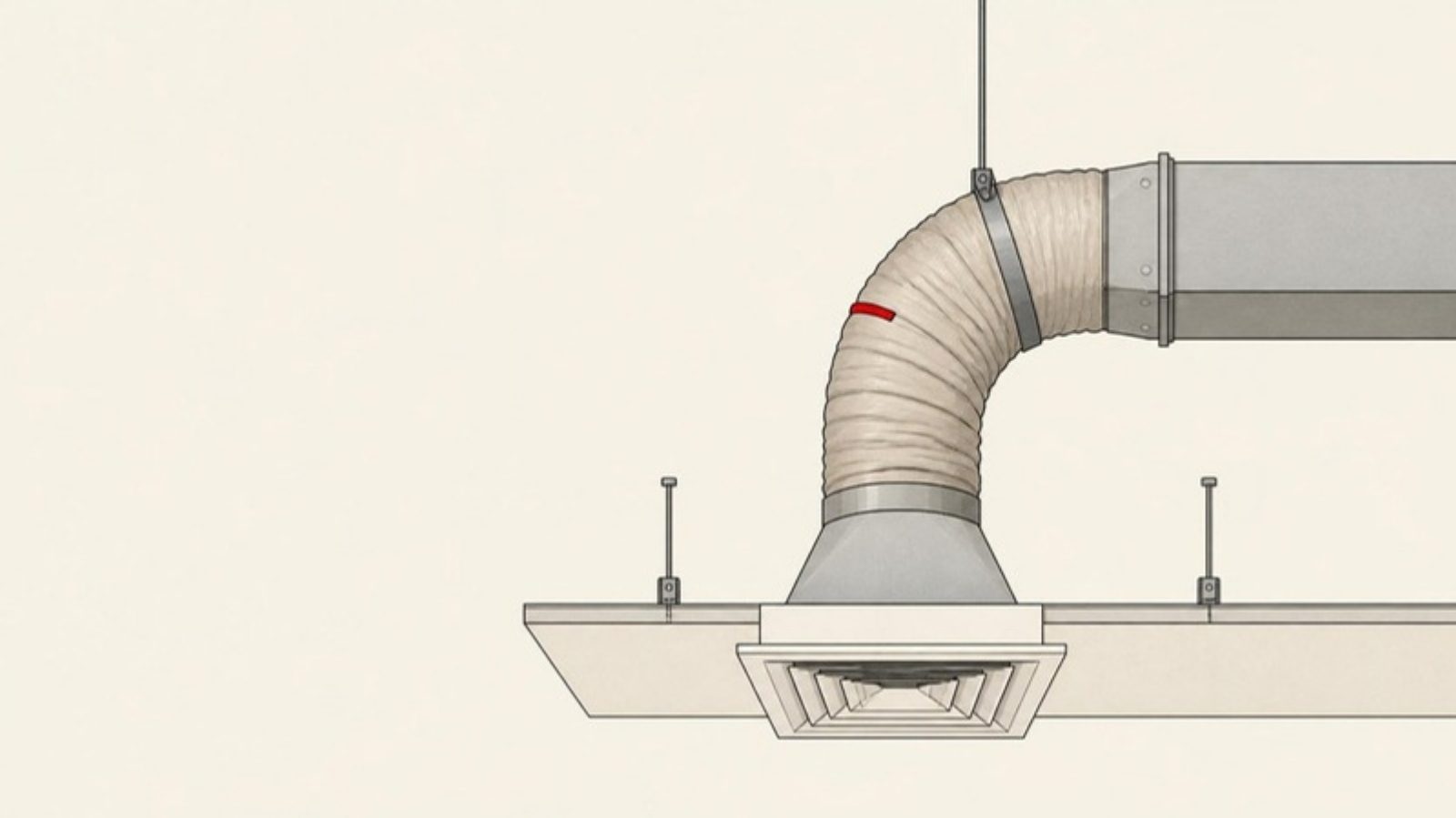
Insulated flexible duct (flex duct) is a bendable round air duct with insulation, such as glass wool, and an outer jacket applied at the factory. It is typically used for short connections from the main duct to diffusers or grilles, because it is easy to fit in tight ceiling spaces. Flex duct has higher airflow resistance than a straight smooth duct, and bends, sag and compression increase that resistance further. Rated air velocity and pressure must be read from the product's datasheet.
It usually has three layers:
Example from our range: Duct Excel ISODEC is described by the manufacturer as a glass-wool insulated flexible duct with a seamless aluminium-foil jacket reinforced with glass yarn, 25 or 50 mm insulation; per the manufacturer, model A2Q is rated to 20 m/s maximum air velocity and A2X to 30 m/s.
Flex duct is not designed to replace long runs of main duct. Suitable lengths should follow the system designer's drawings and the manufacturer's recommendations.
The inner wall of flex duct is less smooth than a metal duct, so it already has more airflow resistance (pressure loss), and that resistance rises further when:
The result is less air at the diffuser than designed, rooms that do not cool evenly and a fan that works harder. That is why the Air Diffusion Council (ADC) installation standard sets requirements for stretching, support spacing and limiting sag.
Maximum air velocity, working pressure, temperature range and insulation thickness differ by product. Match them to the system design, and let the HVAC designer set the duct sizes and lengths.
Read more: why ducts need insulation and how to choose duct insulation
Categories and example products for this topic
Duct and HVAC insulation · Glass wool
Installation accessories · Tape
Check the message below, then press “Open LINE”. On a phone LINE opens with this message; on a computer LINE shows a QR code to scan with your phone. If LINE does not open, copy the message into the chat, or call us.
Add us on LINE: @x2525 · Call 062-195-1909