Building thermal insulation · Stone wool
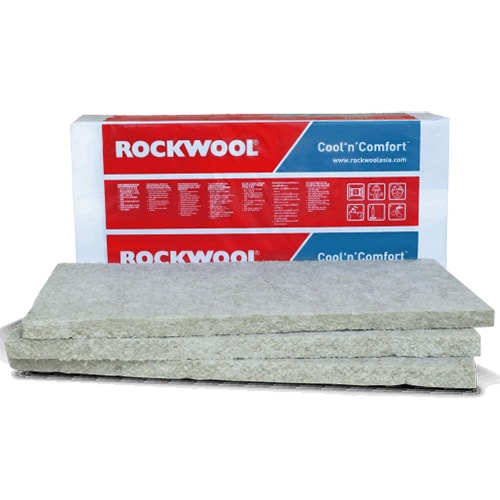
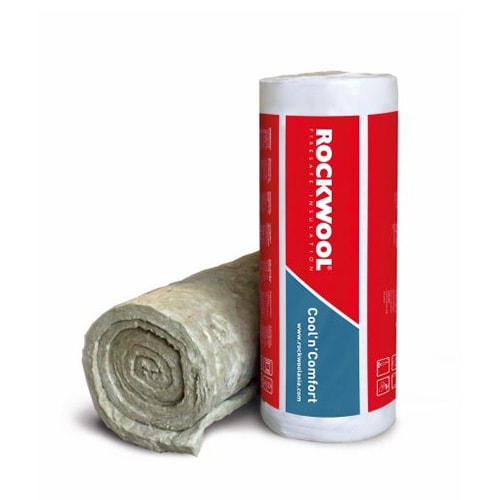
ROCKWOOL Cool 'n' Comfort RL
- Thickness
- 25–50 mm
- Density
- 40–60 kg/m³
- Thermal conductivity (λ)
- 0.034–0.035 W/m·K
Sound coming in or going out (sound insulation)
Echoey rooms (sound absorption)
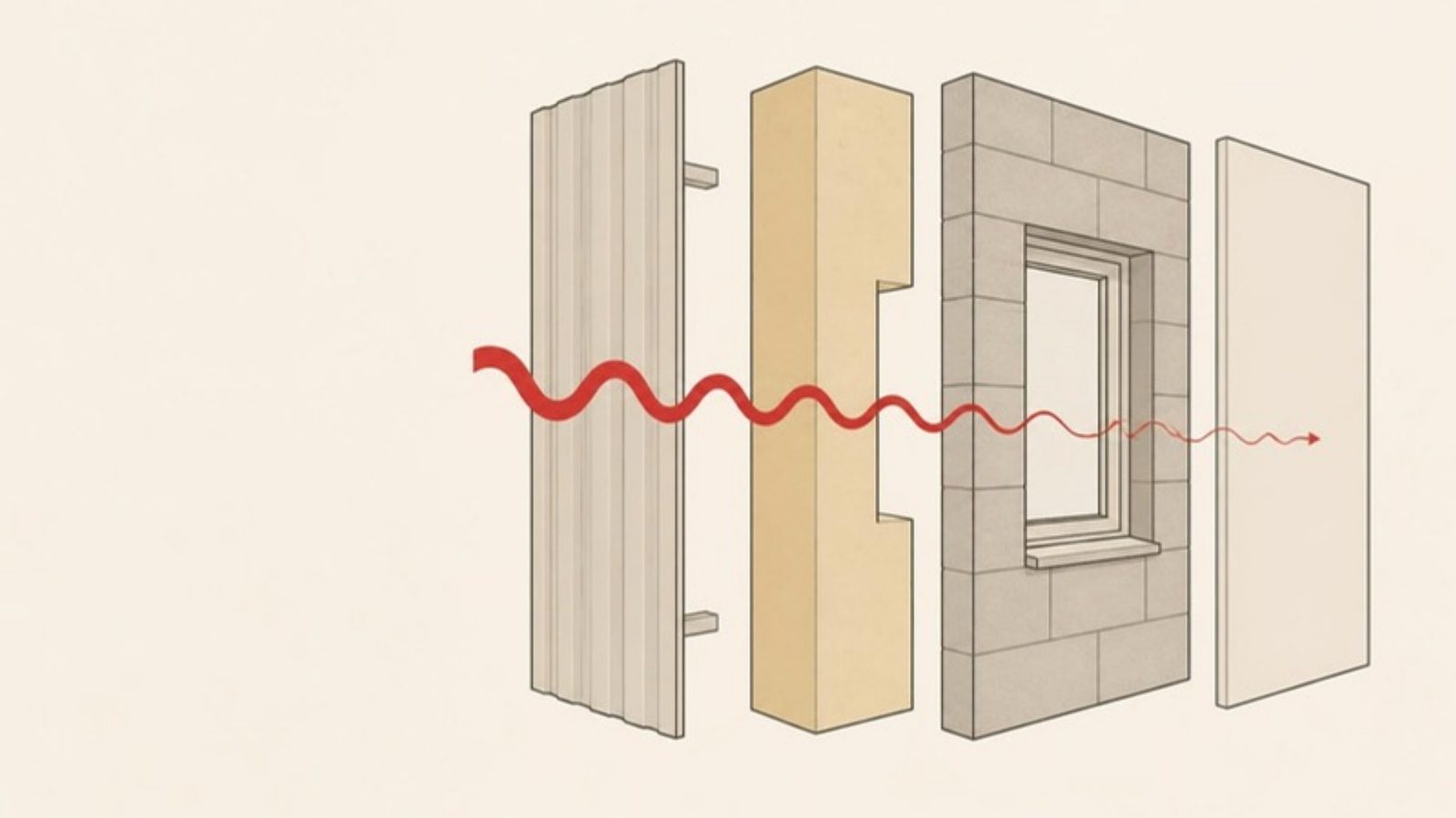
U-value (thermal transmittance) shows how much heat passes through a whole building element, such as a wall, roof or window. Its unit is W/m²·K, and the lower it is, the less heat gets through. The R-value is the resistance of each layer, where higher is better. U is the inverse of the total R of all the layers, including the resistance of the air surfaces on both sides.
| R-value | U-value | |
|---|---|---|
| --- | --- | --- |
| What it describes | Thermal resistance of one layer | Heat passing through a whole building element |
| SI unit | m²·K/W | W/m²·K |
| Better value | Higher | Lower |
| Applies to | Insulation, ceiling board, wall board, etc., layer by layer | Walls, roofs, ceilings, windows as a system |
Put simply: use R to choose an insulation layer, and U to see the result for the whole wall or roof.
Following the ISO 6946 method for elements made of layers:
A hypothetical example that only explains the method (not data for any system): if Rsi + Rse together are 0.20 and all the layers together are 2.30 m²·K/W, then R_T = 2.50 and U = 1 ÷ 2.50 = 0.40 W/m²·K.
U gives a rough estimate of the heat passing through a building element under steady conditions: heat flow (W) ≈ U × area (m²) × temperature difference between the two sides (K).
For example (hypothetical), U 0.40 × 100 m² × 10 K ≈ 400 W. Halving the U-value halves the heat flow under the same conditions.
Some types of building have legal energy requirements. The values to meet and how to calculate them follow the law and standards that apply to that project, and should be checked by the designer or engineer. This article does not set U-values for design.
If you need to choose insulation so that a wall or roof reaches a U-value set by your designer, send us the build-up of layers and we can help. Read more: thermal conductivity (λ) and how to choose insulation thickness.
Categories and example products for this topic
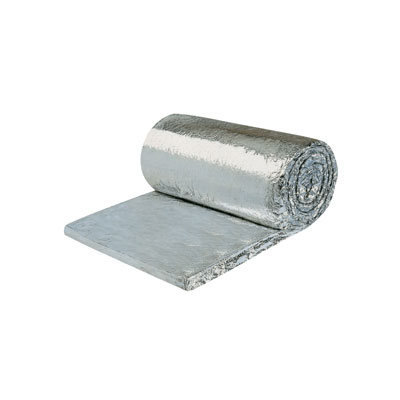
Building thermal insulation · Stone wool
Building thermal insulation · Stone wool
Building thermal insulation · Glass wool
Check the message below, then press “Open LINE”. On a phone LINE opens with this message; on a computer LINE shows a QR code to scan with your phone. If LINE does not open, copy the message into the chat, or call us.
Add us on LINE: @x2525 · Call 062-195-1909